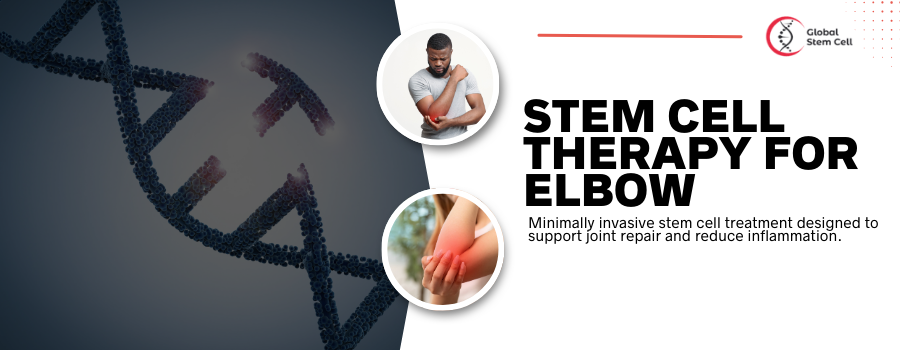
You lift a kettle, turn a screwdriver or pick up your racket, and the outside of your elbow hurts again. Perhaps the problem started differently: stiffness after an old fracture, pain during throwing or weakness after lifting something heavy. Where the pain began matters more than the name of an advertised injection.
Before choosing stem cell therapy for elbow abroad, you need a diagnosis that explains the symptoms. Cell-based elbow procedures remain investigational, and evidence does not establish them as a reliable replacement for rehabilitation or medically necessary surgery.
The first painful tasks
Identify which structure is limiting your arm.
When Grip Pain, Stiffness or Weakness Starts Changing Your Routine
Your elbow includes several joints, tendons, ligaments and nearby nerves. Tendons connect muscle to bone. Ligaments help stabilize the joint. Cartilage covers joint surfaces. Problems in these tissues can produce overlapping symptoms but require different treatment plans.
An examination should assess movement, strength, stability and nerve function. X-rays can show arthritis or bone changes. Ultrasound or MRI may help assess soft tissues when clinically indicated. A scan finding needs to match your symptoms rather than automatically becoming an injection target.
The following distinctions help explain why an overseas clinician needs more than a report stating “elbow pain”:
| Finding or diagnosis | What it describes | What needs clarification |
|---|---|---|
| Tennis or golfer’s elbow | Problems around the common extensor or flexor tendon attachments. | Whether tendon disease explains the pain and how loading affects it. |
| Osteoarthritis or post-traumatic arthritis | Joint changes, sometimes following an earlier injury. | Cartilage loss, bone spurs, stiffness and mechanical blockage. |
| Focal cartilage or osteochondral lesion | A localized defect involving cartilage, sometimes with underlying bone. | Size, stability and whether a loose fragment is present. |
| Partial tendon tear | Damage to part of an extensor, flexor, distal biceps or triceps tendon. | Extent, strength loss and whether the tendon remains functionally intact. |
| Ligament injury | Damage to stabilizers such as the UCL or lateral ligament complex. | Instability, injury severity and sport or work demands. |
Tendinopathy describes a tendon disorder, often involving persistent pain and altered tissue structure. UCL means ulnar collateral ligament, a stabilizer on the inner side of the elbow. Radial collateral and lateral ulnar collateral ligament injuries affect the outer stabilizing structures.
There is no single elbow grade that predicts response to cells. Arthritis severity, tear extent and ligament stability use different assessments. Persistent pain after surgery also needs a fresh diagnosis, including consideration of stiffness, nerve irritation or another complication.
A sudden pop followed by bruising or marked weakness needs prompt assessment. A completely detached distal biceps tendon is not equivalent to chronic tendinopathy, and researching an experimental injection should not delay a time-sensitive surgical opinion.
After the first treatment attempts
Review what has been tried and what remains appropriate.
When Rest Helps Temporarily but the Elbow Still Cannot Handle Your Work
Repeatedly resting until pain settles, then returning to the same workload, may leave the underlying problem unresolved. A clinician or physiotherapist should review the diagnosis, exercise progression and activities that repeatedly overload the elbow.
Depending on the condition, established care may include activity modification, progressive strengthening, bracing and suitable pain management. Joint arthritis, tendon disease and instability should not share one generic rehabilitation plan.
Compare PRP, Other Injections and Surgery on Their Own Merits
Platelet-rich plasma, or PRP, is prepared from your blood and contains concentrated platelets. It is not stem cell therapy. Evidence for elbow tendinopathy varies, and a PRP result cannot validate a different cell preparation.
Corticosteroid injections may provide symptom relief in selected situations, but repeated use around a tendon needs caution. Surgical options depend on the problem and may include tendon repair, ligament reconstruction or treatment of arthritis-related bone spurs and loose bodies.
An injection cannot be assumed to remove a mechanical blockage, reattach a fully ruptured tendon or restore stability to a severely deficient ligament. Seek an independent elbow specialist’s opinion before delaying a recommended operation.
Understand What Elbow Cell Research Has Actually Shown
Small pilot studies in chronic lateral elbow tendinopathy have reported improvements after particular cell preparations. Some also included physiotherapy. These findings do not establish how much improvement came from the cells or whether another product would produce the same result.
Evidence from tennis elbow cannot be extended automatically to elbow arthritis, UCL injury, distal biceps tears or postoperative pain. There is no dependable overall success rate or proven duration of benefit for “stem cell elbow treatment” as a category.
Ask for published human evidence matching your diagnosis, proposed product and route. Meaningful goals might include gripping a mug, completing a work shift or returning to a defined training task. Less pain does not, by itself, prove tendon regeneration.
Before booking abroad
Turn a broad offer into a specific clinical proposal.
When an Overseas Clinic Proposes an Elbow Injection
The proposal should name the target tissue and explain why it is being treated. An injection into the joint differs from one directed at a tendon lesion. Ask whether ultrasound or another guidance method will be used and how nearby nerves and vessels will be protected.
Bone marrow aspirate concentrate, or BMAC, contains a mixture of cells and other components. It is not the same as a purified or laboratory-expanded cell product. Fat-derived preparations also vary substantially.
Mesenchymal stromal cells, or MSCs, may be expanded in a laboratory before administration. Autologous means derived from your own tissue. Allogeneic means donor-derived. Neither label establishes effectiveness or removes safety concerns.
Check the Clinician, Product and Legal Basis Together
Verify the treating clinician’s license, elbow expertise and training in the proposed injection technique. Confirm sterile facilities, laboratory responsibility and emergency arrangements. General accreditation does not establish that an experimental product works.
Request the product or preparation name, source, manufacturer where applicable, processing method and traceability. Ask which identity, sterility and viability checks apply. A device used to process tissue is not proof that the resulting preparation is approved for your elbow condition.
If the intervention is research, verify the sponsor, investigator, study site, regulatory authorization and independent ethics approval. A trial-registry entry alone is insufficient.
Assess Suitability Before You Make Travel Commitments
There is no established ideal candidate for commercial elbow cell treatment. Age alone does not determine suitability. Diabetes, smoking, immune suppression, bleeding risks and general health may affect procedural assessment.
Active infection, progressive nerve symptoms, major instability or a complete rupture may require a different pathway. A remote record review can identify concerns, but final clearance requires an appropriate in-person examination.
Prepare the information the overseas team needs:
- ✓ Diagnosis and imaging: Reports and original image files when requested.
- ✓ Treatment history: Rehabilitation, injections, surgery and their results.
- ✓ Medical details: Medicines, supplements, allergies and relevant conditions.
- ✓ Functional demands: Your dominant arm, work duties, sport and current limitations.
- ✓ Home follow-up: A clinician and physiotherapist able to receive the care plan.
Do not change blood-thinning medicines, anti-inflammatory treatment or other prescriptions independently. Obtain coordinated instructions from the relevant clinicians.
Compare the Whole Commitment, Including Aftercare
Request written inclusions for consultation, imaging, collection, processing, injection, anesthesia if used, medicines and rehabilitation. Clarify follow-up, cancellation and complication charges. Keep medical fees separate from travel and companion expenses.
Compare clinical plans before prices. The cheapest offer may omit rehabilitation or local complication care. Treatment at home may simplify follow-up, while overseas participation adds travel, records transfer and possible return-visit obligations.
A PlacidWay patient coordinator can help with destination and provider comparisons, prices, quote inclusions and travel arrangements.
The treatment appointment
Reconfirm the diagnosis and procedure before administration.
When You Arrive, the Elbow Examination Can Still Change the Plan
The clinician should reassess strength, movement, stability and symptoms. New findings or illness may justify postponement or another recommendation. A deposit should not determine whether treatment proceeds.
Although protocols differ, a clearly explained procedure should include:
- Confirm the target. Match the examination and imaging to the tissue being treated.
- Review consent. Explain uncertainty, alternatives, collection risks and rehabilitation requirements.
- Prepare the material. Perform any agreed collection and verify processing or product-release information.
- Administer the preparation. Use the specified route, sterile technique and appropriate guidance.
- Check recovery. Assess symptoms and provide written restrictions and emergency contacts.
If tendon needling or another procedure is added, it needs its own explanation. Combining interventions also makes it harder to determine which caused any improvement.
Know What Can Go Wrong Before Leaving the Clinic
Potential problems include pain, bleeding, infection, nerve irritation and collection-site complications. Donor-derived or extensively processed preparations introduce additional quality and immune-related concerns.
Reliable complication ranges are unavailable across commercial elbow protocols. Small pilot studies cannot exclude uncommon serious harm. Ask how the team manages a suspected infection or neurological complication and where hospital care would be provided.
Early recovery near the clinic
Check symptoms and complete the handover.
When the Injection Is Finished but the Elbow Is Not Ready for Loading
Local soreness can occur, and tissue collection may create discomfort elsewhere. Early relief may reflect local anesthetic rather than a lasting treatment effect. Your team should explain expected symptoms and when worsening pain needs review.
Get specific advice about gripping, carrying, driving, work and any brace. Avoid prolonged immobilization unless prescribed, but do not improvise exercises either. A tendon lesion, ligament injury and arthritic joint may need different loading instructions.
Before departure, obtain the procedure report, product or preparation details, batch information where applicable, medicines and rehabilitation plan. Include emergency contacts and named responsibility for follow-up.
Travel readiness depends on recovery and individual health. Arrange help with luggage if lifting is restricted. A PlacidWay patient coordinator can help organize the medically advised stay and travel arrangements.
The weeks back home
Progress activity through assessment rather than guesswork.
When Rehabilitation Determines What Your Arm Can Do Next
Your home physiotherapist should receive the overseas instructions and understand the actual procedure performed. Activity progression should reflect symptoms, strength and function. Return to throwing, racket sports or heavy lifting requires more than a comfortable injection site.
Record practical changes in grip, movement and daily tasks. Persistent pain, weakness or loss of function should trigger reassessment rather than an automatic offer of another injection.
Some symptoms require urgent local care:
- Possible infection: Increasing heat, redness, drainage, fever or rapidly worsening pain.
- Nerve or circulation concerns: New weakness, persistent numbness or a cold or discolored hand.
- Sudden functional change: A new pop, marked swelling or inability to use the arm.
Do not wait for an overseas message before seeking urgent assessment. Take the treatment record with you. Establish before travel who pays for local investigations, hospital treatment or any proposed return visit.
Long-term use of the elbow
Reassess durability and address recurring problems.
When You Return to Work or Sport, Judge the Result by Function
A useful outcome means handling meaningful activities with acceptable symptoms and strength. It does not necessarily mean the tissue has returned to its previous structure. Imaging changes alone cannot establish durable recovery.
There is no evidence-based maintenance schedule for repeated elbow cell injections. If symptoms recur, review workload, rehabilitation, stability and the original diagnosis. Further treatment should follow a fresh clinical assessment.
Some patients may still need surgery. There is no standard revision procedure that reverses administered cells, so retain all product and procedure records for future clinicians. Local specialists should be able to coordinate ongoing care even when the original provider is overseas.
Long-term loading habits and appropriate conditioning remain part of protecting your arm, regardless of whether you undergo an experimental procedure.
Get Your Elbow Diagnosis Reviewed Before Booking Abroad
Speak with a PlacidWay patient coordinator about organizing your records and questions for an independent review of an overseas elbow proposal.
References
- American Academy of Orthopaedic Surgeons — Tennis Elbow
- American Academy of Orthopaedic Surgeons — Osteoarthritis of the Elbow
- American Academy of Orthopaedic Surgeons — Biceps Tendon Tear at the Elbow
- American Academy of Orthopaedic Surgeons — Use of Stem Cells in Orthopaedics
- Stem Cells — Treatment of Lateral Epicondylosis Using Allogeneic Adipose-Derived Mesenchymal Stem Cells: A Pilot Study
- Journal of Experimental Orthopaedics — Adipose-Derived Mesenchymal Stromal Cells for Chronic Lateral Elbow Tendinopathy: A Pilot Study
- FDA — Important Patient and Consumer Information About Regenerative Medicine Therapies
This page provides general information and is not medical advice. Consult a qualified elbow specialist about your diagnosis, established treatments and the risks of an investigational procedure abroad.
Who stands behind this article
Health content should never be anonymous. Here are the people who wrote and checked it, with credentials you can verify independently.
Usama
As the Editor of Global Stem Cell Therapy, I provide trusted, research-based information on stem cell treatments worldwide. With over a decade of experience in medical tourism, I guide patients toward safe, effective, and affordable therapies.
This author specializes in global healthcare trends and medical education. By focusing on evidence-based practices and a patient-first approach, they provide accessible resources to help readers understand their international treatment options with clarity.
Stem Cell Therapy, Longevity & Regenerative Medicine Specialist
Dr. Alejandro Fernando is a Mexico City-based physician and medical content reviewer focused on stem cell therapy, regenerative medicine, cellular therapy and longevity medicine. His reviewer profile lists medical and postgraduate training related to regenerative medicine, cellular therapy and stem cell biology.
How this article was checked