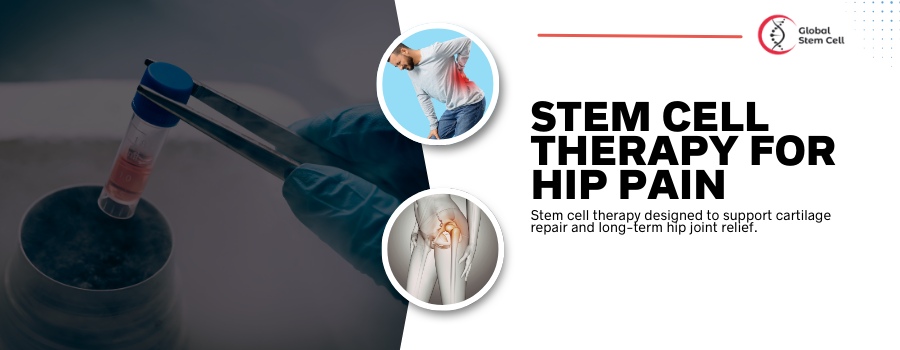
Hip pain is a debilitating condition that can rob individuals of their mobility, independence, and overall quality of life. For decades, the primary solutions offered by conventional medicine were long-term pain medication management, physical therapy, or invasive total hip replacement surgery. However, the landscape of orthopedic care has shifted dramatically with the introduction of regenerative medicine. Stem Cell Therapy for Hip Pain represents a breakthrough, non-surgical alternative designed to address the root cause of joint deterioration rather than merely masking the symptoms.
At its core, Stem Cell Therapy for Hip Pain is a regenerative injection treatment. It utilizes the body’s own natural healing mechanisms—or potent biological materials from ethically sourced donors—to repair damaged cartilage, reduce inflammation, and modulate the immune system within the hip joint. The hip is a ball-and-socket joint lined with articular cartilage. Over time, due to aging (osteoarthritis), injury, or conditions like Avascular Necrosis (AVN), this cartilage wears away, leading to bone-on-bone friction. This therapy introduces potent Mesenchymal Stem Cells (MSCs) into the joint space to halt this degeneration.
The Science Behind the Regeneration
To understand how Stem Cell Therapy for Hip Pain works, one must understand the unique properties of stem cells. Unlike specialized cells (like skin or muscle cells), stem cells are “undifferentiated.” This means they have the unique ability to transform into various types of tissue cells, including chondrocytes (cartilage cells) and osteoblasts (bone cells). However, their primary function in orthopedic applications is often “paracrine signaling.”
When injected into a painful hip, these cells release growth factors and cytokines. These biological signals act like a construction crew foreman, instructing the existing cells in your hip to start repairing damage, increasing blood flow to the area, and drastically reducing the chronic inflammation that causes pain. This makes Stem Cell Therapy for Hip Pain a dual-action treatment: it is both anti-inflammatory and regenerative.
Types of Stem Cells Used in Hip Treatments
There are several sources of stem cells used in modern medical tourism hubs and advanced clinics:
- Autologous Adipose-Derived Stem Cells: These are harvested from the patient’s own fat tissue, usually from the abdomen. Fat is rich in Mesenchymal Stem Cells and provides a high cell count.
- Autologous Bone Marrow Concentrate (BMC): Stem cells are harvested from the patient’s iliac crest (hip bone). This contains a robust mix of stem cells and growth factors essential for bone and cartilage health.
- Allogeneic Umbilical Cord Tissue: Sourced from healthy, pre-screened C-section births (post-natal). These cells are young, potent, and do not require harvesting from the patient, making the procedure faster and less invasive.
Who Should Consider Stem Cell Therapy for Hip Pain?
Not everyone is a candidate for this advanced procedure, but the scope of treatable conditions is expanding. The ideal candidates for Stem Cell Therapy for Hip Pain are generally individuals seeking to avoid or delay hip replacement surgery and those who prefer a holistic, biological approach to healing.
Targeted Conditions
Patients suffering from the following conditions often see the most significant benefits:
- Osteoarthritis of the Hip: This is the most common indication. Candidates with mild to moderate osteoarthritis (Grades 1 through 3) tend to respond best. While Grade 4 (bone-on-bone) patients can find pain relief, cartilage regrowth may be limited.
- Avascular Necrosis (AVN): Also known as osteonecrosis, this condition occurs when blood supply to the femoral head is cut off, causing bone death. Stem Cell Therapy for Hip Pain can help revascularize the area and regenerate bone tissue if caught in early stages.
- Hip Labral Tears: Tears in the ring of cartilage (labrum) that follows the outside rim of the socket can be painful. Stem cells can assist in knitting this soft tissue back together without sutures.
- Trochanteric Bursitis: Chronic inflammation of the fluid-filled sac near the hip joint that has not responded to cortisone injections.
- Post-Traumatic Arthritis: Arthritis that develops after a specific injury or fracture to the hip.
Ideal Patient Profile
Beyond the medical diagnosis, the ideal candidate for Stem Cell Therapy for Hip Pain typically matches the following profile:
- Active Lifestyle Seekers: Individuals who want to return to sports, hiking, or active work sooner than surgery would allow.
- Failed Conservative Treatment: Patients who have tried physical therapy, NSAIDs, and steroid injections with little to no lasting relief.
- Surgical Risks: Patients who are too young for a hip replacement (as the implant may wear out in their lifetime) or those with medical comorbidities that make major surgery too risky (e.g., heart conditions or diabetes).
- Medical Tourists: Individuals willing to travel to centers of excellence where regulations allow for expanded stem cell expansion and culturing, providing higher cell counts for better results.
Stem Cell Therapy for Hip Pain Procedure: Step-by-Step
Understanding the logistical flow of the treatment can help alleviate anxiety. While protocols vary slightly by clinic and country, a typical session of Stem Cell Therapy for Hip Pain follows this comprehensive structured path.
Step 1: Comprehensive Consultation and Imaging
Before any needle is involved, a rigorous evaluation takes place. The medical team will review X-rays, MRIs, and medical history. In many medical tourism destinations, this step happens virtually before you even book your flight. The doctor assesses the level of degeneration to ensure Stem Cell Therapy for Hip Pain is a viable option for your specific anatomy.
Step 2: Harvesting (For Autologous Treatments)
If you are using your own cells, the day begins with harvesting:
- Bone Marrow Aspiration: The area above the back of the hip is numbed with local anesthetic. A specialized needle draws marrow blood. While it sounds intimidating, most patients report only mild pressure.
- Liposuction (Adipose): A “mini-lipo” is performed, usually on the belly or flank, to extract a small amount of fat tissue. This is minimally invasive and done under local anesthesia.
Note: If choosing Allogeneic (Umbilical Cord) cells, this step is skipped, significantly shortening the procedure time.
Step 3: Cell Processing and Activation
The extracted tissue is taken to an onsite laboratory. Using high-speed centrifuges, the sample is spun down to separate the stem cells and growth factors from red blood cells and oil. In advanced clinics offering Stem Cell Therapy for Hip Pain in Mexico or Thailand, the cells may also be “expanded” (cultured) to increase the count into the hundreds of millions, or “activated” using photo-modulation technology to enhance their healing potential.
Step 4: The Injection
This is the critical moment. The physician cleans the hip area and applies a local anesthetic. Because the hip joint is deep within the body, “blind” injections are rarely successful. Therefore, top-tier specialists use Fluoroscopy (real-time X-ray) or Ultrasound Guidance to visualize the needle’s path.
Once the needle is precisely inside the intra-articular joint space (and potentially into the bone of the femoral head if treating AVN), the concentrated stem cells are injected. The process takes only a few minutes.
Step 5: Recovery and Discharge
Following the administration of Stem Cell Therapy for Hip Pain, patients are monitored for 30 to 60 minutes. There is no need for hospitalization. You walk out of the clinic the same day. While crutches might be recommended for 24 to 48 hours to offload the joint, most patients are mobile immediately.
Benefits of Stem Cell Therapy for Hip Pain
The shift toward regenerative medicine is driven by the substantial benefits this therapy offers over traditional orthopedics.
- True Tissue Regeneration: Unlike cortisone, which can actually degrade cartilage over time, stem cells actively promote the repair of soft tissue and cartilage matrix.
- Minimally Invasive: There are no large incisions, no stitches, and no risk of blood clots associated with major orthopedic surgery.
- Reduced Recovery Time: A hip replacement requires months of rehabilitation. With Stem Cell Therapy for Hip Pain, most patients return to light daily activities within 2–3 days and full activity within 4–6 weeks.
- Avoidance of General Anesthesia: The procedure is performed under local anesthesia or mild sedation, removing the risks associated with being “put under.”
- Immune Modulation: For patients with inflammatory arthritis, stem cells help reset the immune system’s attack on the joint.
- Natural Pain Relief: By reducing inflammation and healing the joint surface, patients often experience a significant reduction in pain scores, allowing them to reduce or eliminate opioid or NSAID usage.
Risks of Stem Cell Therapy for Hip Pain
While considered very safe, especially compared to surgery, Stem Cell Therapy for Hip Pain is a medical procedure and carries inherent risks that patients must understand.
- Injection Site Discomfort: It is common to experience increased soreness or swelling in the hip for 24 to 48 hours after the injection. This is often an “inflammatory flare” which actually signals the healing process has begun.
- Infection: As with any injection, there is a very small risk of introducing bacteria into the joint. Top clinics mitigate this with sterile, surgical-grade environments.
- Variable Results: Regenerative medicine is not magic. The degree of healing depends on the patient’s age, severity of the disease, and overall health. Some patients may require a booster treatment.
- Cost Considerations: In many countries, insurance does not yet cover regenerative therapies, making it an out-of-pocket investment.
Why Travel for Stem Cell Therapy for Hip Pain?
Medical tourism for stem cell therapy has exploded in popularity. But why leave home for treatment? The answer lies in a combination of regulatory freedom, treatment quality, and cost efficiency.
In countries like the United States, the FDA maintains strict regulations that classify stem cells as drugs if they are significantly manipulated. This restricts US clinics to using “minimally manipulated” cells, which often means lower cell counts. Conversely, medical destinations like Mexico, Colombia, Panama, and Thailand have regulations that allow reputable, licensed laboratories to culture and expand stem cells.
This means a patient traveling for Stem Cell Therapy for Hip Pain in Mexico might receive a dose of 100 million mesenchymal stem cells, whereas a US treatment might only yield 5 to 10 million. Higher cell counts are often correlated with better outcomes in large joints like the hip.
Top Destinations for Hip Regeneration
- Mexico (Tijuana, Cancun, Guadalajara): The leader in North American medical tourism. Mexico offers state-of-the-art facilities, US-board-certified doctors, and costs that are 50-70% lower than US equivalents.
- Colombia (Medellin, Bogota): Renowned for high-quality biotechnology and stem cell research centers. It is a preferred destination for high-dose allogeneic treatments.
- Thailand (Bangkok): Combining luxury hospitality with world-class medicine, Thailand attracts patients from Australia, Europe, and the Middle East for orthopedic stem cell procedures.
- Turkey (Istanbul): A hub for European patients, offering advanced orthopedic regenerative care at very competitive prices.
Cost Comparison: Stem Cell Therapy for Hip Pain
One of the primary drivers for medical tourism is the cost of Stem Cell Therapy for Hip Pain. Below is an estimated comparison of costs for a comprehensive stem cell protocol (including consultation, harvesting/cells, and injection).
| Country | Average Cost Range (USD) | Notes on Procedure Availability |
|---|---|---|
| United States | $8,000 – $15,000 | Non-expanded cells only (lower potency). Insurance rarely covers it. |
| Mexico | $3,500 – $6,500 | Includes high-dose expanded cells (100M+). Often includes logistics/transport. |
| Colombia | $3,000 – $5,500 | High quality allogeneic cells. Excellent post-care packages. |
| Thailand | $5,000 – $9,000 | Premium hospital settings. Often combined with wellness packages. |
| Turkey | $3,500 – $6,000 | Highly competitive pricing for European and Middle Eastern markets. |
| Panama | $15,000 – $25,000 | Known for extremely high-dose proprietary treatments, priced at a premium. |
How to Plan for a Stem Cell Therapy for Hip Pain Medical Tourism Trip
Traveling for medical care requires meticulous planning. To ensure your journey for Stem Cell Therapy for Hip Pain is smooth and successful, follow this strategic checklist.
- Gather Your Imaging: Recent X-rays or MRIs (within the last 6 months) are mandatory. Have digital copies ready to send to prospective clinics for evaluation.
- Verify Clinic Credentials: Look for clinics that specialize in regenerative medicine. Verify that the laboratory producing the cells is certified (e.g., COFEPRIS in Mexico) and that the doctors are orthopedic specialists.
- Consultation is Key: Schedule a video call with the doctor. Ask about the source of the cells, the viability rate (percentage of live cells), and the specific protocol for hip injection (ensure they use imaging guidance).
- Medication Review: Discuss your current medications. You may need to stop taking anti-inflammatory drugs (NSAIDs) or blood thinners for a week before the procedure, as they can interfere with stem cell function.
- Travel Logistics:
- Book a flight that allows for extra legroom or aisle seating to keep your hip comfortable.
- Arrange for wheelchair assistance at the airport for your return trip to minimize walking.
- Book a hotel near the clinic with an elevator and accessible bathroom facilities.
- Plan for Rest: Do not plan heavy tourism activities immediately after the procedure. Your hip will need rest to facilitate the “homing” of the stem cells to the injury site.
Frequently Asked Questions About Stem Cell Therapy for Hip Pain
How long does it take to see results from Stem Cell Therapy for Hip Pain?
Unlike a steroid injection which works instantly but temporarily, stem cell therapy is a biological process. Most patients begin to notice a reduction in pain and improved range of motion within 4 to 6 weeks. Improvement can continue for 6 to 12 months as the tissues regenerate.
Is Stem Cell Therapy for Hip Pain painful?
The procedure is generally well-tolerated. Local anesthesia is used to numb the skin and tissue down to the joint. Most patients report feeling pressure during the injection but not sharp pain. Post-procedure soreness is manageable with over-the-counter pain relievers (non-NSAID).
Can Stem Cell Therapy for Hip Pain cure advanced osteoarthritis?
While “cure” is a strong word, the therapy can significantly manage symptoms and improve quality of life even in advanced stages. However, for complete “bone-on-bone” arthritis (Grade 4), stem cells may be used to reduce pain and delay surgery, but they cannot completely regrow a full cartilage cap if none exists.
How many treatments will I need?
Many patients achieve significant relief with a single, high-dose treatment, especially when using expanded cells available in international clinics. However, depending on the severity of the hip degeneration, a booster injection or a series of Platelet Rich Plasma (PRP) follow-ups may be recommended.
Is Stem Cell Therapy for Hip Pain covered by insurance?
In most countries, including the US and Canada, this therapy is considered experimental or elective and is not covered by standard health insurance. However, the cost of medical tourism packages often makes it an affordable out-of-pocket alternative.
What is the difference between PRP and Stem Cell Therapy for Hip Pain?
PRP (Platelet Rich Plasma) involves injecting growth factors from your blood to stimulate healing. It is like a fertilizer. Stem Cell Therapy introduces live cells that can differentiate into tissue and orchestrate a much more powerful repair response. Stem cells are generally reserved for more severe damage than PRP.
Get Started with Stem Cell Therapy for Hip Pain Today
Don’t let hip pain dictate your life any longer. Explore affordable, high-quality regenerative options at top-rated international clinics. Contact us for a personalized consultation, clinic comparisons, and exclusive pricing options for your treatment.