Chronic back pain caused by spinal disc issues is one of the most debilitating conditions affecting millions of people worldwide. Traditional treatments often range from temporary pain management with opioids to invasive spinal fusion surgeries that carry long recovery times and significant risks. However, the landscape of orthopedic medicine is rapidly changing. Stem Cell Treatment for Bulging and Herniated Discs Abroad has emerged as a revolutionary, non-surgical alternative that addresses the root cause of the pain rather than just masking the symptoms.
For many patients, accessing high-quality regenerative medicine in their home country is difficult due to regulatory restrictions, high costs, or limited insurance coverage. This has led to a surge in medical tourism, with patients traveling to centers of excellence in Mexico, Thailand, Colombia, and Europe to receive advanced Stem Cell Treatment for Bulging and Herniated Discs Abroad. This comprehensive guide explores the science, the procedure, the costs, and the top destinations for this life-changing therapy.
What Is Stem Cell Treatment for Bulging and Herniated Discs?
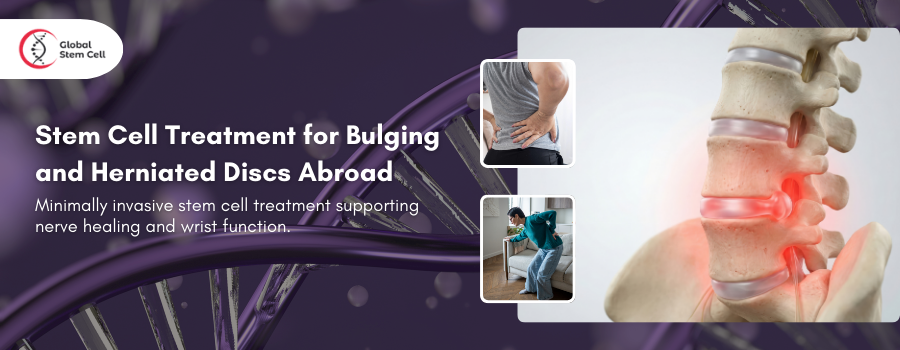
Stem Cell Treatment for Bulging and Herniated Discs is a form of regenerative medicine designed to repair the structural damage of the intervertebral discs. To understand how it works, one must first understand the anatomy of the spine. The discs act as shock absorbers between the vertebrae. They consist of a tough outer layer (annulus fibrosus) and a gel-like center (nucleus pulposus). When a disc herniates or bulges, the outer layer tears or weakens, allowing the inner gel to push out and compress nearby nerves, causing severe pain, numbness, and sciatica.
The Mechanism of Regeneration
This therapy utilizes Mesenchymal Stem Cells (MSCs), which are known for their potent anti-inflammatory and regenerative properties. When undergo Stem Cell Treatment for Bulging and Herniated Discs Abroad, these cells are precisely injected into the damaged disc. The mechanism of action includes:
- Anti-Inflammatory Response: The immediate benefit is a drastic reduction in inflammation around the nerve roots, providing pain relief.
- Paracrine Signaling: The introduced stem cells release growth factors and cytokines that signal the body’s own repair mechanisms to wake up and target the injury.
- Tissue Regeneration: In some cases, the stem cells can differentiate into chondrocyte-like cells, helping to rebuild the cartilage and restore disc height and hydration.
Why “Abroad”? The Scientific Advantage
One of the primary reasons patients seek Stem Cell Treatment for Bulging and Herniated Discs Abroad is the ability to access expanded stem cells. In countries like the United States, regulations often restrict stem cell therapies to “minimally manipulated” cells, meaning the number of stem cells in an injection is limited to what can be harvested in a single sitting. However, in top medical tourism destinations, laboratories are permitted to culture and expand these cells into the millions or even billions. This higher dosage is often critical for effectively treating the avascular (lack of blood supply) environment of the spinal disc.
Who Should Consider Stem Cell Treatment for Bulging and Herniated Discs Abroad?
Not every patient with back pain is suitable for regenerative therapy. However, Stem Cell Treatment for Bulging and Herniated Discs Abroad is often the ideal middle ground for patients who have exhausted conservative therapies but are not ready for—or want to avoid—major spinal surgery.
Primary Indications
The ideal candidates generally exhibit the following profiles:
- Diagnosed Disc Issues: Patients with MRI-confirmed bulging discs, herniated discs, annular tears, or Degenerative Disc Disease (DDD).
- Chronic Pain: Individuals suffering from localized back pain or radicular pain (sciatica) lasting more than three months.
- Failed Conservative Treatment: Patients who have tried physical therapy, chiropractic care, NSAIDs, and epidural steroid injections with little to no lasting relief.
- Desire to Avoid Surgery: Individuals looking to avoid discectomy, laminectomy, or spinal fusion due to the risks of “Failed Back Surgery Syndrome.”
- Functional Mobility: Candidates should be generally healthy enough to travel and undergo a minimally invasive procedure.
Contraindications
While Stem Cell Treatment for Bulging and Herniated Discs Abroad is versatile, it may not be suitable for patients with:
- Active infections or cancer.
- Severe spinal stenosis caused by bone spurs (osteophytes) rather than soft tissue issues.
- Complete collapse of the disc space (bone-on-bone).
- Severe spinal instability (spondylolisthesis) that requires hardware fixation.
Stem Cell Treatment for Bulging and Herniated Discs Abroad Procedure: Step-by-Step
The protocol for Stem Cell Treatment for Bulging and Herniated Discs Abroad varies slightly depending on the clinic and the source of the cells (autologous vs. allogeneic), but the general workflow remains consistent. Here is a detailed breakdown of what patients can expect.
Step 1: Comprehensive Remote Evaluation
Before you even book a flight, the process begins with a telemedicine consultation. You will send your recent MRI scans, X-rays, and medical history to the clinic. A spine specialist will review the imaging to determine if your specific disc pathology is treatable via stem cell injection.
Step 2: Preparation and Harvesting (If Autologous)
If you are using your own cells (Autologous), the first day involves harvesting:
- Bone Marrow Aspiration: Usually taken from the hip bone (iliac crest) under local anesthesia.
- Adipose (Fat) Extraction: A mini-liposuction procedure to harvest fat tissue, which is rich in mesenchymal stem cells.
Note: Many clinics abroad utilize Allogeneic cells (from donor umbilical cord tissue/Wharton’s Jelly). In this case, no harvesting is required, sparing the patient the pain of extraction.
Step 3: Laboratory Processing
The harvested tissue or donor cells are processed in an onsite GMP-certified laboratory. This step is crucial. The goal is to concentrate the stem cells and, in many international clinics, expand them to reach therapeutic counts (e.g., 50 million to 100 million cells per treatment protocol).
Step 4: The Injection Procedure
This is the core of Stem Cell Treatment for Bulging and Herniated Discs Abroad. It is an outpatient procedure performed under sterile conditions.
- Anesthesia: Local anesthesia is applied to the skin and muscle tissues. Light sedation (twilight sedation) may be used to keep the patient comfortable.
- Fluoroscopic Guidance: The physician uses a C-arm fluoroscope (live X-ray) to guide a thin needle precisely into the center of the affected disc(s).
- Administration: The concentrated stem cells, often mixed with Platelet Rich Plasma (PRP) to act as a scaffold, are injected directly into the disc and sometimes into the surrounding facet joints and ligaments to strengthen the entire spinal structure.
Step 5: Post-Procedure Recovery
After the injection, patients are monitored for a few hours. Most are discharged the same day. The recovery involves resting for 24 to 48 hours before flying home. Light walking is encouraged, but strenuous lifting or twisting is prohibited for several weeks.
Benefits of Stem Cell Treatment for Bulging and Herniated Discs Abroad
Choosing regenerative medicine over traditional surgery offers a multitude of advantages, particularly when performed by experienced international specialists.
- Minimally Invasive: There are no large incisions, no removal of bone, and no hardware implementation. This preserves the natural anatomy of the spine.
- Faster Recovery: Unlike spinal fusion, which can take 6 to 12 months for full recovery, most stem cell patients return to light daily activities within a week and full activity within 6 to 8 weeks.
- Addressing the Root Cause: Medication masks pain; stem cells attempt to repair the damaged tissue responsible for the pain.
- Access to High-Potency Cells: Going abroad allows access to expanded mesenchymal stem cells derived from umbilical cord tissue, which are younger, more potent, and available in higher dosages than what is typically available in highly restricted markets.
- Cost-Effectiveness: Even with travel expenses, the total cost is often significantly lower than the out-of-pocket costs or deductibles associated with spinal surgery in countries like the US.
Risks of Stem Cell Treatment for Bulging and Herniated Discs Abroad
While generally considered safe, Stem Cell Treatment for Bulging and Herniated Discs Abroad is a medical procedure and carries inherent risks.
- Temporary Pain Flare: It is common to experience increased soreness at the injection site or in the disc for a few days post-procedure as the cells stimulate an inflammatory healing response.
- Infection: There is a very slight risk of infection (discitis) whenever a needle enters the spine. Reputable clinics use strict sterile protocols to mitigate this.
- Variable Results: Regenerative medicine is not a “magic bullet.” The degree of healing varies by patient age, severity of the condition, and lifestyle factors.
- Standardization: Regulations vary by country. It is vital to choose clinics that adhere to international standards for cell processing and sterility.
Why Travel for Stem Cell Treatment for Bulging and Herniated Discs Abroad?
Medical tourism for spinal regeneration has exploded in popularity. Patients travel not just for lower prices, but for better options. The ability to legally administer hundreds of millions of expanded umbilical cord stem cells is a primary driver for choosing Stem Cell Treatment for Bulging and Herniated Discs Abroad.
Top Destinations
Mexico (Tijuana, Guadalajara, Mexico City)
Mexico is the leading destination for North American patients. Clinics in Tijuana and Guadalajara are state-of-the-art, often partnered with US biotech companies. They specialize in high-dose umbilical cord protocols. Stem cell clinics in Mexico for back pain often offer all-inclusive packages including transport and accommodation.
Colombia (Medellin, Bogota)
Colombia has become a hub for biotechnology in Latin America. The healthcare system is ranked highly by the WHO. Doctors here are often US or Europe-trained. Stem cell therapy for herniated discs in Colombia is known for its personalized approach and incredibly affordable pricing.
Thailand (Bangkok)
For those in Asia or Australia, Thailand is the premier choice. Bangkok boasts JCI-accredited hospitals that rival five-star hotels. Medical tourism in Thailand combines advanced regenerative labs with a relaxing recovery environment, which is conducive to healing.
Germany
Germany offers highly regulated, precision-based medicine. While more expensive than Latin America or Asia, it is often cheaper than the US. German clinics often focus on autologous blood-derived therapies and intricate orthobiologics.
Cost Comparison
The cost of Stem Cell Treatment for Bulging and Herniated Discs Abroad is generally 40% to 70% lower than comparable (though often restricted) treatments in the United States or Canada.
| Country | Estimated Cost Range (USD) | Notes |
|---|---|---|
| United States | $15,000 – $50,000+ | Often restricted cell counts; usually not covered by insurance. |
| Mexico | $5,000 – $12,000 | High-dose expanded cells allowed; inclusive packages. |
| Colombia | $4,000 – $10,000 | Very affordable high-quality care. |
| Thailand | $7,000 – $15,000 | Combines treatment with luxury wellness recovery. |
| Turkey | $5,000 – $9,000 | Excellent value; hub for European/Middle Eastern patients. |
How to Plan for a Stem Cell Treatment for Bulging and Herniated Discs Abroad Medical Tourism Trip
Traveling for a spinal procedure requires careful planning to ensure a smooth experience and optimal recovery. Here is your checklist for organizing Stem Cell Treatment for Bulging and Herniated Discs Abroad.
- Gather Medical Records: Ensure you have high-quality digital copies of your MRI (Magnetic Resonance Imaging) scans from within the last 6 months. This is the most critical tool for the doctor to evaluate your candidacy.
- Consultation & Verification: Schedule video consultations with potential clinics. Ask about the source of stem cells, the doctor’s experience with spinal injections, and verify clinic accreditation.
- Travel Logistics: Book flights that allow for flexibility. If possible, book “lie-flat” seats or extra legroom for the return flight to ensure comfort. Arrange for a travel companion to assist you with luggage.
- Visa Requirements: Check if your destination requires a medical visa or a standard tourist visa.
- Accommodation: Choose a hotel or recovery house recommended by the clinic. Ensure it has elevators and accessible bathrooms.
- Post-Treatment Plan: Plan for at least 2-3 days of rest in the destination country before flying back. Pressure changes in cabins can be uncomfortable immediately after spinal procedures.
- Diet and Supplements: Stop smoking and limit alcohol weeks before the trip. Some doctors recommend anti-inflammatory supplements (like Turmeric or Omega-3) leading up to the procedure.
Frequently Asked Questions
How long does the pain relief last after Stem Cell Treatment for Bulging and Herniated Discs Abroad?
While results vary, many patients experience relief that lasts for years. Unlike steroid injections that wear off in weeks, stem cell therapy aims to repair tissue. If the disc regenerates successfully, the relief can be long-term, provided the patient maintains a healthy lifestyle and core strength.
Is the procedure painful?
The injection itself is performed under local anesthesia and fluoroscopic guidance, so discomfort is minimal during the procedure. Patients often report a feeling of pressure when the fluid enters the disc. Post-procedure soreness is common for 2 to 3 days but is manageable with over-the-counter medication.
Can I fly immediately after Stem Cell Treatment for Bulging and Herniated Discs Abroad?
It is generally recommended to wait 48 to 72 hours before flying. This allows the initial inflammatory response to settle and ensures that you are comfortable enough to sit for the duration of the flight.
What is the success rate of stem cell therapy for herniated discs?
Clinical data and patient outcomes suggest a success rate ranging between 70% and 85% for eligible candidates. “Success” is defined as a significant reduction in pain and improvement in function, preventing the need for surgery.
Will I need more than one treatment?
Most patients achieve their desired results with a single, high-dose treatment (especially when using expanded cells abroad). However, in severe cases of degenerative disc disease, a “booster” treatment may be recommended 6 to 12 months later.
Get Started with Stem Cell Treatment for Bulging and Herniated Discs Abroad Today
Don’t let chronic back pain control your life any longer. Discover affordable, high-quality regenerative options that can help you avoid surgery and return to the activities you love.
Contact us for a personalized consultation, free quotes, and detailed information on the best clinics for your specific needs.
“`