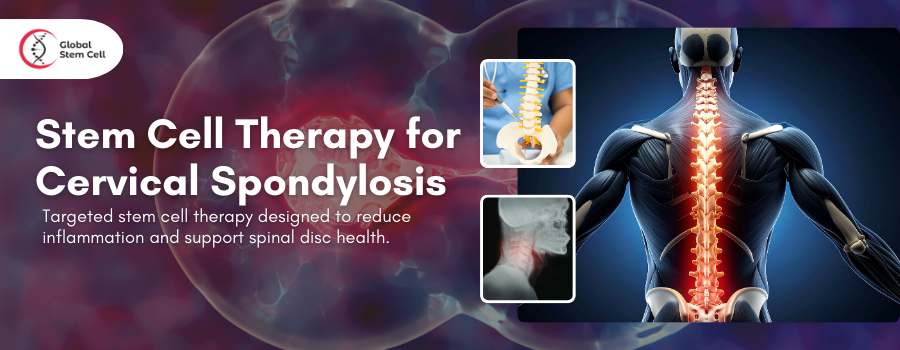
Chronic neck pain is a debilitating condition that affects millions of individuals worldwide, often severely impacting the quality of life, productivity, and general well-being. As we age, the wear and tear on the cervical spine—the seven vertebrae in the neck—can lead to a condition known as cervical spondylosis. Traditionally, treatments have been limited to pain management through medication, physical therapy, or invasive surgical procedures like spinal fusion. However, the landscape of orthopedic medicine is shifting dramatically with the advent of regenerative medicine.
Stem Cell Therapy for Cervical Spondylosis represents a paradigm shift in how we approach spinal degeneration. Rather than merely masking symptoms or fusing bones together, this innovative treatment aims to address the root cause of the pathology: tissue degeneration. By harnessing the body’s own repair mechanisms or utilizing potent donor cells, this therapy seeks to regenerate damaged cartilage, reduce chronic inflammation, and restore function to the cervical spine.
In this comprehensive guide, we will explore the intricacies of Stem Cell Therapy for Cervical Spondylosis, its potential benefits, the procedure process, and why medical tourism hubs are becoming the go-to destinations for patients seeking affordable and advanced regenerative care.
What Is Stem Cell Therapy for Cervical Spondylosis?
To understand Stem Cell Therapy for Cervical Spondylosis, one must first understand the condition it treats. Cervical spondylosis is essentially osteoarthritis of the neck. It involves the dehydration and shrinkage of intervertebral discs and the formation of bone spurs (osteophytes) on the vertebrae. This leads to friction, inflammation, and potential nerve compression.
Stem Cell Therapy for Cervical Spondylosis is a cutting-edge regenerative procedure designed to halt this degenerative cascade and promote tissue repair. The therapy utilizes stem cells—undifferentiated cells with the unique ability to transform into specialized cell types and modulate the immune system.
The Mechanism of Action
When applied to cervical spondylosis, stem cells function through two primary mechanisms:
- Paracrine Effect: The injected stem cells release growth factors and cytokines. These biological signals act as strong anti-inflammatories, reducing the swelling around compressed nerves and alleviation pain.
- Differentiation and Regeneration: Mesenchymal Stem Cells (MSCs), the type most commonly used, have the potential to differentiate into chondrocytes (cartilage cells) and osteoblasts (bone cells). This aids in repairing the structural integrity of the spinal discs and facet joints.
Unlike steroid injections, which can degrade tissue over time, Stem Cell Therapy for Cervical Spondylosis promotes an anabolic (building) environment within the cervical spine, encouraging natural healing processes that the body struggles to perform on its own in avascular areas like spinal discs.
Who Should Consider Stem Cell Therapy for Cervical Spondylosis?
Not every patient with neck pain is an immediate candidate for regenerative medicine. The ideal profile for Stem Cell Therapy for Cervical Spondylosis usually involves individuals who are in the mild to moderate stages of degeneration or those who wish to avoid major surgery.
The Ideal Candidate Profile
You may be a suitable candidate for this procedure if you experience the following:
- Chronic Neck Pain: Persistent pain in the neck that may radiate into the shoulders or arms, lasting for more than three to six months.
- Failed Conservative Treatment: You have tried physical therapy, chiropractic care, NSAIDs (anti-inflammatory medications), and lifestyle modifications with little to no lasting relief.
- Radiological Evidence: MRI or X-ray confirmation of disc degeneration, facet joint arthritis, or mild spinal stenosis without severe spinal cord compression (myelopathy).
- Desire to Avoid Surgery: You are looking for alternatives to invasive surgeries like Anterior Cervical Discectomy and Fusion (ACDF) or disc replacement, which carry longer recovery times and higher risks.
- Good General Health: Candidates should not have active infections, active cancer, or severe bleeding disorders.
Patients with severe spinal instability or complete collapse of the disc space may require surgical intervention before or instead of stem cell therapy. A thorough evaluation by a specialist is required to determine eligibility for Stem Cell Therapy for Cervical Spondylosis.
Stem Cell Therapy for Cervical Spondylosis Procedure: Step-by-Step
Understanding the procedural workflow can help alleviate anxiety and prepare you for your medical journey. While protocols may vary slightly between clinics in medical tourism destinations like Mexico, Germany, or Thailand, the core steps of Stem Cell Therapy for Cervical Spondylosis generally follow this trajectory.
1. Comprehensive Consultation and Diagnostics
The journey begins with a detailed medical evaluation. This includes a review of your medical history, physical examination, and analysis of imaging studies (MRI/CT scans). The medical team determines the source of the pain—whether it is discogenic (from the disc), facetogenic (from the joints), or neurogenic (nerve-related).
2. Stem Cell Source Selection
Depending on the clinic’s protocol and local regulations, stem cells may be sourced from:
- Autologous Adipose Tissue: Stem cells are harvested from your own body fat via a mini-liposuction procedure.
- Autologous Bone Marrow: Stem cells are aspirated from your hip bone (iliac crest).
- Allogeneic Sources: High-potency stem cells derived from ethically sourced umbilical cord tissue or Wharton’s jelly (common in international clinics due to higher cell counts and vitality).
3. Harvesting and Processing
If autologous cells are used, the doctor extracts the tissue (fat or marrow). The sample is then processed in a laboratory to separate and concentrate the Mesenchymal Stem Cells (MSCs). If allogeneic cells are used, the cells are thawed from cryopreservation and prepared for injection.
4. Injection and Administration
This is the critical phase of Stem Cell Therapy for Cervical Spondylosis. Under the guidance of fluoroscopy (live X-ray) or ultrasound to ensure pinpoint accuracy, the concentrated stem cells are injected directly into the target areas. These areas usually include:
- The cervical facet joints.
- The intervertebral discs.
- The surrounding ligaments and muscles to strengthen the support structure.
5. Post-Procedure Recovery
The procedure is minimally invasive and typically performed on an outpatient basis. Patients are monitored for a short period to ensure no immediate adverse reactions occur. Most patients can leave the clinic the same day.
Benefits of Stem Cell Therapy for Cervical Spondylosis
The growing popularity of Stem Cell Therapy for Cervical Spondylosis is driven by its potential to offer long-term relief without the trauma of surgery. Here are the key benefits patients report:
- Regenerative Healing: Unlike painkillers that mask symptoms, stem cells work to repair the damaged cartilage and tissues, addressing the structural cause of the pain.
- Significant Pain Reduction: The potent anti-inflammatory properties of stem cells can drastically reduce chronic inflammation, providing relief from neck stiffness and radiating pain.
- Minimally Invasive: The procedure involves needle injections rather than scalpels, hardware, or bone removal. This preserves the natural anatomy of the spine.
- Reduced Recovery Time: While spinal surgery can require months of rehabilitation, patients undergoing stem cell therapy often return to light daily activities within a few days.
- Increased Range of Motion: By reducing joint friction and regenerating tissue, many patients experience improved flexibility and movement in the neck.
- Avoidance of General Anesthesia: Many stem cell procedures are performed using local anesthesia and mild sedation, reducing the risks associated with general anesthesia.
Risks of Stem Cell Therapy for Cervical Spondylosis
While Stem Cell Therapy for Cervical Spondylosis is generally considered safe, especially when compared to spinal surgery, it is a medical procedure and carries certain risks. Being informed helps in managing expectations.
- Injection Site Discomfort: Mild pain, swelling, or bruising at the injection or harvest site is common but typically resolves within a few days.
- Infection: As with any procedure involving needle penetration, there is a very slight risk of introducing an infection into the spine or soft tissue. Top clinics use strict sterile protocols to minimize this.
- Variable Results: Regenerative medicine affects every individual differently. While many see significant improvement, some patients may experience minimal change. Success depends on the severity of the condition and the patient’s biological response.
- Immune Reaction: In cases using donor (allogeneic) cells, there is a theoretical risk of immune reaction, though MSCs are generally considered “immune-privileged” and rejection is extremely rare.
- Nerve Damage: Although rare, needle placement near spinal nerves carries a small risk of nerve injury. This underlines the importance of choosing highly experienced specialists utilizing image guidance.
Why Travel for Stem Cell Therapy for Cervical Spondylosis?
Medical tourism for regenerative medicine has exploded in popularity. Patients from North America and Western Europe often travel abroad for Stem Cell Therapy for Cervical Spondylosis for three primary reasons: Cost, Access, and Quality.
Advanced Regulations and Higher Cell Counts
In countries like the US, regulations regarding stem cell expansion (growing cells in a lab to increase their numbers) are strict. However, in destinations like Mexico, Panama, and Thailand, clinics are often permitted to culture cells, allowing for therapeutic doses that are significantly higher (often 50 million to 100 million cells) than what is standard in strictly regulated markets. This higher dosage often correlates with better clinical outcomes for conditions like cervical spondylosis.
Top Destinations for Stem Cell Therapy
Mexico (Tijuana, Guadalajara, Cancun): Mexico is the leading destination for Americans seeking stem cell therapy. The proximity, high standards of private hospitals, and availability of expanded mesenchymal stem cells make it a top choice. Stem Cell Therapy for Cervical Spondylosis in Mexico is often combined with functional medicine approaches.
Thailand (Bangkok, Phuket): Thailand is Asia’s medical tourism hub. Hospitals here are JCI-accredited and offer luxurious service. Stem Cell Therapy for Cervical Spondylosis in Thailand often includes comprehensive wellness packages.
Turkey (Istanbul): Offering a bridge between Europe and Asia, Turkey provides high-quality medical care at competitive prices. Stem Cell Therapy for Cervical Spondylosis in Turkey draws patients from the UK, Middle East, and Europe.
Colombia (Medellin, Bogota): Colombia has rapidly advanced in the field of biotechnology and offers excellent regenerative treatments.
Cost Comparison: Stem Cell Therapy for Cervical Spondylosis
The cost of stem cell therapy varies based on the cell source, cell count, and the number of injections required. Below is an estimated cost comparison for medical tourists.
| Country | Estimated Cost Range (USD) | Why Choose This Destination? |
|---|---|---|
| United States | $8,000 – $25,000+ | Convenience, but restricted cell expansion protocols. |
| Mexico | $3,500 – $8,500 | High cell counts allowed, proximity to US, experienced specialists in Tijuana/Cancun. |
| Thailand | $5,000 – $10,000 | World-class JCI hospitals, combines therapy with luxury vacation. |
| Turkey | $4,000 – $7,000 | Excellent healthcare infrastructure, affordable flights from Europe. |
| Colombia | $3,000 – $6,500 | Rising biotech hub, highly affordable accommodation. |
| Germany | $9,000 – $14,000 | Rigorous safety standards, advanced research facilities. |
Note: Prices are estimates and depend on the specific treatment protocol (e.g., number of cells administered).
How to Plan for a Stem Cell Therapy for Cervical Spondylosis Medical Tourism Trip
Traveling for medical treatment requires careful planning to ensure safety and success. Here is a checklist to help you organize your trip for Stem Cell Therapy for Cervical Spondylosis.
- Research and Verify Clinics: Look for clinics with international accreditation (JCI, ISO). Read patient testimonials specifically regarding neck and spine treatments.
- Virtual Consultation: Schedule a video call with the doctor. Ask about their experience with cervical spondylosis, the type of stem cells used (autologous vs. allogeneic), and the cell count.
- Medical Records: Gather your recent MRI scans, X-rays, and medical history reports. You will need to send these to the international clinic for assessment.
- Travel Logistics: Check visa requirements for the destination country. Book flights that allow flexibility in case you need extra recovery time.
- Accommodation: Book a hotel near the clinic. Ensure the hotel has elevators and comfortable bedding, as your neck may be sensitive post-procedure.
- Post-Treatment Plan: Discuss the rehabilitation protocol with the clinic. Will you need physical therapy upon returning home? Ask for a written report of the procedure to give to your local doctor.
- Companion: It is highly recommended to travel with a companion who can assist you with luggage and transportation immediately after the procedure.
Frequently Asked Questions
Is Stem Cell Therapy for Cervical Spondylosis painful?
Most patients report minimal discomfort. The procedure is usually performed under local anesthesia, and sometimes mild sedation is used. You may feel pressure during the injection, and the area may be sore for 24 to 48 hours afterward, but this is generally manageable with over-the-counter pain relief.
How long does it take to see results from Stem Cell Therapy for Cervical Spondylosis?
Regeneration is a biological process that takes time. While the anti-inflammatory effects (pain reduction) may be felt within a few weeks, tissue repair continues for months. Most patients report significant improvements between 3 to 6 months post-treatment.
How many treatments will I need?
Many patients achieve satisfactory results with a single treatment session that delivers a high volume of stem cells. However, depending on the severity of the degeneration, a booster treatment may be recommended 6 to 12 months later. Your specialist will outline a personalized plan.
Can I fly home immediately after the procedure?
While the procedure is outpatient, most doctors recommend waiting 2 to 3 days before flying. This allows the medical team to monitor for any immediate side effects and ensures you are comfortable enough for travel.
Are the results permanent?
While stem cell therapy can repair tissue and reverse damage, it does not stop the natural aging process. The results can last for several years, often delaying or eliminating the need for surgery. Maintenance of a healthy lifestyle and proper posture extends the longevity of the results.
Is Stem Cell Therapy for Cervical Spondylosis covered by insurance?
In most countries, including the US and UK, stem cell therapy for orthopedic conditions is considered experimental and is not covered by standard health insurance. This is a primary reason why patients seek affordable options abroad through medical tourism.
Get Started with Stem Cell Therapy for Cervical Spondylosis Today
Don’t let neck pain control your life. Explore the possibilities of regenerative medicine and discover affordable, high-quality options globally. Contact us for a personalized consultation and pricing options for your Stem Cell Therapy for Cervical Spondylosis treatment.