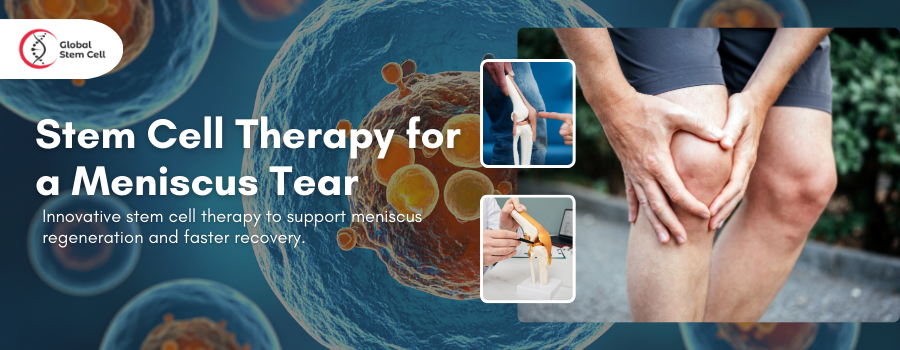
The meniscus is a C-shaped piece of tough, rubbery cartilage that acts as a shock absorber between your shinbone and thighbone. It plays a critical role in joint stability and load distribution. However, once damaged, the meniscus is notoriously difficult to heal naturally. This is largely due to poor blood supply, specifically in the inner two-thirds of the meniscus, known as the “white zone.” Without adequate blood flow, the body cannot transport the necessary growth factors and cells to repair the tear. This is where Stem Cell Therapy for a Meniscus Tear revolutionizes orthopedic care.
Stem Cell Therapy for a Meniscus Tear is a form of regenerative medicine designed to repair damaged cartilage without the need for invasive surgery like a partial meniscectomy. Instead of removing the damaged tissue—which can lead to osteoarthritis later in life—this therapy utilizes the body’s own potent building blocks to reconstruct the injured area. The procedure involves harvesting mesenchymal stem cells (MSCs) from the patient’s body (autologous) or using donor cells (allogeneic) and introducing them directly into the knee joint.
Once injected, these stem cells do not just passively sit in the joint. They initiate a “paracrine effect,” releasing signaling proteins and growth factors that reduce inflammation, prevent cell death (apoptosis), and stimulate existing cells to regenerate cartilage tissue. This biological boost helps bridge the gap in the meniscus tear, promoting structural integrity and restoring function to the knee. By choosing Stem Cell Therapy for a Meniscus Tear, patients are opting for a preservation strategy that aims to maintain the natural anatomy of the knee rather than altering it surgically.
Ideal Candidates for Stem Cell Therapy for a Meniscus Tear
Not every knee injury requires surgery, but not every injury heals on its own. Identifying who is best suited for regenerative medicine is the first step toward recovery. The ideal candidates for Stem Cell Therapy for a Meniscus Tear are typically individuals looking for alternatives to traditional orthopedic surgery or those who have exhausted conservative treatments without success.
You may be a prime candidate for this procedure if:
- You Suffer from Persistent Knee Pain: You have chronic pain resulting from a diagnosed meniscus tear that limits your daily activities, sports, or work.
- Conservative Treatments Have Failed: You have tried physical therapy, rest, icing, and anti-inflammatory medications (NSAIDs) for several months with little to no improvement.
- You Want to Avoid Surgery: You wish to avoid the downtime, anesthesia risks, and potential long-term complications associated with arthroscopic meniscectomy or meniscus repair surgery.
- You Have “White Zone” Tears: You have been told your tear is in the avascular zone (white zone) of the meniscus, where surgical repair is often not recommended, and removal is the standard—but destructive—option.
- You Are an Athlete or Active Individual: You want to return to high-impact sports or an active lifestyle faster than surgical rehabilitation would allow.
- You Have Early-Stage Arthritis: Often, a meniscus tear is accompanied by mild osteoarthritis. Stem Cell Therapy for a Meniscus Tear can simultaneously address the cartilage degradation of arthritis while treating the tear.
Conversely, patients with complete mechanical blockages (locked knee) due to a bucket-handle tear or those with active infections or blood-borne cancers may need to explore different medical avenues. A thorough evaluation by a regenerative medicine specialist is essential.
Comprehensive Step-by-Step Guide to Stem Cell Therapy for a Meniscus Tear
One of the primary advantages of this treatment is its simplicity compared to surgery. However, it is a highly technical medical procedure that requires precision. Here is a detailed breakdown of what patients can expect during Stem Cell Therapy for a Meniscus Tear.
Step 1: The Initial Consultation and Diagnostic Imaging
Before any treatment begins, a rigorous evaluation takes place. This involves a physical examination of the knee to check for range of motion, swelling, and specific pain points. Advanced imaging, usually an MRI (Magnetic Resonance Imaging), is required to locate the exact size and type of the meniscus tear. The physician will also review your medical history to ensure you are healthy enough for the procedure.
Step 2: Harvesting the Stem Cells
If the procedure is autologous (using your own cells), the next step is harvesting. There are two common sources:
- Bone Marrow Aspiration: The doctor numbs the back of the hip and uses a specialized needle to draw a small amount of bone marrow, which is rich in mesenchymal stem cells.
- Adipose (Fat) Tissue Extraction: Using a mini-liposuction technique, a small amount of fat is taken, usually from the abdomen or flank, as adipose tissue is a dense source of stem cells.
If the therapy uses allogeneic cells (from a donor, typically umbilical cord tissue), this harvesting step is skipped, and the pre-screened, cryopreserved cells are thawed for use.
Step 3: Processing and Concentration
The harvested tissue is placed in a high-speed centrifuge. This machine spins the sample rapidly to separate the stem cells and platelets from red blood cells and other unnecessary fluids. The result is a highly concentrated serum of stem cells and growth factors, sometimes referred to as Bone Marrow Concentrate (BMC) or Stromal Vascular Fraction (SVF).
Step 4: Precision Injection
This is the most critical part of Stem Cell Therapy for a Meniscus Tear. The physician cleans the knee area and applies a local anesthetic. Using ultrasound guidance or fluoroscopy (real-time X-ray), the doctor visualizes the needle entering the joint capsule. This ensures the stem cells are delivered precisely into or immediately adjacent to the torn meniscus. Accuracy here is paramount for maximum efficacy.
Step 5: Post-Procedure Recovery
The injection process typically takes less than an hour. Patients are monitored for a short period and then discharged the same day. There is no need for crutches in most cases, though strenuous activity must be avoided for a specific period to allow the cells to attach and begin the healing process.
Benefits and Risks of Stem Cell Therapy for a Meniscus Tear
Like any medical intervention, it is vital to weigh the pros and cons. Stem Cell Therapy for a Meniscus Tear offers a biological approach to healing that differs significantly from the mechanical approach of surgery.
Key Benefits
- Regenerative Healing: Unlike surgery that removes tissue, this therapy encourages the regrowth and repair of the meniscus structure, potentially preserving the knee’s shock-absorbing capability for the long term.
- Minimally Invasive: The procedure involves only needle injections. There are no large incisions, no stitches, and no significant scarring.
- Rapid Recovery Profile: Most patients walk out of the clinic the same day. Return to work is often immediate for sedentary jobs, and return to sports happens weeks or months sooner than after surgical repair.
- Reduced Risk of Future Arthritis: By preserving the meniscus tissue rather than removing it (meniscectomy), the risk of developing rapid-onset osteoarthritis is significantly lowered.
- Natural Pain Relief: The anti-inflammatory properties of stem cells provide significant pain reduction, allowing patients to reduce or eliminate reliance on pain medications.
Possible Risks and Side Effects
- Injection Site Discomfort: Mild pain, swelling, or stiffness at the injection site or the harvesting site (hip/abdomen) is common for a few days post-procedure.
- Risk of Infection: Although extremely rare due to sterile techniques, introducing a needle into a joint always carries a slight risk of septic arthritis or superficial infection.
- Variable Results: Regenerative medicine affects every individual differently. Age, severity of the tear, and overall health can influence the outcome. Not all patients achieve 100% regeneration.
- Immune Reaction (Allogeneic only): If using donor cells, there is a theoretical risk of immune rejection, though mesenchymal stem cells are considered “immune-privileged” and rejection is very rare.
Why Travel for Stem Cell Therapy for a Meniscus Tear?
Medical tourism for regenerative medicine has exploded in popularity. Patients from North America and Europe often travel abroad for Stem Cell Therapy for a Meniscus Tear for two main reasons: cost-effectiveness and regulatory freedom.
In countries like the United States, regulations on stem cell culturing (expanding cell count in a lab) are strict, often limiting treatments to lower cell counts derived from same-day procedures. However, top medical tourism destinations often allow for advanced cell culturing techniques, providing treatments with significantly higher potency (millions of cells vs. thousands) under strict safety protocols. Furthermore, the cost of operating a medical facility in these countries is lower, allowing savings to be passed on to the patient.
Top Destinations for Meniscus Repair
Mexico: Cities like Tijuana, Cancun, and Guadalajara are leaders in this field. Clinics here often employ US-trained physicians and offer Stem Cell Therapy for a Meniscus Tear in Mexico at a fraction of US prices. The proximity makes it an easy trip for North American patients.
Thailand: Bangkok and Phuket are world-renowned for combining luxury hospitality with medical excellence. Stem Cell Therapy for a Meniscus Tear in Thailand is often performed in JCI-accredited hospitals that rival the best in the West.
Colombia: Bogota and Medellin have emerged as hubs for biotechnology. Stem Cell Clinics in Colombia offer advanced regenerative protocols and are becoming a favorite for patients seeking high-quality care in South America.
Turkey: Known for medical tourism infrastructure, Stem Cell Therapy for a Meniscus Tear in Turkey offers a blend of European medical standards and affordable pricing, making it ideal for patients from the UK and EU.
Global Cost Comparison
The following table illustrates the estimated cost savings when traveling for this procedure. Prices typically include the consultation, the procedure, and sometimes airport transfers.
| Country | Procedure Name | Average Cost (USD) | Savings vs. USA |
|---|---|---|---|
| USA | Stem Cell Therapy for a Meniscus Tear | $5,000 – $10,000+ | N/A |
| Mexico | Stem Cell Therapy for a Meniscus Tear | $2,500 – $4,500 | 50% – 60% |
| Thailand | Stem Cell Therapy for a Meniscus Tear | $3,000 – $5,500 | 40% – 50% |
| Turkey | Stem Cell Therapy for a Meniscus Tear | $2,500 – $4,000 | 50% – 60% |
| Colombia | Stem Cell Therapy for a Meniscus Tear | $2,000 – $4,000 | 60% – 70% |
| Germany | Stem Cell Therapy for a Meniscus Tear | $6,000 – $9,000 | 10% – 20% |
How to Plan for a Stem Cell Therapy for a Meniscus Tear Medical Tourism Trip
Traveling for medical care requires careful planning to ensure a safe and stress-free experience. Use this checklist to prepare for your trip abroad.
- Gather Medical Records: Obtain your most recent MRI scans (digital files) and X-rays of your knee. The international clinic will need these to confirm you are a candidate for Stem Cell Therapy for a Meniscus Tear before you fly.
- Verify Clinic Credentials: Research the clinic’s accreditations (such as JCI or ISO) and the doctor’s background. Look for specialists in orthopedics and regenerative medicine.
- Virtual Consultation: Schedule a video call with the doctor. Ask specifically about their experience with meniscus tears and the type of stem cells they use (Bone Marrow vs. Adipose vs. Umbilical).
- Travel Logistics: Book flights that allow for legroom, as you may need to stretch your leg post-procedure. Arrange accommodation near the clinic to minimize travel time immediately after the injection.
- Post-Treatment Plan: Ask the clinic for a rehabilitation protocol. You need to know when you can walk, when you can fly back home, and what exercises you should do.
- Pack Essentials: Bring loose-fitting pants or shorts that allow easy access to the knee, any knee braces you currently use, and your medical history documents.
Frequently Asked Questions About Stem Cell Therapy for a Meniscus Tear
Can Stem Cell Therapy for a Meniscus Tear heal a fully detached meniscus?
Stem cell therapy is most effective for partial tears, degenerative tears, and tears within the vascular zones. If the meniscus is fully detached or has flipped (bucket handle tear) causing the knee to lock, surgery may be required to reposition it before stem cells can be used to aid healing.
How many treatments will I need?
Many patients experience significant relief after a single session of Stem Cell Therapy for a Meniscus Tear. However, depending on the severity of the damage and the body’s response, a booster injection or a series of Platelet-Rich Plasma (PRP) injections may be recommended 4 to 6 weeks later.
Is the procedure painful?
The procedure is generally well-tolerated. Local anesthesia is used to numb the harvesting site and the injection site. Most patients report a feeling of pressure in the knee during the injection but minimal acute pain. Post-procedure soreness is common but manageable with over-the-counter pain relief.
How long does it take to see results?
Stem cell therapy is a biological process, not a mechanical fix. While the anti-inflammatory effects may reduce pain within 1 to 2 weeks, actual tissue regeneration takes time. Most patients report progressive improvement over 3 to 6 months following the treatment.
Will insurance cover Stem Cell Therapy for a Meniscus Tear?
In most Western countries, stem cell therapy for orthopedic conditions is considered experimental and is not covered by standard health insurance. This is a primary driver for why patients seek more affordable self-pay options through medical tourism.
Get Started with Stem Cell Therapy for a Meniscus Tear Today
Don’t let knee pain dictate your life. Explore the regenerative potential of advanced medicine. Contact us for a personalized consultation, access to top-rated international clinics, and affordable pricing options for your treatment.