
Chronic back pain affects millions of lives globally, often stemming from the degeneration or rupture of spinal discs. For decades, the primary solutions were masking the pain with medication or undergoing invasive spinal surgery, which carries significant risks and long recovery times. However, the landscape of orthopedic medicine has shifted dramatically with the advent of regenerative medicine. Stem Cell Therapy for a Herniated Disc represents a breakthrough in non-surgical treatment, offering patients the potential to repair damaged tissue rather than simply removing it.
This comprehensive guide explores the science, procedure, benefits, and global availability of Stem Cell Therapy for a Herniated Disc. We will delve into why medical tourism for this procedure is booming in countries like Mexico, Colombia, and Turkey, and how you can access affordable, world-class care.
What Is Stem Cell Therapy for a Herniated Disc?
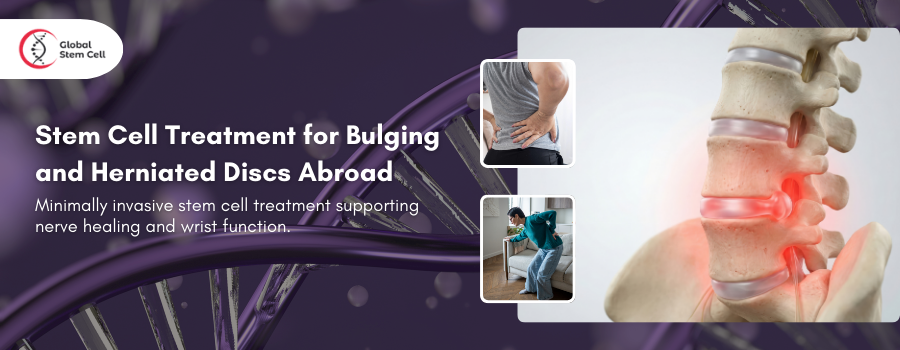
Stem Cell Therapy for a Herniated Disc is a cutting-edge regenerative medical procedure designed to repair the structural damage of a spinal disc using the body’s own healing mechanisms or donor cells. To understand the therapy, one must first understand the injury. A herniated disc occurs when the soft, gel-like center of a spinal disc (the nucleus pulposus) pushes through a tear in the tougher exterior casing (annulus fibrosus). This can irritate nearby nerves, causing intense pain, numbness, or weakness in the arms or legs.
Traditional treatments like microdiscectomy involve removing part of the disc, which can lead to further degeneration or spinal instability over time. In contrast, Stem Cell Therapy for a Herniated Disc aims to restore the disc’s height and hydration while sealing the tears in the outer wall.
How It Works: The Science of Regeneration
The core of this therapy relies on Mesenchymal Stem Cells (MSCs). These are “blank slate” cells that have the unique ability to differentiate into various types of tissue, including cartilage and bone. When applied to Stem Cell Therapy for a Herniated Disc, these cells are injected directly into the affected disc. Once inside, they perform three critical functions:
- Anti-Inflammatory Response: The stem cells release profound anti-inflammatory cytokines that reduce swelling around the compressed nerve roots, providing immediate pain relief.
- Tissue Regeneration: The cells stimulate the growth of new healthy tissue to repair the tears in the annulus fibrosus.
- Rehydration: They help restore the hydrophilic (water-loving) properties of the nucleus pulposus, helping the disc regain height and cushioning ability.
This biologic approach makes Stem Cell Therapy for a Herniated Disc a true alternative to spinal fusion, addressing the root cause of the pain rather than just the symptoms.
Who Should Consider Stem Cell Therapy for a Herniated Disc?
Not every patient with back pain is an automatic candidate for regenerative medicine. The ideal candidates for Stem Cell Therapy for a Herniated Disc are usually individuals who are seeking to avoid the permanence and risks of surgery but have not found relief through conservative methods. Identifying the right candidate is crucial for the high success rates associated with this treatment.
The Ideal Candidate Profile
You may be a suitable candidate for Stem Cell Therapy for a Herniated Disc if you meet the following criteria:
- Diagnosed Disc Herniation: You have a confirmed MRI or CT scan showing a bulging, protruding, or herniated disc in the cervical (neck), thoracic (mid-back), or lumbar (lower back) spine.
- Failed Conservative Treatment: You have tried physical therapy, chiropractic care, NSAIDs, or epidural steroid injections for at least 3 to 6 months with little to no sustained relief.
- Discogenic Pain: Your pain is primarily localized to the spine or radiates down the limbs (radiculopathy/sciatica) and is directly linked to the disc pathology.
- Desire to Avoid Surgery: You are looking for a minimally invasive alternative to surgeries like laminectomy, discectomy, or spinal fusion.
- Active Lifestyle Goals: You wish to return to sports, heavy lifting, or an active lifestyle faster than surgical recovery would allow.
Who Is Not a Candidate?
While versatile, Stem Cell Therapy for a Herniated Disc may not be effective for patients with complete spinal stenosis, severe spinal instability (spondylolisthesis grade 3 or 4), or completely collapsed discs where there is no space left to inject the cells.
Stem Cell Therapy for a Herniated Disc Procedure: Step-by-Step
Understanding the flow of the procedure can alleviate anxiety for patients traveling abroad for treatment. The Stem Cell Therapy for a Herniated Disc is typically an outpatient procedure performed within a single day, although some protocols involving cell culturing may require a few days.
1. Comprehensive Initial Evaluation
Before any needles are used, the medical team performs a rigorous evaluation. This includes reviewing your medical history, blood work, and advanced imaging (MRI/X-ray). In medical tourism hubs, this is often done virtually before you travel, ensuring you are pre-qualified for Stem Cell Therapy for a Herniated Disc.
2. Stem Cell Harvesting (Extraction)
Depending on the protocol used by the clinic, the source of the stem cells will vary:
- Autologous (From Patient): The doctor extracts stem cells from your own body. This is usually done via a bone marrow aspiration (from the hip bone) or a mini-liposuction (adipose tissue from the belly). Both are performed under local anesthesia.
- Allogenic (From Donor): Many international clinics offer umbilical cord tissue stem cells derived from healthy, screened donors. These cells are often more potent and “younger,” requiring no extraction from the patient.
3. Cell Processing and Concentration
If autologous cells are used, the harvested tissue is processed in a centrifuge or a specialized lab onsite. This isolates the Mesenchymal Stem Cells and concentrates them into a powerful biologic injectate. High-quality clinics dealing in Stem Cell Therapy for a Herniated Disc will count the cells to ensure a therapeutic dose (often millions of cells).
4. Fluoroscopic Guided Injection
This is the most critical step. The physician uses a C-Arm fluoroscope (real-time X-ray) to guide a thin needle precisely into the center of the damaged disc. Contrast dye may be used to confirm exact placement. The concentrated stem cells are then injected directly into the herniation and the surrounding facet joints if necessary. Precision is key for the success of Stem Cell Therapy for a Herniated Disc.
5. Post-Procedure Recovery
After the injection, you will rest in a recovery room for 1 to 2 hours. Because no incisions were made, stitches are rarely needed (perhaps a small bandage at the harvest site). Most patients walk out of the clinic on their own. Recovery time is minimal, and many patients can return to light activities within 24 to 48 hours.
Benefits of Stem Cell Therapy for a Herniated Disc
The shift toward regenerative medicine is driven by the substantial benefits it offers over traditional orthopedic surgery. Patients choosing Stem Cell Therapy for a Herniated Disc report high satisfaction rates due to the non-destructive nature of the treatment.
- True Regeneration: Unlike steroid injections that only mask pain, stem cells work to repair the structural integrity of the disc.
- Minimally Invasive: There is no cutting of muscle or removal of bone, leading to significantly less trauma to the body.
- Rapid Recovery: Recovery is measured in days, not months. There is no need for prolonged rehabilitation or hospital stays.
- Reduced Opioid Reliance: Successful treatment reduces chronic pain, allowing patients to stop taking potentially addictive pain medications.
- Avoidance of Adjacent Segment Disease: Spinal fusion often causes stress on discs above and below the fusion site, leading to future surgeries. Stem cell therapy preserves natural spine mechanics, preventing this issue.
Risks of Stem Cell Therapy for a Herniated Disc
While considered extremely safe compared to surgery, Stem Cell Therapy for a Herniated Disc is a medical procedure and carries inherent risks that must be considered.
- Infection: Although rare, there is a risk of infection at the injection site or within the disc (discitis). Sterile technique is paramount.
- Temporary Pain Flare: Some patients experience increased soreness or inflammation at the injection site for a few days post-procedure as the healing process initiates.
- Variable Outcomes: Biological treatments rely on the body’s response. While many find relief, some patients may not experience the desired level of regeneration.
- Nerve Injury: In rare cases, the needle used during injection could graze a nerve root, causing temporary irritation.
Why Travel for Stem Cell Therapy for a Herniated Disc?
Medical tourism for regenerative medicine has exploded in popularity. This is not just about cost; it is about access to treatments that may not be available domestically due to regulatory restrictions. For example, in the United States, regulations strictly limit the manipulation and expansion (culturing) of stem cells. However, international destinations often allow for cell culturing, which allows doctors to administer significantly higher cell counts (up to 100 million+ cells), potentially increasing the efficacy of Stem Cell Therapy for a Herniated Disc.
Top Destinations for Stem Cell Therapy
Patients are flocking to specific hubs known for their advanced biotechnology and orthopedic expertise:
Mexico (Tijuana, Guadalajara, Los Cabos)
Mexico is the leading destination for North Americans seeking Stem Cell Therapy for a Herniated Disc. Clinics in Tijuana and Guadalajara often partner with US-based biotech companies to offer expanded umbilical cord cells at a fraction of the US price.
Colombia (Medellin, Bogota)
Colombia has established itself as a hub for high-quality medicine. The clinics here are renowned for personalized care and advanced protocols for Stem Cell Therapy for a Herniated Disc, often combining stem cells with ozone therapy and physical rehabilitation.
Turkey (Istanbul)
For patients in Europe and the Middle East, Turkey offers JCI-accredited hospitals that provide Stem Cell Therapy for a Herniated Disc using state-of-the-art technology. Istanbul combines luxury medical tourism with affordable regenerative care.
Thailand (Bangkok)
Thailand is a pioneer in Asian medical tourism. Bangkok boasts world-class hospitals offering integrated regenerative medicine packages that include Stem Cell Therapy for a Herniated Disc alongside wellness retreats.
Cost Comparison: Stem Cell Therapy for a Herniated Disc
One of the primary drivers for travel is the cost. In the US, stem cell treatments are rarely covered by insurance and can be prohibitively expensive. Abroad, patients can save between 40% to 70% while receiving a higher dosage of cells.
| Country | Procedure Cost Range (USD) | Notes |
|---|---|---|
| United States | $5,000 – $15,000 | Often limited to lower cell counts; non-expanded cells only. |
| Mexico | $3,500 – $8,500 | Includes high-dose expanded cells (IV + Local). |
| Colombia | $3,000 – $7,000 | Includes accommodation and transport in many packages. |
| Turkey | $4,000 – $9,000 | Performed in JCI-accredited hospitals. |
| Thailand | $5,000 – $10,000 | Comprehensive wellness and rehab packages included. |
| Germany | $9,000 – $14,000 | High regulatory standards; often Autologous focused. |
How to Plan for a Stem Cell Therapy for a Herniated Disc Medical Tourism Trip
Traveling for medical care requires careful planning to ensure safety and success. Here is a checklist to help you prepare for your Stem Cell Therapy for a Herniated Disc abroad:
- Imaging Review: Ensure you have a current MRI (less than 6 months old) and send the digital files to the clinic for a preliminary review. This confirms you are a candidate for Stem Cell Therapy for a Herniated Disc before you buy a plane ticket.
- Clinic Vetting: Research the clinic’s accreditation and the doctor’s experience. Look for specialists who are board-certified in orthopedics, pain management, or regenerative medicine.
- Understand the Protocol: Ask specifically what type of cells (autologous vs. allogenic) will be used, the cell count, and the method of injection (fluoroscopic guidance is a must).
- Travel Logistics: Book flexible flights. While the procedure is outpatient, you should plan to stay at the destination for 3 to 5 days for initial monitoring.
- Stop Anti-Inflammatories: Most doctors will ask you to stop taking NSAIDs (Ibuprofen, Aleve) for a week before and after the procedure, as these can hinder the stem cell efficacy.
- Companion: It is highly recommended to travel with a companion who can assist you immediately after the procedure, as your back may be sore.
Frequently Asked Questions
How long does it take to see results from Stem Cell Therapy for a Herniated Disc?
Unlike steroid injections that work instantly but temporarily, stem cells take time to repair tissue. Most patients undergoing Stem Cell Therapy for a Herniated Disc begin to notice significant pain reduction within 4 to 6 weeks, with continued improvement for up to 6 to 12 months.
Is Stem Cell Therapy for a Herniated Disc covered by insurance?
In most countries, including the US and Canada, this therapy is considered experimental and is not covered by standard health insurance. However, the lower cost of medical tourism packages makes Stem Cell Therapy for a Herniated Disc accessible to self-pay patients.
Can I walk immediately after Stem Cell Therapy for a Herniated Disc?
Yes, you will be able to walk immediately after the procedure. However, it is recommended to take it easy for the first few days. strenuous exercise should be avoided for at least 3 to 4 weeks to allow the cells to settle and begin the healing process.
What is the success rate of Stem Cell Therapy for a Herniated Disc?
Clinical data and patient outcomes vary, but many reputable clinics report success rates (defined as greater than 50% pain reduction and improved function) in the range of 70% to 85% for properly selected candidates.
Is the procedure painful?
Stem Cell Therapy for a Herniated Disc is generally well-tolerated. Local anesthesia is used to numb the skin and tissue. Patients may feel some pressure during the injection into the disc, but it is rarely described as painful. Sedation is often available for anxious patients.
Get Started with Stem Cell Therapy for a Herniated Disc Today
Don’t let back pain control your life any longer. Explore affordable, high-quality regenerative options abroad. Contact us for a personalized consultation, clinic comparisons, and exclusive pricing options for your treatment.