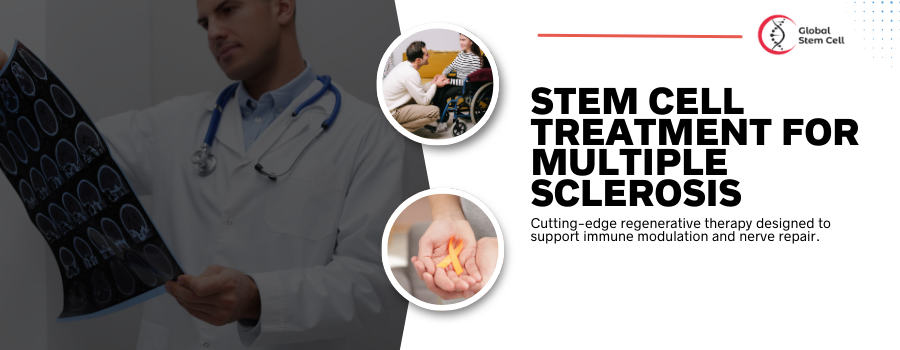
Multiple Sclerosis (MS) is a complex and often debilitating autoimmune disease that affects the central nervous system, disrupting the flow of information within the brain and between the brain and the body. For decades, patients have relied on disease-modifying therapies (DMTs) to manage symptoms and slow progression. However, a revolutionary approach has emerged that goes beyond symptom management: Stem Cell Treatment for Multiple Sclerosis. This regenerative therapy offers new hope for halting disease progression and potentially reversing damage caused to the myelin sheath.
In this comprehensive guide, we will explore the science behind this breakthrough, the types of procedures available, cost analysis across top medical tourism destinations, and how Stem Cell Treatment for Multiple Sclerosis is changing the landscape of neurological care worldwide.
What Is Stem Cell Treatment for Multiple Sclerosis?
Stem Cell Treatment for Multiple Sclerosis is an advanced regenerative medicine protocol designed to reset the immune system and repair the damage inflicted on the nervous system. To understand how this works, one must first understand the pathology of MS. In MS patients, the immune system mistakenly attacks myelin, the protective sheath covering nerve fibers. This causes communication problems between your brain and the rest of your body and can lead to permanent damage or deterioration of the nerves.
Current conventional treatments primarily focus on suppressing the immune system to reduce attacks. However, Stem Cell Treatment for Multiple Sclerosis takes a dual approach:
1. Immunomodulation (Resetting the System)
Certain types of stem cell therapies, particularly Hematopoietic Stem Cell Transplantation (HSCT), aim to “reboot” the faulty immune system. By extracting the patient’s stem cells and then using chemotherapy to wipe out the existing, malfunctioned immune cells, the re-introduced stem cells rebuild a new immune system that no longer attacks the myelin.
2. Neuroregeneration (Repairing the Damage)
Other protocols, such as the use of Mesenchymal Stem Cells (MSCs), focus on repair. These cells have a unique ability to migrate to areas of inflammation and tissue damage. Once there, they release growth factors that promote the repair of the myelin sheath (remyelination) and protect surviving neurons (neuroprotection). This form of Stem Cell Treatment for Multiple Sclerosis is less invasive than HSCT and focuses on restoring function and reducing inflammation.
Types of Stem Cells Used
- Autologous Stem Cells: These are harvested from the patient’s own body (bone marrow, adipose tissue, or peripheral blood). This minimizes the risk of rejection.
- Allogeneic Stem Cells: These are sourced from a healthy donor, often used when the patient’s own cells are not viable.
- Umbilical Cord Tissue Cells: Young, potent cells harvested from donated umbilical cords (Wharton’s Jelly) that have high anti-inflammatory properties.
By targeting the root cause of the autoimmune response and fostering an environment for neural repair, Stem Cell Treatment for Multiple Sclerosis represents the frontier of neurological recovery.
Who Should Consider Stem Cell Treatment for Multiple Sclerosis?
While this therapy offers immense promise, it is not a universal cure for every stage of the disease. Determining candidacy is a crucial step in ensuring safety and efficacy. Generally, Stem Cell Treatment for Multiple Sclerosis is most effective for patients who are in the inflammatory stages of the disease, though recent advancements are showing promise for progressive forms as well.
Ideal Candidates Include:
- Patients with Relapsing-Remitting MS (RRMS): Individuals who experience flare-ups followed by periods of recovery are often the best candidates. The therapy is highly effective in halting these active inflammatory attacks.
- Active Disease Activity: Patients who show evidence of new lesions on MRI scans or active inflammation despite being on standard Disease-Modifying Therapies (DMTs).
- Secondary Progressive MS (SPMS): Patients who have transitioned from RRMS to a progressive stage but still exhibit some inflammatory activity may benefit, particularly from Mesenchymal Stem Cell protocols.
- Primary Progressive MS (PPMS): While harder to treat, some clinics specializing in Stem Cell Treatment for Multiple Sclerosis have developed protocols specifically for PPMS to slow decline and improve quality of life.
- EDSS Score Consideration: The Expanded Disability Status Scale (EDSS) is used to quantify disability in MS. Ideally, candidates should have an EDSS score below 6.0 or 6.5 (meaning they are still ambulatory, perhaps with assistance). However, some compassionate care programs accept higher scores for palliative improvements.
- Failure of Conventional Treatment: Individuals who have not responded well to drugs like Ocrevus, Tysabri, or Interferons often turn to stem cell therapy as a viable alternative.
Who May Not Be Suitable?
Patients with severe, long-standing disability without active inflammation, those with significant comorbidities (heart or kidney failure), or pregnant women are typically not eligible. A thorough evaluation by a medical team specializing in Stem Cell Treatment for Multiple Sclerosis is required to determine eligibility.
Stem Cell Treatment for Multiple Sclerosis Procedure: Step-by-Step
Understanding the procedure helps alleviate anxiety and prepares patients for the journey ahead. While protocols vary depending on whether the patient is receiving HSCT or MSC therapy, the general workflow for Stem Cell Treatment for Multiple Sclerosis involves four main phases.
Step 1: Consultation and Pre-Treatment Evaluation
Before traveling, patients undergo a remote evaluation including a review of medical history, recent MRIs, and blood work. Upon arrival at the clinic, a physical examination is conducted.
Keywords: Stem cell clinics in Mexico, Medical tourism evaluation.
Step 2: Mobilization and Harvesting (Extraction)
The method of extraction depends on the source of the stem cells:
- Bone Marrow Aspiration: Under local anesthesia or sedation, marrow is extracted from the iliac crest (hip bone).
- Adipose (Fat) Tissue Extraction: A mini-liposuction procedure is performed to harvest fat tissue, which is rich in Mesenchymal Stem Cells.
- Peripheral Blood Mobilization: For HSCT, growth factors are administered to stimulate the bone marrow to release stem cells into the bloodstream, which are then collected via apheresis (a process similar to blood donation).
Step 3: Laboratory Processing and Activation
Once harvested, the biological material is sent to a sterile laboratory. Here, the stem cells are isolated, purified, and counted. In some protocols for Stem Cell Treatment for Multiple Sclerosis, the cells are expanded (cultured) to increase their numbers into the millions. They may also be activated with laser technology or growth factors to enhance their regenerative capabilities.
Step 4: Implantation (Administration)
The delivery method is critical for MS treatment to ensure cells reach the Central Nervous System (CNS):
- Intravenous (IV) Infusion: The most common method. Cells are delivered into the bloodstream to address systemic inflammation and modulate the immune system.
- Intrathecal Injection: Also known as a lumbar puncture. Stem cells are injected directly into the spinal canal containing cerebrospinal fluid (CSF). This bypasses the blood-brain barrier, delivering cells directly to the brain and spinal cord where the MS lesions are located.
Step 5: Recovery and Adjunct Therapies
Following the injection, patients are monitored for adverse reactions. Many comprehensive Stem Cell Treatment for Multiple Sclerosis packages include supportive therapies such as physiotherapy, ozone therapy, hyperbaric oxygen therapy, and nutritional counseling to maximize the potency of the stem cells.
Benefits of Stem Cell Treatment for Multiple Sclerosis
The potential improvements from this therapy can be life-changing. While results vary based on the severity of the condition and the patient’s biology, the benefits of Stem Cell Treatment for Multiple Sclerosis are compelling.
- Halting Disease Progression: The primary goal is to stop the immune system from attacking the body. Many patients experience a period of remission where no new lesions form.
- Myelin Regeneration: Unlike drugs that only stop attacks, stem cells have the potential to regenerate damaged myelin, potentially restoring lost functions.
- Reduction in Brain Fog: Cognitive clarity often improves as systemic inflammation decreases.
- Improved Motor Function: Patients frequently report better balance, coordination, and walking ability (gait).
- Bladder and Bowel Control: Restoration of autonomic functions is a commonly reported benefit.
- Energy Levels: A significant reduction in chronic fatigue, a major symptom of MS, allows patients to return to daily activities.
- Long-Term Remission: In HSCT specifically, patients may experience years of remission without the need for ongoing medication.
Risks of Stem Cell Treatment for Multiple Sclerosis
Like any medical procedure, Stem Cell Treatment for Multiple Sclerosis carries risks, which vary significantly between MSC therapy (lower risk) and HSCT (higher risk due to chemotherapy).
- Infection: The risk of infection exists at the injection or catheter site. In HSCT, the immune system is temporarily wiped out, making the patient highly susceptible to infections during the recovery phase.
- Transplant Symptoms: Patients may experience fever, headache, nausea, or dizziness immediately following the administration of cells.
- No Guarantee of Results: While many see improvement, some patients may not respond to the therapy, or the disease may eventually resume progression.
- Cost: Insurance rarely covers stem cell therapy for MS, making the financial risk a consideration for medical tourists.
Why Travel for Stem Cell Treatment for Multiple Sclerosis?
Medical tourism for regenerative medicine has exploded in popularity. Patients travel globally to access Stem Cell Treatment for Multiple Sclerosis because regulations in countries like the US often restrict the expansion and culturing of stem cells, limiting the dosage and potency available domestically. International clinics can often legally culture cells to provide hundreds of millions of stem cells per treatment, drastically increasing efficacy.
Top Destinations
Mexico (Tijuana, Guadalajara, Los Algodones)
Mexico is the leading destination for North Americans seeking Stem Cell Treatment for Multiple Sclerosis in Mexico. Clinics here are heavily regulated by COFEPRIS and offer world-class facilities. The proximity to the US border makes travel easy.
Keywords: Stem cell therapy cost in Tijuana, MS treatment clinics Guadalajara.
Thailand (Bangkok, Phuket)
Thailand combines advanced biotechnology with luxury hospitality. Stem Cell Treatment for Multiple Sclerosis in Thailand often involves comprehensive wellness packages that include rehabilitation and functional medicine in state-of-the-art hospitals.
Keywords: Stem cell hospitals in Bangkok, Medical tourism Thailand MS.
Germany (Frankfurt, Munich)
For those seeking rigorous safety standards and European medical precision, Stem Cell Treatment for Multiple Sclerosis in Germany is a top choice. German clinics are known for their research-backed protocols and high-tech processing laboratories.
Turkey (Istanbul)
Turkey offers a bridge between East and West, providing high-quality healthcare at competitive prices. Stem Cell Treatment for Multiple Sclerosis in Turkey draws patients from Europe and the Middle East due to its experienced hematologists and modern infrastructure.
Cost Comparison: Stem Cell Treatment for Multiple Sclerosis
The cost of therapy varies wildly based on the type of cells, the number of injections, and the inclusion of rehabilitation services. Below is an estimated cost range for medical tourists.
| Country | Procedure Type | Estimated Cost Range (USD) | Inclusions (Typical) |
|---|---|---|---|
| Mexico | Mesenchymal (MSC) / Intrathecal | $8,000 – $18,000 | Hotel, Transport, Blood work, 1-3 infusions |
| Thailand | Expanded MSCs + Rehab | $15,000 – $25,000 | 7-10 day stay, Physio, Nutrition, VIP room |
| Germany | Autologous / Immunotherapy | $18,000 – $30,000 | Medical fees, Lab processing, Consultation |
| Turkey | MSC / HSCT | $10,000 – $35,000 | Hospital stay, Full HSCT protocol (higher end) |
| USA | Limited Clinical Trials/Same-day | $15,000 – $50,000+ | Often outpatient, no cell expansion permitted |
| India | HSCT / MSC | $6,000 – $25,000 | Full hospitalization, Nursing care |
How to Plan for a Stem Cell Treatment for Multiple Sclerosis Medical Tourism Trip
Traveling for medical care requires meticulous planning. Use this checklist to ensure a smooth journey toward receiving Stem Cell Treatment for Multiple Sclerosis.
- Gather Medical Records: Collect your most recent MRI scans (within 6 months), neurologist reports, and a list of current medications (DMTs).
- Virtual Consultation: Schedule a video call with the international clinic. Ask specifically about their experience with your type of MS (RRMS vs PPMS).
- Visa and Travel Documents: Check if your destination (e.g., Mexico, Thailand, Turkey) requires a visa for medical stays.
- Medication Planning: Ask the doctor if you need to pause your current MS medications (wash-out period) before the stem cell procedure.
- Companion: It is highly recommended to travel with a companion, as you may feel fatigued after the treatment.
- Accommodation: Ensure your hotel or recovery center is wheelchair accessible if your mobility is limited.
- Post-Care Plan: Arrange for physical therapy back home to maximize the gains from the stem cell treatment.
Frequently Asked Questions
What is the success rate of Stem Cell Treatment for Multiple Sclerosis?
Success rates vary by procedure type. For HSCT in Relapsing-Remitting MS, studies have shown success rates (halting progression) as high as 70-80% over 5 years. For Mesenchymal Stem Cell therapy, roughly 60-70% of patients report improvements in symptoms and quality of life.
How many treatments will I need?
This depends on the protocol. HSCT is typically a one-time procedure requiring a hospital stay of 3-4 weeks. MSC therapy for Stem Cell Treatment for Multiple Sclerosis may be done in a single session or may require follow-up “booster” injections every 12 to 24 months to maintain benefits.
Is the procedure painful?
Bone marrow extraction can cause soreness in the hip area for a few days. The intrathecal injection (lumbar puncture) involves a pinch and pressure but is performed under local anesthesia. IV infusions are painless.
Can Stem Cell Treatment for Multiple Sclerosis cure MS?
Currently, there is no known “cure” for MS. However, stem cell therapy is considered one of the most effective ways to induce long-term remission and stop the disease in its tracks, offering a quality of life that medication often cannot achieve.
How long until I see results?
Regeneration takes time. While some patients feel an immediate reduction in inflammation (within days), true structural repair and clinical improvements typically manifest between 3 to 6 months post-treatment.
Get Started with Stem Cell Treatment for Multiple Sclerosis Today
Don’t let Multiple Sclerosis define your future. Explore the world’s best options for regenerative medicine. Contact us for a personalized consultation, clinic comparisons, and affordable pricing options for your Stem Cell Treatment for Multiple Sclerosis. Start your journey toward recovery with PlacidWay.