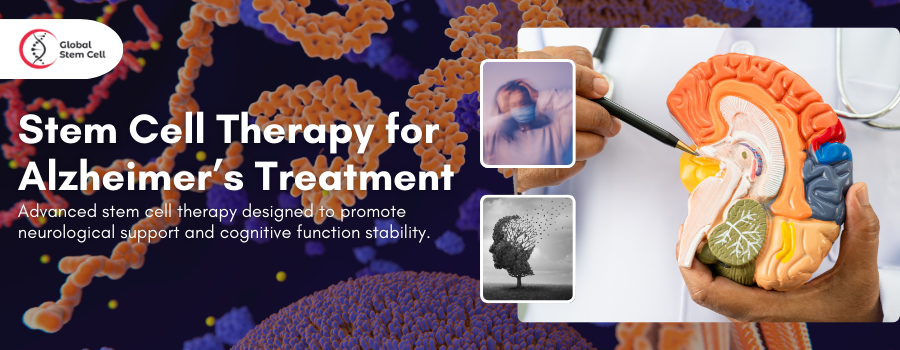
Alzheimer’s disease represents one of the most significant medical challenges of the 21st century, characterized by the progressive degeneration of brain cells, memory loss, and cognitive decline. Stem Cell Therapy for Alzheimer’s Treatment has emerged as a revolutionary approach in regenerative medicine, offering new hope to patients and families where traditional pharmaceutical interventions have reached their limits.
Unlike conventional medications such as cholinesterase inhibitors, which primarily aim to manage symptoms temporarily, Stem Cell Therapy for Alzheimer’s Treatment focuses on the root cause of the degeneration: the death of neurons and the loss of synaptic connections. This advanced therapy utilizes the body’s building blocks—stem cells—to target damaged brain tissue. These potent cells have the unique ability to differentiate into various cell types and, more importantly, release neurotrophic factors (growth factors) that promote the healing of existing neurons and reduce neuroinflammation.
The mechanism behind Stem Cell Therapy for Alzheimer’s Treatment involves several biological pathways. Primarily, Mesenchymal Stem Cells (MSCs) are often utilized due to their high safety profile and potent anti-inflammatory properties. When administered, these cells migrate to areas of inflammation within the brain. They work to modulate the immune system, reduce the accumulation of amyloid-beta plaques (a hallmark of Alzheimer’s), and stimulate the formation of new blood vessels (angiogenesis), thereby improving oxygen and nutrient supply to the brain. This regenerative process aims not just to halt progression but to restore lost cognitive function and improve the overall quality of life.
Identifying Ideal Candidates for Stem Cell Therapy for Alzheimer’s Treatment
Determining eligibility is a crucial step in the journey toward regenerative healing. While Stem Cell Therapy for Alzheimer’s Treatment offers significant potential, it is not a one-size-fits-all solution. Medical professionals evaluate patients based on the stage of the disease, overall physical health, and medical history.
The most suitable candidates for Stem Cell Therapy for Alzheimer’s Treatment generally include:
- Early to Moderate Stage Patients: Clinical data suggests that patients in the early to moderate stages of Alzheimer’s respond most favorably to treatment. At these stages, there is still significant viable brain tissue that can be protected and revitalized.
- Non-Responders to Conventional Medication: Individuals who have tried standard Alzheimer’s medications (like Aricept or Namenda) with little to no improvement, or those who suffer from severe side effects from these drugs, often seek stem cell therapy as a viable alternative.
- Patients with Stable Overall Health: Candidates should be free from active infections, uncontrolled cancer, or severe bleeding disorders. Since the procedure often involves travel to centers specializing in Stem Cell Therapy for Alzheimer’s Treatment in Mexico, Germany, or Thailand, patients must be physically fit enough to travel.
- Support System Availability: Ideal candidates are those who have a dedicated caregiver or family member to accompany them. The support system is vital for monitoring progress and assisting during the post-treatment phase.
- Realistic Expectations: Patients and families who understand that Stem Cell Therapy for Alzheimer’s Treatment is a management and regenerative tool—meant to improve quality of life and slow progression rather than an immediate “cure”—are the best candidates for this procedure.
Comprehensive Breakdown of the Stem Cell Therapy for Alzheimer’s Treatment Procedure
Undergoing Stem Cell Therapy for Alzheimer’s Treatment is a multi-step process designed to ensure safety, efficacy, and patient comfort. Clinics offering this procedure generally follow a rigorous protocol to maximize the viability of the cells and the therapeutic outcome.
1. Comprehensive Medical Evaluation and Consultation
Before any treatment begins, a thorough assessment is conducted. This involves reviewing the patient’s neurological history, MRI or CT scans, and current medication list. Specialists will determine if Stem Cell Therapy for Alzheimer’s Treatment is safe for the specific patient and plan the dosage and administration method.
2. Stem Cell Source Selection and Harvesting
Depending on the specific protocol of the clinic and the patient’s condition, stem cells may be sourced from different areas:
- Autologous Adipose Tissue: Stem cells are harvested from the patient’s own fat tissue via a mini-liposuction procedure, usually from the abdominal area.
- Autologous Bone Marrow: Cells are extracted from the patient’s hip bone marrow under local anesthesia.
- Allogeneic Umbilical Cord Tissue: Many top clinics prefer using Wharton’s Jelly-derived mesenchymal stem cells from healthy, screened donor umbilical cords. These cells are “younger,” more potent, and do not require an invasive harvesting procedure from the patient.
3. Cell Processing and Expansion
Once harvested (or selected from a cryobank), the cells undergo processing in a laboratory. For autologous treatments, the cells are separated from fat or blood. In high-quality facilities offering Stem Cell Therapy for Alzheimer’s Treatment, cells may be expanded (cultured) to reach a therapeutic count, often numbering in the hundreds of millions, to ensure a robust regenerative response.
4. Administration of Stem Cells
The delivery method is critical for Alzheimer’s treatment. There are generally two primary routes used during Stem Cell Therapy for Alzheimer’s Treatment:
- Intravenous (IV) Infusion: The most common method. Stem cells are delivered directly into the bloodstream. They can cross the blood-brain barrier (though in limited numbers) and exert a systemic anti-inflammatory effect that benefits the brain.
- Intrathecal Injection: This is a more direct approach where stem cells are injected into the spinal canal (via lumbar puncture). This allows the cells to bypass the blood-brain barrier and circulate directly within the cerebrospinal fluid to the brain, potentially offering higher efficacy for neurological conditions.
- Intranasal Administration: A non-invasive method where stem cells or exosomes are delivered through the nasal cavity, providing a direct pathway to the brain via the olfactory nerves.
5. Post-Treatment Observation and Recovery
After the administration, the patient is monitored for several hours to ensure there are no allergic reactions or adverse effects. Recovery from Stem Cell Therapy for Alzheimer’s Treatment is generally quick. Most patients can return to their hotel or home on the same day or the following day. Mild fatigue is common, but significant downtime is rarely required.
Therapeutic Benefits of Stem Cell Therapy for Alzheimer’s Treatment
The goal of regenerative medicine is to restore function and improve the daily lives of patients. Those undergoing Stem Cell Therapy for Alzheimer’s Treatment have reported a variety of cognitive and physical improvements.
- Cognitive Improvement: Many patients experience improved memory retention, better focus, and enhanced ability to recognize faces and places.
- Neuroprotection: The therapy helps protect existing healthy neurons from further degeneration caused by amyloid plaques and tau tangles.
- Reduction in Neuroinflammation: Stem cells have potent anti-inflammatory properties that reduce brain inflammation, a key driver of Alzheimer’s progression.
- Improved Mood and Sleep: Caregivers often report that patients exhibit reduced agitation, less anxiety, and better sleep patterns following treatment.
- Angiogenesis: The formation of new blood vessels improves blood flow to the brain, ensuring neurons receive adequate oxygen and glucose.
- Systemic Health Benefits: Because stem cells circulate throughout the body, patients often report improvements in energy levels and immune system function.
Potential Risks and Considerations
While Stem Cell Therapy for Alzheimer’s Treatment is generally considered safe, particularly when using Mesenchymal Stem Cells (MSCs), it is a medical procedure and carries inherent risks that must be weighed.
- Minor Side Effects: Common side effects include temporary headache, fever, nausea, or mild pain at the injection site (especially with intrathecal administration).
- Variable Results: The response to therapy varies significantly from patient to patient. While some see dramatic improvements, others may experience only a stabilization of the disease.
- Infection Risk: As with any injection or lumbar puncture, there is a very slight risk of introducing an infection, though this is rare in sterile, accredited facilities.
- Cost Considerations: Insurance rarely covers Stem Cell Therapy for Alzheimer’s Treatment, making it an out-of-pocket investment for most families.
Why Travel for Stem Cell Therapy for Alzheimer’s Treatment?
Medical tourism for stem cell therapy has exploded in popularity because regulatory restrictions in countries like the United States often limit the types of stem cell therapies available (specifically regarding cell expansion and culture). Consequently, patients travel abroad to access advanced, high-dosage Stem Cell Therapy for Alzheimer’s Treatment protocols that are both legal and highly regulated in other jurisdictions.
Traveling allows patients to access Stem Cell Therapy for Alzheimer’s Treatment clinics in Mexico, Germany, Thailand, and Colombia where they can receive expanded cell counts (often 100 million+ cells) which are necessary for treating neurodegenerative diseases, at a fraction of the cost of restricted US trials.
Top Destinations for Treatment
- Mexico: A top choice for North Americans. Stem Cell Therapy for Alzheimer’s Treatment in Mexico (specifically Tijuana, Guadalajara, and Cancun) offers world-class facilities, board-certified doctors, and proximity to the US/Canada.
- Germany: Known for precision and high medical standards. Stem Cell Therapy for Alzheimer’s Treatment in Germany often combines stem cells with other holistic therapies like ozone therapy and laser therapy.
- Thailand: A hub for Asian medical tourism. Stem Cell Therapy for Alzheimer’s Treatment in Thailand combines luxury hospital hospitality with cutting-edge regenerative labs.
- Colombia: Emerging as a leader in biotechnology, offering affordable yet high-quality Stem Cell Therapy for Alzheimer’s Treatment clinics in Bogota and Medellin.
Cost Comparison: Stem Cell Therapy for Alzheimer’s Treatment
The Stem Cell Therapy for Alzheimer’s Treatment cost varies depending on the number of cells, the source (umbilical vs. bone marrow), and the duration of the treatment protocol. Below is a comparative overview.
| Country | Estimated Cost Range (USD) | Why Choose This Destination? | Typical Inclusions |
|---|---|---|---|
| Mexico | $8,000 – $15,000 | Proximity to USA/Canada, high cell counts, affordable luxury accommodations. | Consultation, 50-200M Stem Cells, Airport Transfer, Hotel Stay. |
| Germany | $12,000 – $22,000 | Strict EU regulations, high safety standards, integrative medicine approach. | Medical fees, extensive lab work, specialized infusions, rehabilitation. |
| Thailand | $10,000 – $18,000 | Combines vacation with treatment, JCI accredited hospitals. | VIP Hospital Suite, Nursing care, extensive physiotherapy, stem cell injections. |
| Colombia | $7,000 – $12,000 | Cost-effective, highly trained specialists, growing biotech sector. | Evaluation, treatment sessions, local transport, post-op support. |
| United States | $20,000+ (Limited Availability) | Treatment is often restricted to clinical trials or minimal manipulation procedures. | Basic procedure (often lower cell counts due to FDA regulations). |
| Turkey | $9,000 – $16,000 | Strategic location between Europe/Asia, modern infrastructure. | Full package including accommodation, translation services, and treatment. |
Strategic Planning for Your Medical Tourism Trip
Traveling for medical care requires meticulous preparation, especially when the patient suffers from cognitive decline. Use this checklist to plan your trip for Stem Cell Therapy for Alzheimer’s Treatment.
- Consultation & Records: Send your recent MRI/CT scans and medical history to the clinic beforehand for a remote evaluation. Ensure you are a candidate for Stem Cell Therapy for Alzheimer’s Treatment.
- Travel Documents: Ensure the patient and all caregivers have valid passports and necessary visas for the destination country.
- Caregiver Support: It is mandatory for Alzheimer’s patients to travel with a companion. Plan for the caregiver’s accommodation and needs as well.
- Accommodation Logistics: Book a hotel or recovery apartment that is ground-floor or elevator-accessible and close to the clinic to minimize transit stress.
- Medical Clearance: Obtain a “fit to fly” letter from your local physician if the patient has other underlying health issues.
- Hydration and Nutrition: Prepare a plan for keeping the patient hydrated and well-fed during travel, as changes in routine can cause confusion.
- Post-Treatment Plan: Discuss the follow-up protocol with the clinic. Ask about supplements or therapies to continue at home after the Stem Cell Therapy for Alzheimer’s Treatment.
Frequently Asked Questions About Stem Cell Therapy for Alzheimer’s Treatment
Can Stem Cell Therapy for Alzheimer’s Treatment cure the disease completely?
Currently, there is no known complete cure for Alzheimer’s. Stem Cell Therapy for Alzheimer’s Treatment is a regenerative management therapy aimed at slowing progression, regenerating damaged tissue, and improving quality of life, rather than completely eradicating the disease.
How long does it take to see results after Stem Cell Therapy for Alzheimer’s Treatment?
Results vary by patient. Some caregivers notice changes in mood and sleep within weeks, while cognitive improvements (memory, speech) typically take 3 to 6 months as the cells work to repair neural connections.
Is Stem Cell Therapy for Alzheimer’s Treatment painful?
The procedure is generally minimally invasive. IV infusions are painless. Intrathecal injections (spinal) involve local anesthesia and may cause minor discomfort similar to a lumbar puncture, but sedation is often available to keep the patient calm.
How many sessions of Stem Cell Therapy for Alzheimer’s Treatment are required?
This depends on the severity of the condition. A standard protocol might involve one intensive treatment cycle (lasting 3-5 days), potentially followed by annual maintenance treatments to sustain the benefits.
Why is Stem Cell Therapy for Alzheimer’s Treatment cost cheaper in Mexico or Thailand than in the US?
The cost difference is due to lower overheads, labor costs, and insurance expenses in these countries. However, the quality of care is often comparable or superior due to the ability to use expanded cell protocols that are restricted in the US.
Take the First Step Toward Cognitive Renewal Today
Do not wait for the condition to progress further. Explore the possibilities of regenerative medicine with Stem Cell Therapy for Alzheimer’s Treatment. Our team at PlacidWay is ready to connect you with accredited, world-class clinics offering affordable and effective treatment plans tailored to your specific needs.