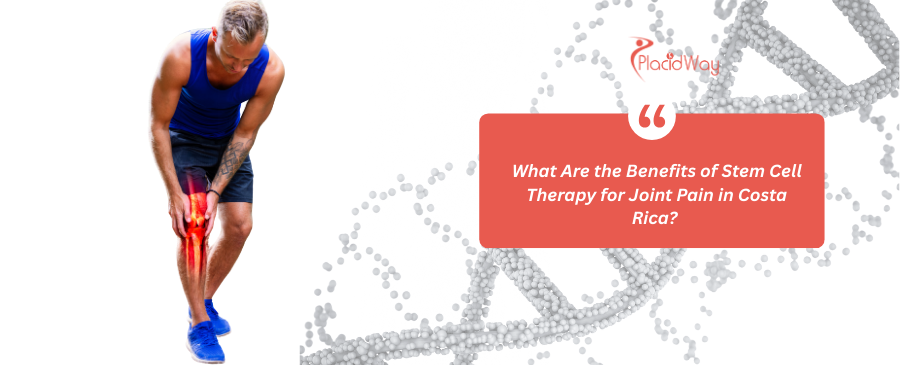
Stem cell therapy for joint pain in Costa Rica offers several key benefits, including access to expanded mesenchymal stem cells (MSCs), which provide significantly higher cell counts than typically available in some other countries. Patients often achieve cost savings of 50-60% compared to treatments elsewhere. Additionally, the procedures are minimally invasive, leading to quicker recovery times and effective inflammation reduction.
Living with chronic joint pain can feel like a losing battle, whether it’s osteoarthritis, a nagging shoulder injury, or hip pain. Traditional options often involve a lifetime of painkillers or invasive joint replacement surgery.
Many patients are now exploring the regenerative potential of stem cells, particularly abroad, due to strict regulations limiting advanced treatments in some Western countries. This has made destinations like Costa Rica a beacon of hope for those seeking real relief.
Unlike the United States, where treatments are often restricted to “same-day” procedures with lower cell counts, Costa Rica allows for the cultivation and expansion of stem cells. This means patients can receive millions more potent cells, potentially leading to better healing outcomes.
This guide will explain why this Central American nation is a leader in regenerative medicine, covering its legal framework, cost benefits, and safety protocols. PlacidWay is a medical tourism facilitator that connects patients with global healthcare providers, not a medical provider itself. Discovering the full Benefits of Stem Cell Therapy for Joint Pain in Costa Rica can offer a new path to well-being.
What Regenerative Advantages Does Stem Cell Therapy in Costa Rica Offer?
- Access to Expanded MSCs: Costa Rican clinics can cultivate stem cells to administer significantly higher cell counts (100 million+), leading to potentially superior therapeutic effects compared to non-expanded treatments.
- Significant Cost Savings: Patients can achieve 50-60% savings on high-dose stem cell treatments compared to prices for similar advanced therapies in other developed countries.
- Minimally Invasive Procedure: The treatment involves needle-based injections, avoiding major surgical incisions, general anesthesia risks, and lengthy hospital stays.
- Accelerated Recovery Time: Most patients can walk immediately after the procedure, with full benefits often observed within 3 to 6 months, significantly reducing downtime compared to traditional surgeries.
- Targeted Anti-Inflammatory Action: Mesenchymal Stem Cells (MSCs) reduce inflammation and modulate the immune system, addressing the root causes of joint pain and promoting long-term healing rather than just temporary symptom relief.
What Exactly is Stem Cell Therapy for Joint Pain?
Stem cell therapy for joint pain is a regenerative procedure involving the injection of potent cells, typically mesenchymal stem cells (MSCs), into damaged joints to reduce inflammation and support tissue repair.
These cells act as the body’s natural repairmen. When injected into an arthritic knee or a torn rotator cuff, they release growth factors and anti-inflammatory proteins.
This calms the inflamed joint environment, helping to halt cartilage degradation and, in many cases, aiding in the rebuilding of worn-away tissue. The therapy uses adult stem cells, which can be harvested from the patient’s own body (autologous) or from a donor (allogeneic), such as umbilical cord tissue.
The primary goal in treating joint pain is to improve function and reduce discomfort without the extensive downtime and inherent risks associated with invasive surgery. Unlike a temporary cortisone shot, stem cell therapy seeks to fundamentally change the joint’s biological environment for more sustained relief.
Understanding the Efficacy and Potential Risks of Stem Cell Treatments
Evidence & Outcomes: Stem cells can stimulate the repair of cartilage tissue, improve joint lubrication, and heal micro-tears, especially in cases of mild to moderate osteoarthritis. While they do not reliably regrow an entire joint that is completely worn away, the primary mechanism of significant pain reduction and improved mobility is often achieved through their potent anti-inflammatory action.
Risks & Contraindications: Serious side effects from stem cell therapy are extremely rare, with the most common issues being temporary swelling or pain at the injection site. Mesenchymal Stem Cells (MSCs) are “immune-privileged,” minimizing the risk of rejection; however, choosing a sterile, accredited facility is crucial to mitigate infection risk. Patients with active cancer or severe infections are generally not candidates for this therapy, and individual results can vary significantly, so always consult a qualified physician to discuss eligibility and potential outcomes. Seek immediate care if you experience severe swelling, fever, or worsening pain after treatment.
Did You Know?
Did you know that Costa Rica is home to some of the world’s most advanced medical facilities, where patients often save significant amounts on stem cell therapy while receiving care that meets or exceeds international hospital standards?
How Does Stem Cell Therapy for Joint Pain in Costa Rica Compare in Cost?
Cost is a significant consideration for many patients seeking advanced medical treatments. Stem cell therapy in Costa Rica presents an undeniable value proposition, allowing access to high-dose, expanded cell treatments that are often unavailable or prohibitively expensive elsewhere.
While the investment in regenerative medicine is substantial, the advanced laboratory work required to cultivate and expand stem cells in Costa Rica often results in savings of 50-60% compared to equivalent therapies in other countries, particularly when considering the superior cell counts offered.
Cost Breakdown
Major Savings
| Country |
Estimated Cost (Single Joint) |
Approximate Savings vs. US (Expanded Cell) |
| Costa Rica |
$4,500 |
Starting Point Best Value |
| United States (Comparable) |
$11,250 |
60% Savings |
| United Kingdom (Comparable) |
$10,000 |
55% Savings |
| Canada / Australia (Comparable) |
$9,500 |
53% Savings |
Essential Facts & Pro-Tips
1
Fast Fact: Top Costa Rican clinics adhere to ISO laboratory standards, utilizing ISO-7 clean rooms for cell processing to ensure sterility and verify cell viability before implantation.
2
Travel Tip: Most stem cell therapy protocols in Costa Rica span 3 to 5 days, allowing for comprehensive initial consultations, multiple treatment sessions, intravenous infusions, and post-procedure monitoring.
3
Recovery Tip: While most patients can walk immediately after the procedure, it is generally advised to rest for a few days and avoid strenuous exercise for at least 4 weeks to optimize healing and long-term results.
What to Expect: A Typical Stem Cell Therapy Journey in Costa Rica
Embarking on a medical journey for stem cell therapy in Costa Rica is designed with patient comfort and optimal outcomes in mind. The process prioritizes efficiency, minimizing downtime while ensuring that every safety protocol is meticulously followed, adhering to national health regulations.
Day 01
Initial Consultation and Diagnostics
Your journey begins with an in-depth consultation with a medical specialist, including a review of your medical history, current symptoms, and any existing imaging like X-rays or MRI scans. Blood work may also be performed to assess your overall health and suitability for treatment.
Day 02 — 03
Stem Cell Procedure and Supportive Therapies
The primary stem cell injection procedure typically takes about 60 to 90 minutes. Depending on your personalized treatment plan, this may be combined with supportive therapies such as IV vitamin infusions or exosomes to enhance the effectiveness of the stem cells. You will be closely monitored by medical staff.
Day 04 — 05
Post-Procedure Observation and Recovery Guidance
The final days involve follow-up check-ups with your medical team to ensure that the initial healing process is progressing well. You will receive detailed instructions on post-treatment care, including recommended activities to avoid, gentle exercises, and a timeline for resuming strenuous activities to support optimal recovery.
Frequently Asked Questions
1. Is this treatment safe in Costa Rica?+
Yes, stem cell therapy using adult mesenchymal stem cells (MSCs) is legal and regulated by the Ministry of Health in Costa Rica. Clinics operate under established national health regulations and strict bio-safety and laboratory standards, ensuring patient safety. Reputable facilities also maintain quality control protocols for cell processing and often hold international accreditations to meet global healthcare standards.
2. What types of stem cells are primarily used?+
Clinics in Costa Rica primarily utilize Mesenchymal Stem Cells (MSCs). These are typically derived from umbilical cord tissue, also known as Wharton’s Jelly, or from the patient’s own adipose (fat) tissue. Umbilical cord MSCs are particularly popular as “day zero” cells, meaning they are young, potent, and immune-privileged, having not been exposed to aging or environmental toxins.
Adipose-derived cells, harvested via mini-liposuction, are also effective, though their potency may decrease with age. Bone marrow stem cells are less frequently used for joint pain due to the painful extraction process and lower MSC yield.
3. Which joints can be effectively treated with stem cells?+
Stem cell therapy is most commonly and effectively applied to knees, particularly for osteoarthritis, and for conditions affecting hips and shoulders, such as rotator cuff injuries. The ease of access to the knee joint space and its cartilage-preserving potential contribute to its high responsiveness.
The therapy is also used for other joints like elbows, ankles, and certain spinal facets, though success rates may vary with spinal applications due to the complexity of the area. Precision guidance via ultrasound or fluoroscopy is often used for deeper joints like the hip to ensure optimal cell placement.
4. Can stem cells truly regenerate lost cartilage?+
While stem cells can stimulate the repair of existing cartilage tissue, they typically do not regrow an entire joint that has been completely worn away. It is crucial to manage expectations realistically: stem cell therapy works best by preserving remaining cartilage, improving joint lubrication, and healing micro-tears within the joint structure.
The primary benefit often comes from their anti-inflammatory properties, which can arrest the chronic degradation of cartilage, leading to significant pain reduction and improved mobility, even without a complete regeneration of new tissue visible on X-rays.
5. How does recovery after stem cell therapy compare to surgery?+
Recovery from stem cell therapy is considerably quicker and less invasive than joint replacement surgery. Most patients can walk immediately after the needle-based procedure, experiencing only mild soreness or stiffness for 24 to 48 hours. Strenuous activities are typically avoided for about 4 weeks.
In contrast, joint replacement involves major trauma, months of rehabilitation, and a limited lifespan for implants. Stem cell therapy offers minimal downtime, avoids surgical risks like clots or infection, and preserves your natural anatomy, offering a “no-burned-bridges” approach if surgery is still needed later.
6. Who is an ideal candidate for stem cell treatment?+
Ideal candidates typically have mild to moderate osteoarthritis or soft tissue injuries and wish to avoid or delay invasive surgery. Doctors will review X-rays or MRI scans to assess remaining joint space and overall joint health. Generally healthy, non-smoking, and active individuals tend to experience the best results.
However, individuals with completely fused joints, active cancer, or severe infections are usually not eligible for this therapy. Comprehensive evaluations ensure the treatment aligns with patient needs and expected outcomes.
7. What safety standards do Costa Rican clinics follow?+
Reputable stem cell clinics in Costa Rica adhere to stringent safety standards, often following ISO laboratory certifications and holding accreditations like AAAHC or equivalent. They typically process cells in ISO-7 clean rooms to ensure a sterile environment, minimizing any risk of contamination. Furthermore, these clinics perform rigorous quality control, including verifying cell viability and freedom from disease markers via a Certificate of Analysis (COA) before any implantation.
Doctors often maintain memberships with international medical boards and regularly attend global conferences, staying updated on the latest protocols and best practices in regenerative medicine to ensure high standards of care.
8. How many stem cell treatments are typically required for results?+
Many patients experience significant and lasting relief after just one comprehensive stem cell treatment, especially when receiving high-dose expanded cells (50-100 million+). The therapeutic effects of these cells continue to work within the body for several months after the initial visit, often providing relief for years.
However, depending on the individual’s response and the severity of joint degeneration, a “booster” treatment may be recommended 12 to 18 months later to maintain the benefits. For progressive conditions, annual maintenance might be suggested, but for specific injuries or moderate arthritis, a single treatment often achieves the desired long-term outcome.
Ready to Take the Next Step Towards Recovery?
Choosing the right destination for your medical care is significant. By opting for treatment abroad, you are not just saving on costs—you are gaining access to specialized clinicians and world-class care.
Get Your Free Quote Now
Medical Disclaimer: This article is intended for informational and educational purposes only and should not be construed as medical advice, diagnosis, or treatment recommendations. PlacidWay is a medical tourism facilitator, connecting patients with qualified healthcare providers and medical facilities worldwide; we do not provide medical services directly. Before making any healthcare decisions, undergoing any procedure, or starting any treatment plan, it is crucial to consult with a qualified and licensed physician who can assess your specific health condition and provide personalized guidance. Outcomes of medical treatments, including stem cell therapy, are not guaranteed, and individual results may vary significantly. Always seek immediate professional medical care if you experience severe or worsening symptoms.