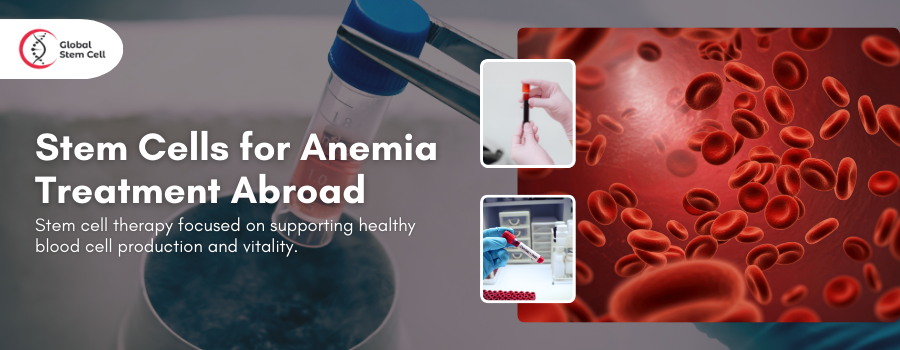
Living with severe or chronic anemia can be a debilitating experience, characterized by persistent fatigue, weakness, and a constant reliance on blood transfusions or heavy medication protocols. For many patients, conventional treatments offer management rather than a cure. However, the evolution of regenerative medicine has opened new doors. Stem Cells for Anemia Treatment Abroad offers a promising pathway for patients seeking to address the root cause of blood disorders rather than just treating the symptoms.
As medical borders expand, thousands of patients are traveling internationally to access advanced Hematopoietic Stem Cell Transplantation (HSCT) and regenerative therapies that may be unavailable, wait-listed, or prohibitively expensive in their home countries. This guide explores the scientific mechanisms, the patient journey, the top global destinations, and the financial considerations of choosing Stem Cells for Anemia Treatment Abroad.
What Is Stem Cells for Anemia Treatment Abroad?
Stem Cells for Anemia Treatment Abroad refers to the medical application of stem cells—specifically hematopoietic stem cells (HSCs) and, in some emerging protocols, mesenchymal stem cells (MSCs)—to treat various forms of severe anemia. The primary goal is to regenerate the patient’s bone marrow capability to produce healthy red blood cells, white blood cells, and platelets.
Anemia occurs when the body lacks enough healthy red blood cells to carry adequate oxygen to the body’s tissues. In severe cases like Aplastic Anemia, Sickle Cell Disease, or Thalassemia, the bone marrow is either damaged, failing, or producing defective cells. Stem cell therapy works by replacing these dysfunctional cells with healthy precursors.
The Science Behind the Therapy
The core of this treatment is the Hematopoietic Stem Cell. These are immature cells found in bone marrow and peripheral blood that have the unique ability to develop into all types of blood cells. When a patient undergoes Stem Cells for Anemia Treatment Abroad, the procedure typically involves:
- Restoration: Infusing healthy stem cells that migrate to the bone marrow (a process called homing).
- Regeneration: The new stem cells begin to proliferate and differentiate into healthy blood components.
- Immune Reset: In autoimmune-related anemias (like acquired aplastic anemia), stem cells can help reset the immune system to stop attacking the bone marrow.
Types of Anemia Treated
Not all anemias require stem cell intervention (e.g., simple iron deficiency). However, Stem Cells for Anemia Treatment Abroad is often sought for:
- Aplastic Anemia: A condition where the body stops producing enough new blood cells.
- Sickle Cell Anemia: An inherited group of disorders where red blood cells become misshapen and break down.
- Thalassemia: An inherited blood disorder characterized by less oxygen-carrying protein (hemoglobin) and fewer red blood cells.
- Fanconi Anemia: A rare genetic disease resulting in bone marrow failure.
Who Should Consider Stem Cells for Anemia Treatment Abroad?
Deciding to pursue regenerative medicine internationally is a significant step. The ideal candidates for Stem Cells for Anemia Treatment Abroad are typically individuals who have exhausted standard therapies or are facing life-long dependencies on blood transfusions.
Criteria for Candidacy
Doctors evaluating patients for this procedure typically look for the following profiles:
- Diagnosis Confirmation: Patients must have a confirmed diagnosis of severe aplastic anemia, thalassemia major, or sickle cell disease.
- Transfusion Dependence: Individuals who require frequent blood transfusions to maintain hemoglobin levels are primary candidates.
- Failure of First-Line Therapies: Patients who have not responded adequately to immunosuppressive therapy (in the case of aplastic anemia) or other standard medications.
- Organ Function: Candidates should have relatively healthy heart, lung, kidney, and liver function to withstand the conditioning regimen required before the transplant.
- Age Factors: While younger patients often have higher success rates with HSCT, advancements in reduced-intensity conditioning have made Stem Cells for Anemia Treatment Abroad viable for older adults as well.
Exclusion Criteria
Patients with active, uncontrolled infections, severe organ failure unrelated to the anemia, or other distinct malignancies may not be suitable for this specific therapy. A thorough pre-screening via telemedicine is usually the first step in determining eligibility for Stem Cells for Anemia Treatment Abroad.
Stem Cells for Anemia Treatment Abroad Procedure: Step-by-Step
Understanding the roadmap of the treatment helps reduce anxiety and allows for better logistical planning. While protocols vary based on whether the transplant is autologous (using own cells) or allogeneic (using donor cells), the general workflow for Stem Cells for Anemia Treatment Abroad follows this structure:
Step 1: Consultation and Pre-Screening
Before traveling, patients engage in remote consultations. Medical records, blood tests, and genetic typing (HLA typing) are reviewed. Once cleared, the patient travels to the chosen destination for a physical evaluation. This phase includes comprehensive cardiac and pulmonary testing to ensure safety.
Step 2: Conditioning (The Preparatory Phase)
This is arguably the most critical phase. The patient undergoes a conditioning regimen, which may involve chemotherapy and/or radiation therapy. The purpose is twofold:
- To suppress the patient’s immune system so it does not reject the new stem cells.
- To clear out the damaged or defective marrow to make physical space for the new cells.
Step 3: Stem Cell Harvesting or Procurement
Depending on the source:
- Autologous: Stem cells are collected from the patient’s own blood or bone marrow prior to conditioning. This is less common for genetic anemias but used for other conditions.
- Allogeneic: Stem cells are harvested from a matched donor (sibling or unrelated registry donor) or cord blood.
- Umbilical Cord Tissue: Some regenerative clinics abroad utilize mesenchymal stem cells from umbilical cord tissue for their immunomodulatory properties, which is a simpler injection process compared to full HSCT.
Step 4: The Infusion
The transplant itself is non-surgical and resembles a blood transfusion. The harvested Stem Cells for Anemia Treatment Abroad are infused into the patient’s bloodstream through a central venous catheter. The cells then navigate through the blood to the bone marrow cavities.
Step 5: Engraftment and Isolation
Following the infusion, the patient enters the “engraftment” phase. This takes 2 to 4 weeks. During this time, the new stem cells begin to produce blood cells. The patient is kept in a sterile environment (HEPA-filtered room) to prevent infection, as their immune system is temporarily non-existent. Supportive care, including antibiotics and blood products, is provided.
Step 6: Recovery and Monitoring
Once blood counts rise to safe levels, the patient is discharged from the isolation unit but must remain close to the clinic for daily or weekly follow-ups. The total stay for Stem Cells for Anemia Treatment Abroad can range from 3 weeks to 3 months depending on the intensity of the procedure.
Benefits of Stem Cells for Anemia Treatment Abroad
Traveling for this therapy offers medical and practical advantages that drive the medical tourism market.
- Potential for a Cure: unlike transfusions which are palliative, stem cell transplants offer the only potential cure for diseases like Thalassemia Major and Sickle Cell Disease.
- Access to Advanced Protocols: Many clinics abroad offer innovative combinations of MSCs and HSCs that may be in trial phases elsewhere.
- Reduced Wait Times: In countries with nationalized health systems, waiting for a transplant can take years. Private international clinics can often schedule Stem Cells for Anemia Treatment Abroad immediately upon donor matching.
- Cost-Effectiveness: The cost of care in destinations like India, Mexico, or Turkey can be 50-70% lower than in the US or UK, even including travel.
- Comprehensive Care Packages: Medical tourism providers often bundle airport transfers, accommodation, and translator services, making the logistics seamless.
Risks of Stem Cells for Anemia Treatment Abroad
While the potential is transformative, HSCT is a high-stakes medical procedure. Patients must be fully aware of the risks associated with Stem Cells for Anemia Treatment Abroad.
- Graft-Versus-Host Disease (GVHD): In allogeneic transplants, the donor’s immune cells may attack the patient’s healthy tissues. This can be acute or chronic and requires long-term management.
- Infection: During the engraftment phase, the risk of bacterial, viral, or fungal infection is high due to the lack of an immune system.
- Graft Failure: There is a risk that the new stem cells do not settle and grow in the marrow, necessitating a second transplant.
- Organ Toxicity: The conditioning chemotherapy can sometimes cause damage to the liver, kidneys, or lungs.
- Infertility: High-dose conditioning regimens can impact fertility; preservation options should be discussed prior to treatment.
Why Travel for Stem Cells for Anemia Treatment Abroad?
The decision to travel is often driven by a combination of financial necessity and the search for medical excellence. Medical tourism centers have evolved into hubs of biotechnology, offering facilities that rival or exceed those in the West.
Top Destinations for Anemia Treatment
1. Turkey
Turkey has emerged as a powerhouse for Stem Cells for Anemia Treatment Abroad. With a high concentration of JCI-accredited hospitals in Istanbul and Ankara, Turkey offers European-standard hematology departments at a fraction of the cost. The country is particularly renowned for its bone marrow transplant centers and success with pediatric anemia cases.
2. India
India is perhaps the most cost-effective destination globally for complex medical procedures. Cities like Bangalore, Chennai, and Delhi host world-class institutes specializing in hematology. Indian doctors often have extensive experience due to the high volume of cases they manage. The cost of stem cell therapy for anemia in India can be significantly lower than in Western nations without compromising on the success rates of engraftment.
3. Mexico
For patients from the United States and Canada, Mexico represents a convenient and high-quality option. Clinics in Tijuana, Guadalajara, and Mexico City specialize in regenerative medicine. Mexico is a popular choice for Stem Cells for Anemia Treatment Abroad due to its proximity, allowing for easier travel for follow-up visits and family accompaniment.
4. Germany
Germany is synonymous with precision medicine. While more expensive than India or Mexico, it is often cheaper than the US. German university hospitals are at the forefront of stem cell research, offering highly regulated and safe environments for complex cases of aplastic anemia and leukemia-related anemia.
5. Thailand
Combining medical excellence with world-class hospitality, Thailand attracts thousands of medical tourists. Bangkok’s private hospitals are equipped with state-of-the-art hematology units. The supportive care environment in Thailand is exceptional, which is crucial during the recovery phase of Stem Cells for Anemia Treatment Abroad.
Cost Comparison Table
The following table provides an estimated cost range for stem cell therapies and bone marrow transplants for anemia. Prices vary based on the specific type of transplant (autologous vs. allogeneic) and the source of cells.
| Country | Procedure Cost Range (USD) | Notes |
|---|---|---|
| United States | $200,000 – $800,000+ | High cost of hospitalization and drugs. |
| Germany | $100,000 – $250,000 | High regulation, advanced technology. |
| Turkey | $30,000 – $80,000 | Includes hospital stay and medications. |
| India | $15,000 – $35,000 | Most affordable globally for HSCT. |
| Mexico | $10,000 – $45,000 | Varies significantly by clinic and protocol type. |
| Thailand | $40,000 – $90,000 | Premium hospital services included. |
Note: These costs are estimates and can fluctuate based on patient complexity, donor sourcing fees, and extended hospital stays.
How to Plan for a Stem Cells for Anemia Treatment Abroad Medical Tourism Trip
Preparing for a medical journey requires meticulous organization. Here is a checklist to ensure a smooth experience when pursuing Stem Cells for Anemia Treatment Abroad.
- Medical Record Compilation: Gather all historical data, including biopsy results, HLA typing reports, blood transfusion history, and current medication lists. Translate them into English if necessary.
- Virtual Consultation: Schedule video calls with potential doctors. Ask specifically about their experience with your type of anemia and their clinic’s accreditation.
- Caregiver Arrangement: You cannot travel alone for this procedure. A dedicated caregiver (family member or friend) is essential for support during the isolation and recovery phase.
- Financial Planning: Ensure funds are available. Check if your insurance covers international procedures (rare, but possible) or if the clinic offers financing.
- Visa and Legal Documents: Apply for medical visas for both the patient and the caregiver. Some countries like India require a specific Medical Visa.
- Accommodation for Recovery: While the initial stay is in the hospital, you will need clean, hygienic accommodation nearby for the post-discharge monitoring phase.
- Pack for Isolation: Bring sanitized entertainment (tablets, books), comfortable clothing that allows catheter access, and any specific dietary supplements allowed by the doctor.
Frequently Asked Questions
What is the success rate of Stem Cells for Anemia Treatment Abroad?
Success rates vary by age, donor match quality, and disease type. For Thalassemia and Sickle Cell disease, disease-free survival rates in experienced centers can exceed 80-90% for matched sibling donors. Unrelated donor transplants have slightly lower but improving success rates.
How long do I need to stay abroad?
Patients typically need to stay in the destination country for 2 to 4 months. This includes the conditioning phase, the transplant, the hospital isolation period, and outpatient monitoring to ensure the graft is stable before flying home.
Is the procedure painful?
The stem cell infusion itself is not painful. However, the side effects of the conditioning chemotherapy (mouth sores, nausea, fatigue) can be uncomfortable. Pain management is a priority in all reputable clinics performing Stem Cells for Anemia Treatment Abroad.
Can I use my own stem cells?
For genetic anemias like Sickle Cell or Thalassemia, using your own unprocessed stem cells would simply reintroduce the disease. However, gene therapy (modifying your own cells) is an emerging field. Currently, most curative treatments rely on allogeneic (donor) transplants.
How do I find a donor for treatment abroad?
International clinics have access to global bone marrow registries (like the NMDP). They will first test your siblings. If no match is found, they will search the international database for a matched unrelated donor.
Is Stem Cells for Anemia Treatment Abroad safe for children?
Yes, pediatric transplants are very common and often have higher success rates than adult transplants due to the resilience of children’s bodies. Many top destinations in Turkey and India have specialized pediatric hematology units.
Get Started with Stem Cells for Anemia Treatment Abroad Today
Don’t let anemia dictate your life limitations. Explore the world of regenerative possibilities and find affordable, high-quality care options globally. Contact us for a personalized consultation, clinic comparisons, and pricing options for your treatment.