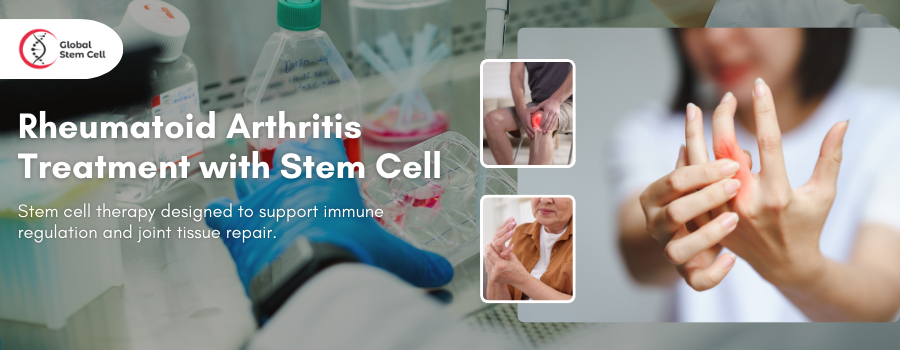
Rheumatoid Arthritis (RA) is a chronic autoimmune disorder that affects millions globally, causing inflammation, pain, and eventual joint destruction. While traditional medicine focuses on symptom management through DMARDs and NSAIDs, advances in regenerative medicine offer a new horizon. Rheumatoid Arthritis Treatment with Stem Cell Therapy has emerged as a revolutionary approach, aiming not just to manage symptoms but to address the root cause of inflammation and promote tissue repair.
In this comprehensive guide, we explore the science, procedure, benefits, and global opportunities associated with this cutting-edge treatment.
What Is Rheumatoid Arthritis Treatment with Stem Cell Therapy?
Rheumatoid Arthritis Treatment with Stem Cell Therapy is a regenerative medical procedure designed to combat the autoimmune response characteristic of RA while stimulating the repair of damaged cartilage and joint tissue. Unlike Osteoarthritis, which is wear-and-tear, RA involves the immune system attacking the body’s own tissues. Therefore, the therapy focuses heavily on immunomodulation.
The Science Behind the Therapy
The core of this treatment involves the administration of Mesenchymal Stem Cells (MSCs). These cells are unique because they possess potent anti-inflammatory properties. When introduced into the body of a patient suffering from RA, these stem cells perform two primary functions:
- Immunomodulation: The stem cells signal the immune system to stop attacking the synovial lining of the joints. They inhibit T-cell proliferation and reduce the production of inflammatory cytokines (such as TNF-alpha and IL-6), essentially “resetting” the immune response.
- Regeneration: Once the inflammation is quelled, the stem cells can differentiate into cartilage and bone cells or recruit the body’s own repair mechanisms to heal damaged tissues, improving joint function and reducing pain.
Types of Stem Cells Used
In Rheumatoid Arthritis Treatment with Stem Cell Therapy, the source of the cells plays a crucial role in the outcome. Common sources include:
- Umbilical Cord Tissue (Allogenic): These are young, potent cells harvested from donated umbilical cords after healthy births. They have the highest anti-inflammatory capacity and are often preferred for severe autoimmune conditions like RA.
- Adipose Tissue (Autologous): Stem cells derived from the patient’s own fat. These are easily accessible and abundant but may be less potent in older patients or those with severe chronic illness.
- Bone Marrow (Autologous): Extracted from the hip bone. While effective for orthopedic issues, the extraction process is more invasive compared to other methods.
Who Should Consider Rheumatoid Arthritis Treatment with Stem Cell Therapy?
Not every patient is an immediate candidate for regenerative medicine. The ideal candidates for Rheumatoid Arthritis Treatment with Stem Cell Therapy are typically those seeking alternatives to aggressive pharmaceutical interventions or surgery. Clinical evaluations are necessary, but general suitability includes specific profiles.
Criteria for Candidacy
You may be a strong candidate for this procedure if:
- Confirmed Diagnosis: You have a medical diagnosis of Rheumatoid Arthritis (seropositive or seronegative).
- Non-Responsive to Medication: You have tried conventional treatments like corticosteroids, Methotrexate, or biologics with limited success or severe side effects.
- Joint Damage but No Ankylosis: You have joint pain and stiffness, but the joints have not yet completely fused (ankylosis). Stem cells can repair tissue but cannot separate fused bones.
- Desire to Avoid Surgery: You are looking to delay or prevent joint replacement surgeries.
- Overall Health: You are free from active infections or uncontrolled cancer.
Contraindications
Patients with active blood cancers, severe anemia, or active infections may be advised against the procedure until their condition stabilizes. A thorough consultation with a specialist is required to determine eligibility for Rheumatoid Arthritis Treatment with Stem Cell Therapy.
Rheumatoid Arthritis Treatment with Stem Cell Therapy Procedure: Step-by-Step
Understanding the roadmap of the treatment helps reduce anxiety and prepares patients for their medical journey. Below is a detailed breakdown of how Rheumatoid Arthritis Treatment with Stem Cell Therapy is typically performed in top medical tourism destinations.
1. Pre-Procedure Consultation and Evaluation
Before traveling or undergoing treatment, a comprehensive medical evaluation is conducted. This often starts virtually.
- Medical History Review: Doctors review your rheumatology reports, X-rays, blood work (CRP, ESR levels), and current medication list.
- Clearance: The medical team ensures there are no contraindications.
- Customized Plan: The physician determines the type of stem cells (Umbilical vs. Autologous), the dosage (usually ranging from 50 million to 200 million cells depending on severity), and the method of delivery.
2. Preparation and Extraction (If Autologous)
If the patient is using their own stem cells:
- Adipose Harvest: A mini-liposuction is performed under local anesthesia to extract a small amount of fat, usually from the abdomen.
- Bone Marrow Aspiration: Bone marrow is drawn from the iliac crest (hip bone) using a special needle.
Note: If using Allogenic (Umbilical Cord) cells, this step is skipped as the cells are pre-screened, cultured, and ready for use.
3. Stem Cell Processing and Activation
The collected tissue is processed in a laboratory.
- Separation: Stem cells are separated from fat, blood, or plasma.
- Expansion (Optional but recommended): In many international clinics, cells are cultured to increase their numbers into the millions, ensuring a therapeutic dose high enough to combat systemic inflammation.
- Activation: Cells may be subjected to photo-activation or specific growth factors to enhance their regenerative capabilities.
4. Administration of Stem Cells
For RA, a systemic approach is often required alongside local treatment.
- Intravenous (IV) Infusion: A significant portion of the stem cells is administered via an IV drip. This allows the cells to circulate through the bloodstream to regulate the immune system globally and target inflammation markers throughout the body.
- Intra-articular Injection: For patients with severe pain in specific joints (e.g., knees, hands, or wrists), stem cells are injected directly into the joint space, often using ultrasound guidance for precision.
5. Post-Treatment Protocol and Recovery
The procedure is generally outpatient.
- Observation: Patients are monitored for 1-2 hours for any allergic reactions.
- Rest: Minimal physical activity is recommended for 24-48 hours.
- Rehabilitation: Physical therapy may be suggested after a few weeks to maximize joint mobility as the cells begin to repair the tissue.
Benefits of Rheumatoid Arthritis Treatment with Stem Cell Therapy
Patients choose Rheumatoid Arthritis Treatment with Stem Cell Therapy because it offers a holistic approach to healing that chemical drugs cannot provide. The benefits extend beyond simple pain relief.
- Systemic Immunoregulation: The primary benefit is the “calming” of the overactive immune system, leading to a reduction in flare-ups and slowing disease progression.
- Tissue Regeneration: Unlike pain killers that mask symptoms, stem cells actively work to repair damaged cartilage and synovial tissue.
- Reduction in Medication Dependency: Many patients report being able to lower their dosage of corticosteroids and harsh DMARDs, reducing long-term side effects like liver toxicity.
- Minimally Invasive: The procedure avoids the risks, downtime, and scarring associated with joint replacement surgery.
- Natural Healing: The therapy utilizes biological components, reducing the risk of synthetic drug interactions.
Risks of Rheumatoid Arthritis Treatment with Stem Cell Therapy
While generally considered safe, especially when compared to invasive surgeries, Rheumatoid Arthritis Treatment with Stem Cell Therapy carries potential risks that patients must be aware of.
- Injection Site Reactions: Mild pain, swelling, or bruising at the site of the injection or IV insertion is common but temporary.
- Immune Reaction (GVHD): While extremely rare with Mesenchymal Stem Cells (which are immune-privileged), there is a theoretical risk of an immune reaction if the cells are not properly matched or screened (in allogenic cases).
- Infection: As with any procedure involving needles, there is a small risk of introducing bacteria if sterile protocols are not strictly followed.
- Variable Results: RA is a complex disease. While many patients see significant improvement, the degree of healing varies based on disease severity, age, and lifestyle. Not every patient achieves full remission.
- Detox Symptoms: Some patients experience flu-like symptoms for 24 hours post-treatment as the immune system adjusts.
Why Travel for Rheumatoid Arthritis Treatment with Stem Cell Therapy?
Medical tourism for Rheumatoid Arthritis Treatment with Stem Cell Therapy has exploded in popularity. This is largely due to regulatory differences. In countries like the USA, regulations often restrict the manipulation and expansion of stem cells, limiting the dosage patients can receive. International destinations often allow for the culture-expansion of cells, providing hundreds of millions of potent cells—a crucial factor for treating systemic autoimmune diseases like RA.
Top Destinations for RA Stem Cell Therapy
Mexico (Tijuana, Cancun, Guadalajara)
Mexico is the leading destination for North Americans seeking Rheumatoid Arthritis Treatment with Stem Cell Therapy in Mexico. Clinics in Tijuana and Cancun operate under COFEPRIS regulations and often partner with US board-certified doctors. They offer high-dose umbilical cord protocols that are unavailable in the US.
Colombia (Medellin, Bogota)
Colombia has become a hub for biotechnology. Stem cell clinics in Colombia are known for their advanced laboratories and affordable pricing. The healthcare infrastructure is top-tier, often ranking higher than many developed nations.
Turkey (Istanbul)
For patients in Europe and the Middle East, medical tourism in Istanbul is a prime choice. Turkey offers luxurious hospital environments and highly experienced doctors specializing in immunotherapies and regenerative medicine at a fraction of European prices.
Thailand (Bangkok)
Thailand combines a vacation atmosphere with world-class healthcare. Stem cell therapy clinics in Bangkok are renowned for their hospitality and integrated wellness approaches, combining stem cell therapy with physiotherapy and nutritional support.
Austria and Germany
For those seeking treatment within the EU, Germany and Austria offer strictly regulated, high-quality stem cell therapy for Rheumatoid Arthritis. While more expensive than Mexico or Turkey, the standards of care are exceptional.
Cost Comparison: Rheumatoid Arthritis Treatment with Stem Cell Therapy
The cost of Rheumatoid Arthritis Treatment with Stem Cell Therapy varies significantly by location, cell type, and dosage. Below is a comparative range for a standard protocol (typically involving IV and local injections with expanded cells).
| Country | Average Cost Range (USD) | Notes |
|---|---|---|
| United States | $15,000 – $50,000+ | Often non-expanded cells; limited dosage; variable availability. |
| Mexico | $3,500 – $8,500 | Includes high-dose expanded cells (100M+); VIP transport often included. |
| Colombia | $3,000 – $7,000 | Very affordable; high-quality biotechnology labs. |
| Turkey | $4,500 – $9,000 | Includes hospital stay and comprehensive testing. |
| Thailand | $5,000 – $12,000 | Often sold as comprehensive wellness packages. |
| Germany/Austria | $12,000 – $20,000 | Premium pricing; strict EU regulatory adherence. |
How to Plan for a Rheumatoid Arthritis Treatment with Stem Cell Therapy Medical Tourism Trip
Embarking on a medical journey abroad requires careful planning. Use this checklist to ensure a smooth experience for your Rheumatoid Arthritis Treatment with Stem Cell Therapy.
- Research and Validate: Do not just look at the price. Research the clinic’s laboratory standards, the doctor’s credentials, and read patient testimonials regarding RA specifically.
- Consultation: Engage in a telemedicine consultation. Ask specifically about cell count, viability guarantees, and the source of the cells.
- Medical Records: Gather all recent blood work (specifically inflammatory markers like CRP and Rheumatoid Factor), MRI/X-rays, and a list of current medications to send to the clinic.
- Travel Logistics: Ensure your passport is valid. Check visa requirements for countries like Turkey or Thailand. Book flights that allow for flexibility in case recovery takes a day longer than expected.
- Accommodation: Choose a hotel near the clinic that is handicap accessible. Many clinics offer shuttle services; confirm this in advance.
- Pre-Treatment Guidelines: You may need to stop taking certain anti-inflammatory medications or blood thinners a few days before the procedure. Follow the doctor’s instructions strictly.
- Companion: If possible, travel with a companion. While recovery is quick, having support during travel is beneficial for RA patients.
Frequently Asked Questions
How long does it take to see results from Rheumatoid Arthritis Treatment with Stem Cell Therapy?
Response times vary. Some patients feel a reduction in inflammation within days due to the immediate immunomodulatory effects. However, tissue repair is a slower process. Significant improvements in joint mobility and pain reduction are typically observed between 6 to 12 weeks post-treatment, with benefits continuing to improve for up to 6 months.
Is the procedure painful?
Most patients report minimal discomfort. Intravenous infusions are painless. Joint injections are performed under local anesthesia, often causing only a sensation of pressure. Post-procedure soreness is usually manageable with over-the-counter pain relief.
How many treatments will I need?
This depends on the severity of the Rheumatoid Arthritis. Some patients achieve long-term remission with a single high-dose treatment. Others with aggressive disease may require a follow-up “booster” treatment 6 to 12 months later to maintain the immunomodulation.
Are the results permanent?
While Rheumatoid Arthritis Treatment with Stem Cell Therapy can halt disease progression and repair tissue, RA is a chronic condition. The therapy is not a “cure” in the traditional sense but a highly effective management tool. Remission can last for years, but lifestyle factors and disease aggression play a role.
Can I stop my RA medication after the therapy?
You should never stop medication abruptly. The goal of stem cell therapy is to reduce inflammation naturally. As your symptoms improve and inflammatory markers in your blood decrease, your rheumatologist may gradually taper your dosage of traditional medications.
Why is the cell count important?
For autoimmune diseases like RA, a “therapeutic threshold” must be met to effectively signal the immune system to reset. Clinics in Mexico and Colombia often offer treatments with 100 million to 300 million cells, which is significantly higher than what is typically available in restrictive regulatory environments, providing a potentially more potent result.
Get Started with Rheumatoid Arthritis Treatment with Stem Cell Therapy Today
Are you ready to reduce joint pain, regain mobility, and explore a life with less medication? Contact us for a personalized consultation, access to world-class specialists, and affordable pricing options for your Rheumatoid Arthritis Treatment with Stem Cell Therapy.
“`