Is Rotator Cuff Stem Cell Therapy in Mexico Right for You?

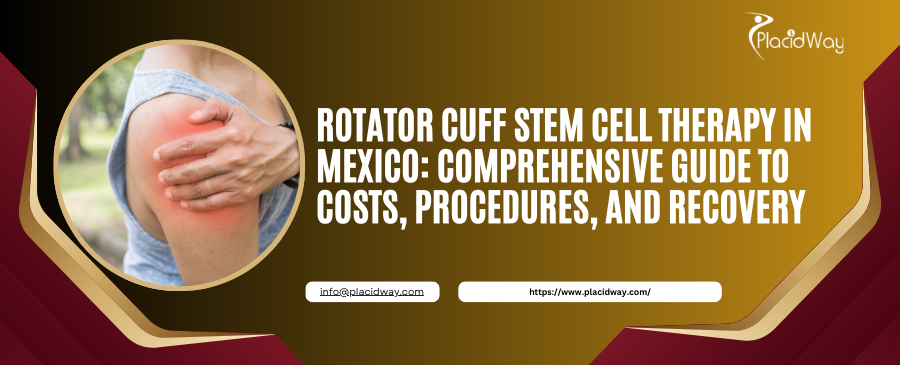
Rotator Cuff Stem Cell Therapy in Mexico: Comprehensive Guide to Costs, Procedures, and Recovery

Rotator Cuff Stem Cell Therapy in Mexico: Comprehensive Guide to Costs, Procedures, and Recovery

Rotator Cuff Syndrome is a common debilitating shoulder injury, and stem cell therapy in Mexico offers a highly effective, minimally invasive alternative to traditional surgery. Utilizing potent Mesenchymal Stem Cells (MSCs), treatment protocols in medical tourism hubs like Tijuana and Cancun promote significant tissue regeneration, pain reduction, and functional recovery. Patients typically save 50%–65% compared to US costs.

Chronic shoulder pain and limited mobility from a rotator cuff injury can severely impact your quality of life, often leading to a challenging decision between ongoing discomfort and invasive surgery. For many seeking effective, non-surgical solutions, Rotator Cuff Stem Cell Therapy in Mexico: Comprehensive Guide to Costs, Procedures, and Recovery has emerged as a compelling option. This regenerative approach leverages the body’s natural healing capabilities, offering a promising pathway to recovery.

Mexico has become a leading destination for medical tourism, particularly for advanced regenerative treatments. Patients from the U.S. and Canada are increasingly choosing Mexican clinics for rotator cuff stem cell therapy due to substantial cost savings, access to innovative protocols, and high-quality medical expertise. This comprehensive guide will explore the costs, procedures, recovery expectations, and safety standards involved, helping you make an informed decision for your shoulder health.

What Key Benefits Does Stem Cell Therapy Offer for Rotator Cuff Injuries?

  • Significant Savings: Patients often save 50%–65% on orthopedic stem cell procedures by choosing specialized clinics in Mexico compared to US and Canadian costs.
  • Excellent Safety Profile: Mesenchymal Stem Cells (MSCs) have a strong safety record, especially when using autologous or ethically sourced allogeneic cells, virtually eliminating rejection risks.
  • Affordable Treatment Costs: Rotator cuff stem cell therapy in Mexico typically ranges from $3,500 to $8,000 USD per joint, a fraction of international prices.
  • Minimally Invasive Option: This non-surgical approach reduces downtime and avoids the lengthy, challenging rehabilitation often associated with traditional rotator cuff surgery.
  • Promotes Natural Healing: MSCs work to actively reduce inflammation, decrease pain, and stimulate the body’s intrinsic repair mechanisms for damaged tendon tissue.

How Does Stem Cell Therapy Work for Rotator Cuff Injuries?

Stem cell therapy for Rotator Cuff Syndrome is a minimally invasive, non-surgical treatment. It harnesses the body’s natural regenerative cells, primarily Mesenchymal Stem Cells (MSCs), to repair damaged tendon tissue. This process reduces pain and decreases inflammation in the affected shoulder joint.

Rotator Cuff Syndrome encompasses various injuries to the four tendons and muscles surrounding the shoulder joint. These conditions typically cause pain, weakness, and reduced range of motion. Traditional surgery often entails extensive and difficult rehabilitation. Stem cell therapy offers a powerful alternative or complement to conventional surgical repair. It utilizes Mesenchymal Stem Cells (MSCs), which are multipotent adult cells found in tissues like bone marrow (BMAC) or fat (ADSCs). These cells are precisely injected into the injured area of the shoulder, usually guided by ultrasound or fluoroscopy for accuracy. The regenerative approach focuses on genuine tissue healing rather than merely masking pain. MSCs operate through paracrine signaling, releasing growth factors that prompt native cells to initiate repair. They also exhibit anti-inflammatory action, suppressing localized inflammation and reducing pain and swelling. Furthermore, MSCs possess the potential to differentiate into tenocytes, contributing to the formation of new, strong tendon tissue. This advanced treatment aims for internal tissue healing, offering a surgery-free solution for many patients with partial tears or tendinopathy. It also significantly augments the success rates of surgical repair for full-thickness tears.

What Outcomes Can Patients Expect from Stem Cell Therapy, and What are the Associated Risks?

Evidence & Outcomes: Success rates are highly dependent on the tear’s severity and the dosage of cells administered. For partial tears and tendinopathy, many reputable clinics report impressive patient satisfaction and functional improvement rates, typically ranging between 70% and 90%. For full tears, stem cells are often employed to enhance the success of surgical repair, significantly reducing the likelihood of a re-tear. The failure rate for traditional surgical repair can be as high as 90% in elderly patients, making stem cell therapy a vital option to improve structural integrity and healing. Individual results vary based on age, health, and injury specifics.

Risks & Contraindications: While stem cell therapy is considered exceptionally safe, particularly with autologous or rigorously screened allogeneic MSCs, it’s crucial to understand potential, albeit minimal, risks. The primary concerns are localized infection at the injection site or a lack of efficacy if the cells are not viable. Exaggerated claims of “cures” or “guarantees” should be viewed with skepticism, as individual variations in healing are significant. Patients should consult a board-certified specialist to assess their specific injury and overall health. Warning signs for complications are rare but include persistent severe pain, redness, or swelling at the injection site. These should prompt immediate medical attention.

Did You Know?

Did you know that Mexico is home to some of the world’s most advanced medical facilities, where patients often save significant amounts on Rotator Cuff Stem Cell Therapy while receiving care that meets or exceeds international hospital standards?

How Do Rotator Cuff Stem Cell Therapy Costs in Mexico Compare Internationally?

The cost of stem cell therapy for a rotator cuff tear in Mexico is notably lower than in the US or Canada. This is primarily due to reduced operational overhead and favorable currency exchange rates. Importantly, these savings do not come at the expense of facility quality or physician expertise. Prices are often bundled into single, transparent packages for medical tourists, varying based on cell count and protocol specifics.

Cost Breakdown

Major Savings

Country Estimated Cost Average Savings
Mexico (Tijuana, Cancun) $4,500 – $8,000 USD Starting Point Best Value
United States $12,000 – $25,000+ USD N/A
Turkey (Istanbul, Izmir) $2,700 – $5,500 USD 70% – 85% Savings
South Korea (Seoul) $7,000 – $13,000 USD 30% – 50% Savings

Essential Facts & Pro-Tips

1
Fast Fact: Mexico’s regulatory body, COFEPRIS, permits access to regenerative therapies that are often available only under clinical trials in the US and Canada.
2
Travel Tip: Most patients are medically cleared to travel immediately after the minimally invasive stem cell procedure. For cross-border travel from Tijuana, simple, non-strenuous movement is encouraged.
3
Recovery Tip: Avoid all Non-Steroidal Anti-Inflammatory Drugs (NSAIDs) like ibuprofen or aspirin for at least two weeks post-injection, as they can hinder stem cell healing. Acetaminophen is generally permitted for pain relief.

What Does a Rotator Cuff Stem Cell Treatment Journey in Mexico Involve?

Mexico’s top clinics prioritize efficiency and patient safety throughout the treatment journey for rotator cuff stem cell therapy. The process is designed to minimize your time away from home while adhering to rigorous medical standards.


Day 01
Initial Consultation & Diagnostics
Your journey begins with a detailed medical consultation, often initiated remotely. Upon arrival in Mexico, you’ll undergo local imaging (MRI or ultrasound) for precise tear assessment. A physical exam by an orthopedic specialist will confirm your candidacy and tailor the treatment plan.
Day 02 – 03
Procedure & Immediate Recovery
The stem cell injection itself is quick, typically 30-60 minutes, guided by imaging for accuracy. If autologous cells are used, harvesting (bone marrow or fat) and processing occur the same day, taking 3-4 hours. Post-procedure, you’ll have minimal downtime, with light activities resumed within 48-72 hours.
Weeks 3 – 6 Months
Regenerative Phase & Rehabilitation
True healing is a gradual process. Weeks 3-4 involve gentle physical therapy (PT) and light activity, leading to noticeable pain reduction. Months 1-3 see significant gains in strength and mobility, with a gradual return to sports. Full recovery and peak tissue healing are observed within 3-6 months with continued PT.

Frequently Asked Questions

1. Is stem cell therapy for rotator cuff tears approved in Mexico?+

Yes, stem cell therapy is legally available and highly regulated in Mexico. While the US FDA typically restricts such treatments outside of clinical trials, Mexico’s regulatory body (COFEPRIS) allows specialized clinics to offer these therapies directly to patients under specific medical supervision. This robust regulatory framework ensures patient safety and treatment quality in accredited facilities.

2. What is the success rate of stem cell therapy for a torn rotator cuff?+

Success rates are highly dependent on the tear’s severity and the cell dosage administered. For partial tears and tendinopathy, many clinics report patient satisfaction and functional improvement rates between 70% and 90%. For full-thickness tears, stem cells are often used to boost the success rate of surgical repair, significantly lowering the chance of a re-tear. Individual results vary.

3. How long does the rotator cuff stem cell injection procedure take?+

The injection itself is quick, typically lasting only 30–60 minutes. It is performed under local anesthetic or light sedation, using image guidance (ultrasound or fluoroscopy) for pinpoint accuracy. If you choose an autologous procedure (harvesting cells from your own fat or bone marrow), the entire same-day process, including harvesting and processing, may take 3 to 4 hours.

4. Does insurance cover the cost of stem cell treatment in Mexico?+

Generally, no. Most US and Canadian health insurance providers classify regenerative medicine treatments for orthopedic injuries as experimental or elective and typically do not cover them, even when performed domestically. However, the significantly lower cost in Mexico often makes the self-pay option there more affordable than paying the co-pay for surgery in your home country.

5. When can I start physical therapy after the injection?+

Patients are usually advised to begin passive range-of-motion exercises almost immediately after the injection. Gentle, low-load, guided physical therapy can typically start around the two-week mark. Aggressive strengthening exercises are generally delayed until 4–6 weeks post-injection. This allows the injected stem cells sufficient time to initiate the initial phase of tissue regeneration and proper healing without undue stress.

6. Can I travel immediately after my stem cell treatment in Mexico?+

Yes. Since rotator cuff stem cell therapy is a minimally invasive procedure, most patients are medically cleared to travel the same day or the following day after treatment. For those traveling back across the border from Tijuana, simple, non-strenuous movement is encouraged. However, it is generally recommended to stay in the clinic’s local city for at least 24 hours for observation.

7. Who is an ideal candidate for stem cell therapy for rotator cuff injuries?+

Ideal candidates typically have partial-thickness tears or chronic tendinopathy and have not found relief from conservative treatments like physical therapy or corticosteroid injections. Patients seeking to avoid invasive surgery with its associated lengthy recovery are also strong candidates. While patients of all ages can benefit, younger individuals (under 60) often have more potent autologous stem cells, potentially leading to better outcomes.

8. What types of stem cells and protocols are used in Mexico?+

Mexican clinics primarily use Mesenchymal Stem Cells (MSCs), which can be autologous (from the patient’s bone marrow or fat) or allogeneic (from screened umbilical cord blood or tissue). Allogeneic UC-MSCs are often preferred for their higher cell count and potency. Many leading clinics use a combination protocol that includes MSCs, Platelet-Rich Plasma (PRP), and exosomes to enhance healing and accelerate recovery, providing a comprehensive regenerative approach.

Ready to Take the Next Step Towards Recovery?

Choosing the right destination for your medical care is significant. By opting for treatment abroad, you are not just saving on costs—you are gaining access to specialized clinicians and world-class care.

Get Your Free Quote Now

Related Resources

Medical Disclaimer: This article is for informational and educational purposes only and does not constitute medical advice, diagnosis, or treatment recommendations. The information provided is thoroughly researched but should not replace a consultation with a qualified healthcare professional. No guaranteed outcomes are promised. Always seek the advice of your physician or other qualified health provider with any questions you may have regarding a medical condition.

Picture of About Author: Hina Munawar

About Author: Hina Munawar

As the Editor of Global Stem Cell Therapy, I provide trusted, research-based information on stem cell treatments worldwide. With over a decade of experience in medical tourism, I guide patients toward safe, effective, and affordable therapies.

Related Articles

Discover advanced, non-surgical stem cell therapy for herniated discs in Mexico. Learn about high-dose MSC protocols in Tijuana & Cancún, cost savings (50-70% less), safety, and recovery.
A comprehensive guide for Brazilian patients seeking stroke stem cell therapy in Mexico, covering treatments, benefits, safety, costs, and travel preparation.
Explore comprehensive guide to rotator cuff stem cell therapy in Mexico, covering costs ($3,500-$8,000), procedures, and recovery. Find vetted clinics in Tijuana, Cancun & Guadalajara.
GSC Logo X
send