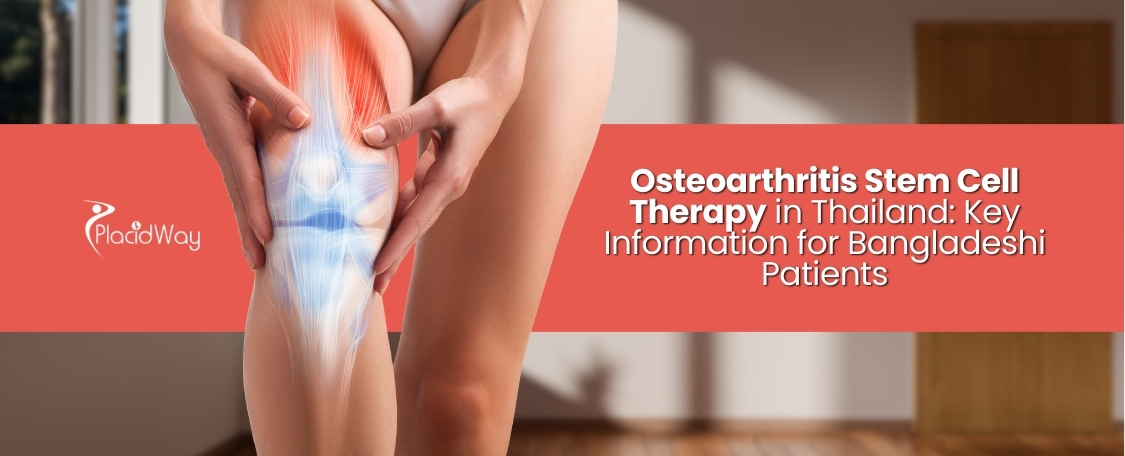
For Bangladeshi patients seeking advanced, non-surgical options to manage osteoarthritis, Thailand has emerged as a prime destination for stem cell therapy. Leading Thai regenerative medicine centers offer specialized protocols aimed at reducing inflammation, promoting cartilage repair, and improving joint mobility. These treatments typically range from $5,000 – $15,000 USD (approx. ৳5.5 Lakh – ৳16.5 Lakh BDT), presenting a cost-effective alternative to procedures in Western countries while maintaining international safety and quality standards.
Living with osteoarthritis can significantly impact daily life, leading to chronic pain, stiffness, and reduced mobility. For many Bangladeshi patients, traditional treatments may offer limited relief or involve invasive surgical procedures. This often leads to exploring advanced medical solutions abroad.
Thailand, renowned for its booming medical tourism sector, offers a compelling alternative. Its state-of-the-art regenerative medicine centers provide specialized stem cell protocols designed to address the root causes of osteoarthritis. These innovative therapies aim to alleviate joint inflammation, support natural cartilage repair, and restore mobility, all without the need for major surgery.
This comprehensive guide provides Osteoarthritis Stem Cell Therapy in Thailand: Key Information for Bangladeshi Patients. It covers everything from treatment options and benefits to safety standards, costs, and essential travel preparations. Our goal is to empower you with the knowledge needed to make an informed decision for your joint health journey, ensuring comfort and a more active lifestyle.
What Key Advantages Does Thailand Offer for OA Stem Cell Treatment?
- Cost Efficiency: Stem cell injections for joint repair in Thailand offer significant value, with typical costs ranging from $5,000 to $15,000 USD. This is often considerably less expensive than comparable procedures in many Western nations, providing a high-quality, accessible option for Bangladeshi patients.
- Safety & Accreditation: Thai treatment facilities are frequently JCI-accredited, adhering to stringent international safety standards. The Thai FDA strictly oversees cell processing, ensuring compliance with Good Manufacturing Practices (GMP) and patient safety.
- Advanced Treatment Protocols: Many Thai clinics utilize potent Umbilical Cord-Derived Mesenchymal Stem Cells (UC-MSCs). These younger, more robust cells are particularly effective for cartilage regeneration, offering a significant advantage over using an older patient’s own, potentially less vital, cells.
- Logistical Ease for Bangladeshi Patients: Direct and relatively short flights from Dhaka (DAC) to Bangkok (BKK), approximately 2.5 hours, make the journey convenient. This minimizes travel stress, which is crucial for individuals with mobility challenges.
- Streamlined Visa Process: Bangladeshi citizens can easily secure a Medical Tourist Visa (MT) for Thailand. Top Thai hospitals regularly provide the essential invitation letter required for the application process at the Royal Thai Embassy in Dhaka.
What is Osteoarthritis, and How Does Stem Cell Therapy Address It?
Osteoarthritis (OA) is a degenerative joint disease where the cartilage cushioning the ends of bones wears down over time. This leads to pain, swelling, and reduced joint movement, primarily affecting the knees, hips, and shoulders. As a progressive condition, OA can severely impact a patient’s quality of life.
Stem cell therapy for osteoarthritis is a non-surgical, regenerative treatment focused on repairing damaged joint tissue and reducing chronic pain. It represents a biological solution that moves beyond traditional symptom management. This approach uses Mesenchymal Stem Cells (MSCs), known for their ability to promote healing and tissue regeneration, offering a promising avenue for joint preservation. The therapy aims to restore comfort and maintain an active lifestyle for patients.
The regenerative mechanism of MSCs involves a multi-faceted approach. First, when injected into the joint (intra-articularly), MSCs actively reduce chronic inflammation, a key driver of cartilage destruction in OA. Second, they release powerful growth factors that signal the joint’s remaining cells to slow down degeneration. This cellular communication also promotes the formation of new, healthy cartilage-like tissue, a process known as chondrogenesis. Ultimately, by mitigating pain and encouraging natural repair, stem cell therapy helps to stabilize the joint, often delaying or even avoiding the need for more invasive procedures like total joint replacement surgery. This comprehensive action makes it an attractive option for many patients.
What is the Evidence for Stem Cell Therapy, and What are the Potential Risks?
Evidence & Outcomes: Clinical reports on stem cell therapy for knee osteoarthritis (OA) show encouraging results, particularly for suitable candidates with Grade 1–3 OA. Success rates are reported between 70–85% for achieving significant pain reduction and improved mobility. These outcomes often allow patients to defer or avoid major surgery. The regenerative effects, including substantial pain relief and enhanced function, typically last between 3 to 5 years, though individual results can vary based on lifestyle, the initial severity of OA, and adherence to post-treatment rehabilitation plans. Ongoing research continues to refine protocols and expand the understanding of long-term benefits, providing hope for sustained relief and improved quality of life.
Risks & Contraindications: While stem cell therapy is generally considered safe, like any medical procedure, it carries potential risks. These can include minor injection-site pain, swelling, bruising, or a low risk of infection. Although Umbilical Cord-Derived Mesenchymal Stem Cells (UC-MSCs) have a very low risk of immunological rejection, adverse reactions are always a possibility. It’s crucial to understand that stem cell therapy for joint pain is still largely considered investigational and is not universally covered by insurance. Exaggerated claims of “cures” or “guarantees” should be approached with extreme caution, as individual responses vary widely. Patients should always consult with a qualified orthopedic or regenerative medicine specialist to assess their specific condition, discuss all potential benefits and risks, and understand that outcomes are not guaranteed. Warning signs such as increased severe pain, fever, redness, or pus at the injection site warrant immediate medical attention.
Did you know that Thailand is home to some of the world’s most advanced medical facilities, where patients often save significant amounts on Osteoarthritis Stem Cell Therapy while receiving care that meets or exceeds international hospital standards? Thai hospitals are often JCI-accredited, ensuring high levels of patient safety and quality.
How Does the Cost of OA Stem Cell Therapy in Thailand Compare Globally?
The cost of osteoarthritis stem cell therapy in Thailand offers a compelling value proposition, balancing high international standards with competitive pricing. While some regions like India may present lower initial costs, Thailand’s established medical infrastructure, including JCI-accredited facilities and highly specialized orthopedic surgeons, often ensures a superior assurance of quality, comprehensive service, and advanced treatment modalities like UC-MSCs. This positions Thailand as an attractive option for Bangladeshi patients seeking effective solutions without the exorbitant prices typically found in Western healthcare systems.
Essential Facts & Pro-Tips for Your Medical Journey
What Does the Stem Cell Therapy Treatment Journey in Thailand Entail?
The treatment protocol for joint repair in Thailand is meticulously designed to be short, efficient, and minimally invasive, typically requiring a 3-5 day stay in Bangkok. This streamlined approach allows patients to receive high-quality care with minimal disruption to their lives, emphasizing convenience and effective recovery.