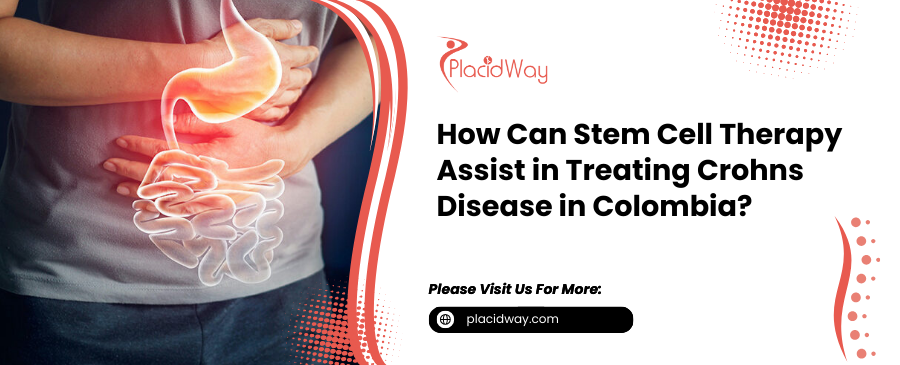
If you have been living with Crohn’s disease, you know that the daily struggle is about more than just stomach pain; it is a constant battle with your own immune system. While traditional medications like biologics and steroids have helped many, they often come with heavy side effects or eventually stop working. This is why so many patients are now looking toward stem cell therapy for Crohn’s disease in Colombia. Colombia has quietly become a world-class destination for regenerative medicine, offering advanced protocols that aren’t always accessible in North America or Europe.
The core question is: does it actually work? The short answer is yes, for many patients. This therapy doesn’t just mask the symptoms; it aims to reset the immune system and repair the damaged lining of your gut. In Colombia, medical teams use high-potency mesenchymal stem cells (MSCs) to target the root cause of the inflammation. In this post, we’re going to dive deep into the real-world results, safety standards, and the financial side of choosing Colombia for your healing journey.
How does stem cell therapy help Crohn’s disease?
Crohn’s is an autoimmune condition where the body mistakenly attacks its own digestive tract. Stem cell therapy for Crohn’s disease works by introducing Mesenchymal Stem Cells (MSCs), which act like a biological “reset button.” These cells have a unique ability called immunomodulation. Instead of suppressing your entire immune system (like traditional drugs do), they “teach” the immune cells to stop the overactive inflammatory response.
Once these cells are infused—usually via IV or local injection—they migrate to the areas of highest inflammation. They release growth factors that help heal ulcers in the intestinal wall and close painful fistulas. This regenerative approach is what sets it apart from conventional medicine.
What are the success rates for stem cell therapy in Crohn’s patients?
Success in treating Crohn’s disease is measured in several ways: clinical remission (no symptoms), endoscopic healing (a healthy-looking gut on a camera), and the closure of fistulas. Recent studies have shown that more than half of the patients who didn’t respond to biologics saw a dramatic reduction in their Crohn’s Disease Activity Index (CDAI) scores after receiving stem cells.
- Fistula Healing: This is where the therapy shines, with some trials showing over 70% success in closing complex perianal fistulas.
- Symptom Relief: Patients often report better energy, less urgency, and a return to a normal diet within weeks of treatment.
- Long-term Remission: While not a permanent cure, many patients enjoy years of “quiet” disease without the need for daily heavy medications.
Is stem cell therapy for Crohn’s disease safe in Colombia?
Safety is often the biggest concern for international patients. In Colombia, the regenerative medicine sector is regulated by INVIMA (the Colombian equivalent of the FDA). Most reputable clinics use umbilical cord-derived MSCs, which are considered very safe because they do not require a surgical harvest from the patient and have low immunogenicity, meaning the body is unlikely to reject them.
The side effects are typically mild, such as a low-grade fever or fatigue for 24 hours after the infusion. Because these are not embryonic stem cells, there is no ethical controversy or risk of tumor formation associated with the types of MSCs used in these Colombian protocols.
How much does stem cell therapy for Crohn’s disease cost in Colombia?
One of the primary reasons patients choose medical tourism in Colombia is the significant cost savings. In the United States, a single round of expanded stem cell therapy can easily exceed $30,000 to $50,000, and it is rarely covered by insurance. Colombia offers a much more accessible price point without sacrificing the quality of care or the potency of the cells.
Below is a detailed comparison of the estimated costs you might encounter. Keep in mind that Colombia stem cell costs often include local transportation and concierge services, which adds even more value to the package.
| Country | Typical Cost (USD) | Cell Type Used | Estimated Savings |
|---|---|---|---|
| United States | $30,000 – $60,000 | Bone Marrow / Adipose | – |
| Colombia | $8,500 – $15,000 | Umbilical Cord MSCs | Up to 75% |
| Mexico | $10,000 – $20,000 | Umbilical Cord MSCs | 50% – 60% |
| Panama | $20,000 – $35,000 | Expanded MSCs | 30% – 40% |
Why are umbilical cord stem cells used for Crohn’s disease?
In the world of regenerative medicine, age matters. As we get older, our own stem cells lose some of their “healing power” and can even carry the “memory” of our inflammation. Umbilical cord tissue (specifically Wharton’s Jelly) provides the most pristine source of MSCs. These cells are brand new, highly proliferative, and haven’t been exposed to environmental toxins or disease.
For a Crohn’s patient whose body is already under stress, avoiding a bone marrow aspiration or liposuction is a huge benefit. You simply show up, receive the infusion, and let the cells go to work.
What is the typical treatment protocol for Crohn’s in Colombia?
Treatment for inflammatory bowel disease (IBD) is not a one-hour appointment. It is a multi-step process designed to maximize the survival and effectiveness of the cells.
- Day 1: Consultation and diagnostic blood work to check current inflammation markers (like CRP and calprotectin).
- Day 2-3: The primary stem cell infusion. Many clinics deliver 100 million to 300 million cells to ensure a therapeutic “threshold” is met.
- Day 4: Post-treatment monitoring and often “booster” therapies like exosomes or localized injections if fistulas are present.
Can stem cell therapy heal Crohn’s fistulas?
Fistulas are one of the most painful and difficult complications of Crohn’s disease. Traditional surgery often fails because the tissue is too inflamed to heal properly. Stem cells change the environment of the tissue from “pro-inflammatory” to “pro-healing.” By injecting the cells directly into the fistula, doctors can close these abnormal connections and prevent the need for more invasive bowel resections.
Will I still need to take my Crohn’s medication after therapy?
The goal of stem cell treatment for Crohn’s is to reach a point where your body can maintain its own balance. While you shouldn’t throw away your prescriptions on day one, many patients find they no longer experience “flares” and can slowly reduce their dependency on drugs that have harsh side effects. This transition is always done carefully with a gastroenterologist.
What are the long-term results of stem cell therapy for IBD?
Because Crohn’s is a chronic condition, “cure” is a word doctors use carefully. However, “sustained remission” is a very realistic goal. The effectiveness of stem cell therapy is often long-lasting because the cells help rebuild the gut barrier, which prevents the “leaky gut” cycle that keeps the immune system in a state of alarm.
Does stem cell therapy help with nutrient absorption?
Malnutrition and weight loss are huge hurdles for Crohn’s disease patients. When the intestinal villi (tiny hair-like structures) are destroyed by inflammation, you can’t absorb vitamins. As the stem cells promote tissue regeneration, these structures can recover, leading to better energy levels, weight gain, and overall vitality.
Why is Colombia a leader in stem cell therapy?
Colombia has invested heavily in medical tourism and biotechnology. Unlike some countries where stem cell therapy is “underground,” in Colombia, it is a mainstream medical field with university-trained doctors and state-of-the-art laboratories. Cities like Bogota, Medellin, and Cali are home to clinics that rival the best in the world.
How do I prepare for my stem cell trip to Colombia?
To get the best results from stem cell therapy in Colombia, you want your body to be as “quiet” as possible. Most clinics will ask for your latest colonoscopy report and blood panels. They might also suggest avoiding alcohol, processed sugars, and smoking for a few weeks prior to arrival.
What should I expect during the recovery period?
Stem cell therapy is not like surgery; there is no “wound” to heal. However, the biological changes take time. You might feel a burst of energy early on due to the anti-inflammatory effect, but the true tissue regeneration happens over the course of three to six months.
Are there any age limits for Crohn’s stem cell therapy?
Whether you are a young adult just diagnosed or a senior who has battled IBD for decades, stem cell therapy for Crohn’s can be an option. The medical team will look at your overall health to ensure that your heart and lungs can handle the journey and the treatment.
How do I choose the right clinic in Colombia?
Don’t be afraid to ask questions. A reputable clinic will be happy to show you their INVIMA certifications and explain exactly where their cells come from. Look for places that offer a holistic approach, including nutritional guidance and follow-up care, rather than just a one-off injection.
Ready to reclaim your health and leave the pain of Crohn’s disease behind? Explore your options for world-class care and advanced treatments through PlacidWay, your trusted partner in global healthcare solutions.