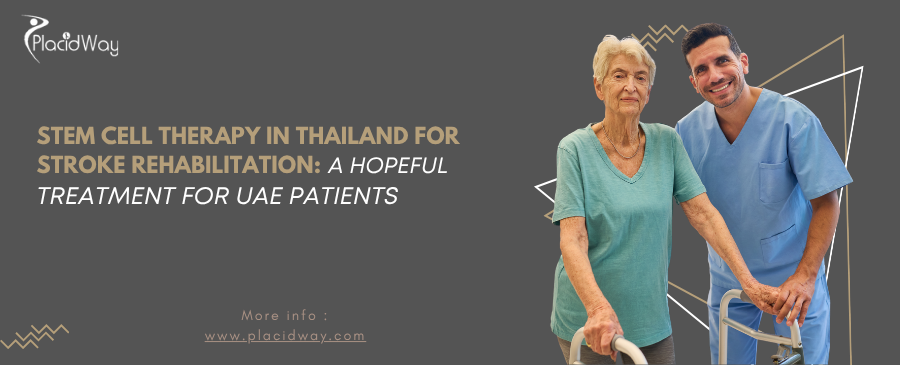
Stem cell therapy in Thailand represents an accessible and advanced option for chronic stroke recovery, particularly for patients from the UAE seeking high-quality, cost-effective treatment. This regenerative approach primarily uses Mesenchymal Stem Cells (MSCs) to enhance the brain’s natural healing processes. It promotes neuroprotection, reduces damaging inflammation, and stimulates neurogenesis, with UAE patients potentially saving 50-70% on comprehensive packages compared to Western countries.
Stroke is a leading cause of long-term disability worldwide, profoundly impacting mobility, speech, and cognitive function. Many stroke survivors face a plateau in their recovery despite conventional rehabilitation efforts. For those seeking advanced solutions, regenerative medicine offers a beacon of hope.
Thailand has emerged as a global leader in medical tourism, especially for innovative neurological treatments. Its cutting-edge facilities, internationally trained specialists, and rigorous safety protocols make it an appealing destination. Patients from the UAE can access high-quality care that rivals Western standards, often at a fraction of the cost.
This article explores the transformative potential of Stem Cell Therapy in Thailand for Stroke Rehabilitation: A Hopeful Treatment for UAE Patients. We delve into how this regenerative approach works, who are ideal candidates, the treatment protocols, expected outcomes, and cost advantages. Understanding these aspects is crucial for making informed decisions about stroke recovery journeys.
What Are the Key Benefits of Stem Cell Therapy in Thailand for Stroke?
- Significant Cost Savings: UAE patients can save 50% to 70% on comprehensive stroke rehabilitation packages compared to Western programs.
- Internationally Accredited Facilities: Thailand boasts JCI-accredited hospitals and specialists adhering to global standards for safety and efficacy.
- Advanced Regenerative Protocols: Treatment primarily uses Mesenchymal Stem Cells (MSCs) from umbilical cord tissue for neuroprotection and tissue repair.
- Integrated Rehabilitation Approach: Therapy is seamlessly combined with intensive physical and occupational therapy for maximal functional recovery.
- Culturally Sensitive Patient Support: Thai hospitals offer Arabic-speaking coordinators, halal food, and prayer facilities for Middle Eastern patients.
How Does Stem Cell Therapy Promote Stroke Recovery and Neurogenesis?
Stem cell therapy is an advanced regenerative treatment using specialized cells, primarily Mesenchymal Stem Cells (MSCs). These cells aim to repair brain tissue damaged by stroke, offering hope for improved neurological function even years after the initial event.
The primary goal is not simple cell replacement, but activating the brain’s intrinsic repair mechanisms. Transplanted cells secrete various trophic factors, including growth factors and cytokines, which initiate several restorative processes. MSCs are favored for their immunomodulatory effect, suppressing harmful inflammation in the brain and creating a favorable microenvironment for healing. They also promote angiogenesis, forming new blood vessels to restore blood flow and oxygen to the ischemic penumbra. Furthermore, MSCs release neurotrophic factors that protect existing neurons and stimulate endogenous neural stem cells to differentiate into new neural cells. This process enhances synaptic plasticity, reorganizing existing neural networks and strengthening functional connectivity, which directly improves motor and cognitive skills. The type of stroke (ischemic or hemorrhagic) does not significantly restrict therapy use, though timing is crucial for maximizing results.
What Clinical Evidence Supports Stem Cell Therapy for Stroke and What Are the Risks?
Evidence & Outcomes: Clinical trials highlight that benefits of stem cell therapy for stroke largely derive from the paracrine effect, where administered cells signal existing damaged cells to heal and survive. Functional improvements often appear gradually over three to six months post-infusion, supported by ongoing intensive rehabilitation. Patients may experience enhanced motor function, improved gait, better fine motor control, and improvements in speech and swallowing difficulties (aphasia, dysphagia). Cognitive functions like memory, focus, and executive function can also sharpen. Reductions in muscle stiffness (spasticity) and neuropathic pain lead to increased comfort and mobility. Expert insights suggest the critical window for measurable gains begins around 90 days post-infusion, when paracrine effects maximally reduce inflammation and stimulate neuroplasticity. Consistent, rigorous physical therapy is vital during this period to optimize outcomes.
Risks & Contraindications: Stem cell therapy using autologous (patient’s own) or carefully screened allogeneic (donor-derived) MSCs is generally considered safe with a low risk profile. Common side effects are mild and temporary, typically including headache, slight fever, and fatigue on the day of injection, or temporary pain at the injection site (for intrathecal delivery). While these are generally manageable, it is crucial to understand that individual results vary significantly. Stem cell therapy is not a guaranteed cure but an enhancement to traditional rehabilitation. Patients should have realistic expectations and be committed to an integrated rehabilitation program. Always consult with a qualified healthcare professional to discuss specific risks, potential benefits, and suitability for treatment. Active infections or uncontrolled severe underlying conditions like hypertension or diabetes may contraindicate the therapy, emphasizing the need for rigorous screening.
Did You Know?
Did you know that Thailand is home to some of the world’s most advanced medical facilities, like JCI-accredited hospitals, where UAE patients often save 40% to 70% on stem cell therapy packages while receiving care that meets or exceeds international hospital standards?
How Does the Cost of Stem Cell Therapy in Thailand Compare to Other Countries?
Thailand offers highly competitive pricing for comprehensive stroke rehabilitation packages, making this advanced treatment accessible. This is particularly beneficial for patients from the Gulf Cooperation Council (GCC) and UAE, who often face high costs or long wait times in their home countries or other Western nations. The total cost is variable, depending on cell dosage, cell source, number of sessions, and inclusion of adjunct therapies such as hyperbaric oxygen or NAD+. Patients traveling from the UAE typically realize significant cost savings of 40% to 70% on the entire treatment package, including procedures, accommodation, and rehabilitation, by choosing Thailand over the U.S. or Europe.
Cost Breakdown
Major Savings
| Destination |
Estimated Cost Range (USD) |
Key Considerations |
| Thailand (Bangkok/Chiang Mai) |
$7,100 – $14,300 |
Includes consultation, high-dosage UC-MSCs, IV/IT delivery, and often a 3-5 day post-infusion recovery stay. Highly regulated by Thai FDA. Best Value |
| Mexico (Regenerative Centers) |
$10,000 – $22,000+ |
Known for large cell counts and speed of access. Costs vary widely depending on clinic reputation. |
| Turkey (Advanced Protocols) |
$8,000 – $15,000 |
Strong for integrated physical therapy programs. Packages often include all logistics. |
| United States (Clinical Trials Only) |
$15,000 – $30,000+ |
Primarily limited to non-insured clinical trials or select, limited FDA-approved therapies, making access difficult and costly. |
Essential Facts & Pro-Tips
1
Fast Fact: Thai clinics prioritize safety and quality, operating under the stringent oversight of the Thai Ministry of Public Health (MOPH) and often holding international accreditations like JCI.
2
Travel Tip: Thai hospitals cater to international patients with cultural sensitivity, offering Arabic-speaking coordinators, halal food, and dedicated prayer facilities. Major medical centers are easily accessible in Bangkok and Phuket.
3
Recovery Tip: Most clinics recommend a 10 to 14-day stay in Thailand to integrate stem cell therapy with an initial, intensive course of physical and occupational rehabilitation, ensuring an optimal kick-start to the recovery process.
What Does the Typical Stem Cell Treatment Journey in Thailand Involve?
The stem cell therapy protocol in Thailand is designed for efficiency and patient safety. It combines advanced cellular delivery with supportive therapies and integrated rehabilitation. The process typically spans one to two weeks, ensuring a thorough approach to stroke recovery.
Day 01
Initial Consultation and Diagnostics
Patients undergo thorough diagnostic tests, including detailed MRI scans and comprehensive blood work. This phase also includes an in-depth medical history review and consultation with a multidisciplinary team of specialists to tailor the treatment plan.
Day 02 — 05
Stem Cell Administration and Supportive Therapies
Stem cells, usually allogeneic Mesenchymal Stem Cells (MSCs) from umbilical cord tissue, are administered. This is typically done via intravenous (IV) infusion or intrathecal (lumbar puncture) injection. These sessions are often combined with supportive intravenous therapies like vitamins or NAD+ to optimize the cellular environment.
Day 06 — 14
Intensive Rehabilitation and Post-Procedure Monitoring
Following cell administration, patients immediately begin or continue intensive physical, occupational, and speech therapy. Daily rehabilitation sessions are crucial for maximizing functional recovery. Post-procedure monitoring ensures any mild, temporary side effects are managed and that the patient is stable before returning home.
Frequently Asked Questions
1. Is stem cell therapy for stroke FDA approved in Thailand?+
Stem cell therapy for stroke is considered an investigational or advanced treatment, not fully approved by the U.S. FDA for widespread use outside of clinical trials. However, in regulated medical tourism destinations like Thailand, clinics operate under specific regulations of the Thai Ministry of Public Health (MOPH), allowing access to these innovative therapies. This regulatory framework ensures that treatments are conducted with strict safety and quality standards, providing a viable option for international patients seeking advanced care.
2. How long after a stroke can I still benefit from stem cell therapy?+
Stem cell therapy offers a far wider therapeutic window than traditional acute stroke interventions. Patients in the chronic phase, typically several months to several years post-stroke, can still experience significant functional improvements. The therapy targets neuroinflammation and promotes repair mechanisms that remain active long after the initial stroke event. This extended window provides a hopeful opportunity for individuals who may have exhausted conventional rehabilitation options and are seeking further recovery.
3. Are the stem cells used in Thailand ethically sourced?+
Yes, reputable and PlacidWay-affiliated Thai clinics primarily use allogeneic Mesenchymal Stem Cells (MSCs). These cells are derived from ethically sourced umbilical cord tissue (UC-MSCs), donated by consenting mothers after full-term, healthy births. Such cells are rigorously screened for safety and meticulously prepared in Good Manufacturing Practice (GMP)-certified laboratories, ensuring both ethical procurement and the highest standards of quality and viability for patient use.
4. What are the potential side effects of the treatment?+
Stem cell therapy using autologous or carefully screened allogeneic MSCs generally has a low risk profile. Common side effects are usually mild and temporary. Patients might experience a headache, slight fever, or fatigue on the day of injection. For intrathecal delivery, temporary pain at the injection site is also possible. These symptoms typically resolve quickly, and serious adverse events are rare. Always discuss any concerns with your medical team.
5. Will my UAE or international insurance cover the cost in Thailand?+
In most cases, international insurance or private plans, including those in the UAE, consider stem cell therapy for stroke rehabilitation experimental or elective. Therefore, they typically do not cover the procedure cost. Patients should plan for out-of-pocket expenses. PlacidWay assists by providing transparent, upfront pricing to help minimize financial surprises and allows patients to budget effectively for their treatment journey abroad.
6. Do I need to stay in Thailand after the treatment is finished?+
While the cellular infusion itself takes only a few days, most clinics recommend a stay of 10 to 14 days. This extended period allows for the integration of stem cell therapy with an initial, intensive course of physical and occupational rehabilitation. This kick-starts the recovery process optimally, which patients should continue upon returning to the UAE for sustained benefits.
7. Why is Thailand considered a premier choice for UAE medical tourists?+
Thailand offers a world-class combination of advanced medical technology, compassionate care, and a conducive environment for recovery. Beyond significant cost savings, Thai hospitals excel in cultural sensitivity, offering Arabic-speaking coordinators and appropriate amenities. Their integrated rehabilitation programs, seamless logistics, and tranquil “Land of Smiles” environment further enhance the medical tourism experience, ensuring comfort and comprehensive support for UAE patients and their families.
8. What are the key candidacy requirements for stroke stem cell therapy?+
Ideal candidates are stroke survivors who have stabilized from the acute phase, typically 3 months or more post-stroke. They must be in good general health, free of active infections, and have underlying conditions properly managed. Crucially, candidates need realistic expectations, understanding that while significant improvement is possible, it is not a guaranteed cure. A strong commitment to participating in an integrated rehabilitation program is also essential for maximizing treatment success.
Ready to Take the Next Step Towards Recovery?
Choosing the right destination for your medical care is significant. By opting for treatment abroad, you are not just saving on costs—you are gaining access to specialized clinicians and world-class care.
Get Your Free Quote Now
Medical Disclaimer: This article is for informational and educational purposes only and does not constitute medical advice, diagnosis, or treatment recommendations. The information provided is thoroughly researched but should not replace a consultation with a qualified healthcare professional. No guaranteed outcomes are promised. Always seek the advice of your physician or other qualified health provider with any questions you may have regarding a medical condition.