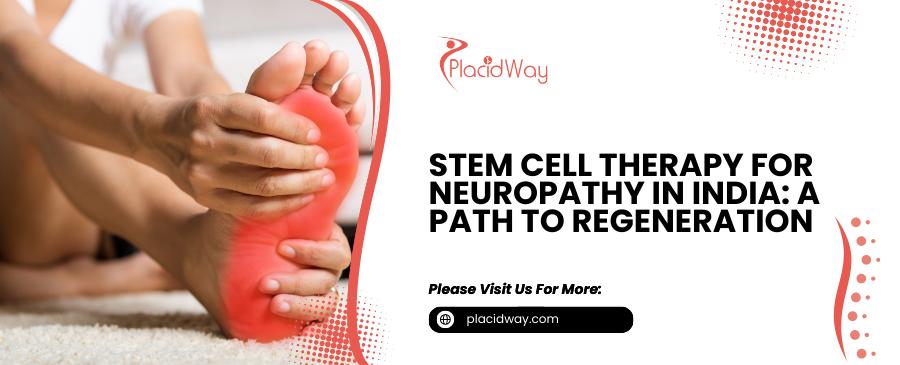
Can Stem Cell Therapy for Neuropathy in India Offer Hope?
Comprehensive guide to stem cell therapy for neuropathy in India. Compare costs vs. USA/UK, explore success rates, treatment packages in Mumbai & Delhi, and book free quotes.
Stem Cell Therapy for Neuropathy in India: A Path to Regeneration
Stem cell therapy for neuropathy in India is an investigational yet widely available regenerative treatment offered in JCI-accredited hospitals. These facilities report a 60–70% success rate in symptom improvement for patients. Comprehensive packages typically cost between $4,500 and $10,500, representing substantial savings compared to Western prices. Treatment often includes a 2–3 week stay with intensive rehabilitation, primarily utilizing Mesenchymal Stem Cells (MSCs) via intrathecal or IV administration.
Neuropathy, encompassing conditions like peripheral and diabetic neuropathy, deeply impacts millions worldwide. It brings persistent pain, numbness, and often a progressive decline in mobility. Traditional Western approaches frequently focus on managing symptoms with medication, leaving the underlying nerve damage unaddressed for many.
However, as regenerative medicine advances, a new horizon of treatment is emerging. Stem Cell Therapy for Neuropathy in India: A Path to Regeneration is now offering a potential pathway. This innovative approach seeks to not merely alleviate symptoms but to actively repair damaged neural tissue.
India has quickly established itself as a global leader in advanced regenerative treatments. It merges cutting-edge medical technology with highly skilled specialists, all available at significantly lower costs. Indian hospitals are harnessing the regenerative power of Mesenchymal Stem Cells (MSCs). They offer extensive care packages that draw patients from the USA, UK, UAE, and numerous other countries. This detailed guide explores the full spectrum of treatment options, including cost analyses, procedural specifics, and leading cities for your medical journey.
What Are the Key Advantages of Choosing India for Neuropathy Care?
Significant Cost Savings:Patients can save approximately 70-80% on treatment costs compared to the US or UK, with comprehensive packages often including accommodation and rehabilitation.
Integrated Care Protocols:Treatment typically includes a 14-21 day stay, with daily physiotherapy, occupational therapy, and airport transfers for holistic recovery.
Immediate Access to Treatment:International patients can usually schedule their procedures within weeks, bypassing the long waiting lists often found in national health systems.
World-Class Medical Expertise:India boasts numerous JCI-accredited hospitals and specialists trained in Western countries, ensuring adherence to global safety and quality standards.
Holistic Rehabilitation:Many top-tier hospitals integrate ancient Indian neuro-rehabilitation techniques like Ayurveda and Yoga with modern cellular therapy for enhanced outcomes.
How Does Stem Cell Therapy Regenerate Damaged Nerves?
This cutting-edge regenerative treatment utilizes the body’s intrinsic master cells to mend damaged nerve fibers and enhance signal transmission. It moves beyond conventional pain management to target the underlying causes of neural dysfunction, offering a pathway to genuine repair rather than temporary relief. This is particularly vital for chronic conditions where nerve damage progresses.
Stem cell therapy for neuropathy primarily employs Mesenchymal Stem Cells (MSCs) due to their potent anti-inflammatory and regenerative capabilities. Unlike typical pharmaceutical interventions that merely mask discomfort, MSCs operate by migrating to nerve damage sites—a phenomenon known as ‘homing’. There, they release neurotrophic factors, which are vital growth factors encouraging the repair of the myelin sheath and the regeneration of axons. This intricate biological process is crucial for individuals with diabetic neuropathy, alcoholic neuropathy, or chemotherapy-induced peripheral neuropathy (CIPN). In accredited Indian facilities, these therapeutic cells are usually sourced from two main types: autologous cells, harvested from the patient’s own bone marrow or adipose tissue to eliminate rejection risks; and allogeneic cells, derived from healthy, donated umbilical cords, often favored for their superior vitality and proliferation capacity, especially in older patients.
What Are the Reported Outcomes and Potential Risks?
Evidence & Outcomes: While individual responses vary, prominent Indian clinics report that roughly 60-70% of patients experience noticeable symptom improvements. These include reduced pain, restored sensation, and enhanced motor coordination. The highest success rates are observed in patients who actively engage in comprehensive rehabilitation alongside their cellular therapy. Furthermore, the sheer volume of stem cell procedures performed in India provides an unparalleled depth of experience. Specialized centers in cities like Delhi or Mumbai often manage hundreds of neuropathy cases annually, allowing physicians to continuously refine treatment protocols, including optimal dosage and administration routes like intravenous or intrathecal methods, to maximize patient benefits for peripheral neuropathy.
Risks & Contraindications: It is crucial to understand that stem cell therapy for neuropathy is currently considered a management and regenerative therapy, not a guaranteed “cure.” The primary objective is to halt disease progression, repair damaged nerve tissue, and improve the patient’s quality of life. Serious side effects are rare when treatments are performed in accredited facilities adhering to strict safety guidelines. Temporary and common side effects may include mild fever, headaches (especially after lumbar puncture), or localized pain at the injection site. The risk of rejection is minimal, particularly when using autologous cells or umbilical cord tissue that has been rigorously screened. Patients should always consult with a qualified healthcare professional to discuss their specific condition, assess suitability for treatment, and understand all potential risks and benefits. Individual outcomes can differ significantly.
Did You Know?
Did you know that India is home to some of the world’s most advanced medical facilities, where patients often save significant amounts on Stem Cell Therapy while receiving care that meets or exceeds international hospital standards?
How Do Costs for Neuropathy Stem Cell Therapy Compare Globally?
A global overview of medical costs clearly positions India as the most economical option for high-quality stem cell therapy. These significant savings enable extended rehabilitation stays that would otherwise be financially prohibitive in other regions. The lower operational and labor costs in India contribute to its affordability, without compromising on the quality of medical care. This comprehensive pricing structure means no hidden fees for diagnostics or consultations, providing transparency and peace of mind for international patients seeking advanced treatments.
Cost Breakdown
Major Savings
Country
Estimated Cost
Average Savings
India
$4,500 – $10,500
Starting Point Best Value
United States
$25,000 – $60,000
60-80% Savings
United Kingdom
$30,000 – $55,000
60-80% Savings
Mexico / Thailand
$12,000 – $25,000
Up to 50% Savings
Essential Facts & Pro-Tips
1
Fast Fact: India is home to over 40 JCI-accredited hospitals. This ensures that safety protocols for stem cell therapy meet or exceed Western standards, providing high-quality care.
2
Travel Tip: International patients can typically schedule their stem cell therapy procedures in India within weeks. This offers a significant advantage over the often months-long queues in national health systems.
3
Recovery Tip: Leading Indian clinics provide structured follow-up schedules after treatment at 1, 3, 6, and 12 months via video calls. This ensures continuous monitoring, medication adjustments, and guidance for home-based rehabilitation exercises.
What Does a Typical Stem Cell Therapy Journey in India Involve?
Navigating medical tourism can seem complex, but Indian hospitals have streamlined the process for international patients. They offer a seamless four-step journey designed to provide comprehensive support at every stage, from initial inquiry to post-treatment follow-up. This structured approach ensures efficiency and patient comfort throughout their stay.
Phase 1: Pre-Arrival Assessment
Initial Consultation & Eligibility
Your journey begins with a digital consultation. You’ll submit your medical history, NCV tests, and MRI reports for review. A team of neurologists and regenerative specialists will determine your eligibility. Qualified candidates receive a formal “Medical Visa Invitation Letter” to assist with travel.
Phase 2: Arrival & Preparation
Medical Checks & Pre-Procedure Protocols
Upon arrival, a hospital representative typically greets you at the airport. The first 1-2 days involve comprehensive health checks, blood work, and pre-procedure counseling. Doctors may also initiate a ‘detox’ protocol, preparing your body for the cellular therapy.
Phase 3: Procedure & Intensive Rehabilitation
Cell Administration & Recovery Program
The core treatment typically involves 2-3 sessions. Stem cells are administered via lumbar puncture (intrathecal) to reach the spinal cord, or intravenously (IV) for systemic benefits. The procedure takes 1-2 hours. Subsequent days focus on intensive physiotherapy, occupational therapy, and nutritional counseling to stimulate nerve repair.
Phase 4: Follow-up & Long-Term Monitoring
Post-Treatment Support & Progress Tracking
After returning home, your care continues. Leading Indian clinics provide structured follow-up schedules at 1, 3, 6, and 12 months through video calls. This allows the medical team to closely track your progress, adjust any necessary medications, and guide your ongoing home-based rehabilitation exercises effectively.
Frequently Asked Questions
1. What is the success rate of stem cell therapy for neuropathy in India?+
While individual results can vary, premier Indian clinics report that approximately 60-70% of patients experience noticeable improvements in key symptoms. These include significant pain reduction, regained sensation in affected areas, and improved motor coordination. Success is often maximized for patients who diligently follow a comprehensive rehabilitation program, integrated with the cellular therapy. This holistic approach supports the regenerative potential of the stem cells.
2. Is stem cell therapy for neuropathy legal in India?+
Yes, stem cell therapy in India is regulated by the Indian Council of Medical Research (ICMR) and the Central Drugs Standard Control Organization (CDSCO). While hematopoietic stem cell transplants are standard care, treatment for neuropathy is generally categorized as ‘investigational’ or ‘experimental.’ Accredited hospitals conduct these procedures under stringent ethical guidelines, often as part of clinical studies or approved compassionate use protocols, ensuring patient safety and oversight.
3. How much does stem cell therapy for neuropathy cost in India compared to the US?+
The cost of stem cell therapy for neuropathy in India ranges from approximately $4,500 to $10,500 USD. This represents a substantial saving when compared to similar treatments in the United States, which can cost between $25,000 and $60,000 USD. This pricing difference offers international patients savings of up to 80% without compromising on the quality of medical care provided in JCI-accredited facilities.
4. What types of stem cells are commonly used for nerve damage treatment?+
The most prevalent type of stem cells utilized in India for nerve damage treatment are Mesenchymal Stem Cells (MSCs). These versatile cells are typically harvested from two primary sources. Autologous MSCs are taken from the patient’s own bone marrow (often the hip bone) or adipose tissue (belly fat), minimizing rejection risk. Alternatively, allogeneic MSCs are sourced from ethically donated umbilical cord tissue (Wharton’s Jelly), which is favored for its high potency and lower immunogenicity.
5. Do treatment packages typically include physiotherapy or rehabilitation?+
Yes, comprehensive medical tourism packages in India nearly always incorporate an intensive rehabilitation program. This vital component typically consists of daily physiotherapy, occupational therapy, and sometimes even aquatic therapy. These sessions are usually scheduled for 14-21 days, a crucial period designed to maximize the regenerative potential of the administered stem cells and enhance functional recovery for patients after the procedure.
6. Is the stem cell therapy procedure itself painful?+
The stem cell therapy procedure is designed to be minimally invasive and is generally well-tolerated by most patients. When cells are harvested from bone marrow, the process is performed under local anesthesia or mild sedation to effectively minimize discomfort. The subsequent re-implantation of cells, whether via lumbar puncture (intrathecal) or intravenously (IV), is comparable to standard injections. Most patients report only mild soreness at the injection site, which typically subsides quickly.
7. What is the typical duration of stay required for treatment in India?+
Most treatment protocols for stem cell therapy for neuropathy in India necessitate a stay of approximately 2 to 3 weeks. This duration is carefully planned to accommodate several critical stages. It allows for thorough pre-procedure testing, the administration of stem cell cycles (which often include multiple doses), and a vital period of post-transplant monitoring and intensive neuro-rehabilitation. This extended stay ensures both patient safety and maximizes the therapeutic effectiveness of the treatment.
8. Are there significant side effects associated with stem cell therapy for neuropathy?+
Serious side effects from stem cell therapy for neuropathy are uncommon in accredited Indian facilities that adhere to strict medical guidelines. Patients might experience common, temporary side effects, such as a mild fever, a headache (particularly after a lumbar puncture), or localized pain at the injection site. The risk of cell rejection is minimal, especially when autologous (patient’s own) cells are used or when allogeneic umbilical cord tissue is rigorously screened for compatibility and safety before administration.
Ready to Take the Next Step Towards Recovery?
Choosing the right destination for your medical care is significant. By opting for treatment abroad, you are not just saving on costs—you are gaining access to specialized clinicians and world-class care.
Medical Disclaimer:This article is for informational and educational purposes only and does not constitute medical advice, diagnosis, or treatment recommendations. The information provided is thoroughly researched but should not replace a consultation with a qualified healthcare professional. No guaranteed outcomes are promised. Always seek the advice of your physician or other qualified health provider with any questions you may have regarding a medical condition.
Tell us what you are trying to find out. A coordinator replies with information — not a diagnosis.
Submitted over a secure connection
No cost and no obligation to proceed
Typical reply within one business day
Accountability
Who stands behind this article
Health content should never be anonymous. Here are the people who wrote and checked it,
with credentials you can verify independently.
Article written by
Hina Munawar
This author specializes in global healthcare trends and medical education. By focusing on evidence-based practices and a patient-first approach, they provide accessible resources to help readers navigate their international treatment options with clarity.
Editorial focusStem cell therapy, regenerative medicine and patient education
Content approachResearch-informed, understandable and non-promotional
Stem Cell Therapy, Longevity & Regenerative Medicine Specialist
Dr. Alejandro Fernando is a Mexico City-based physician and medical
content reviewer focused on stem cell therapy, regenerative medicine,
cellular therapy and longevity medicine. His reviewer profile lists
medical and postgraduate training related to regenerative medicine,
cellular therapy and stem cell biology.
Doctor of MedicinePhD in Regenerative Medicine & Cellular TherapyStem Cell and Regenerative MedicineMexico City, MexicoEnglish and Spanish
Discover the price differences for regenerative medicine in Costa Rica versus the US. Compare treatment costs, facility standards, package inclusions, and travel expenses.
Explore how spinal cord injury stem cell therapy in Malaysia can aid recovery. Learn about costs ($10,000-$25,000), benefits, safety, and treatment outcomes.