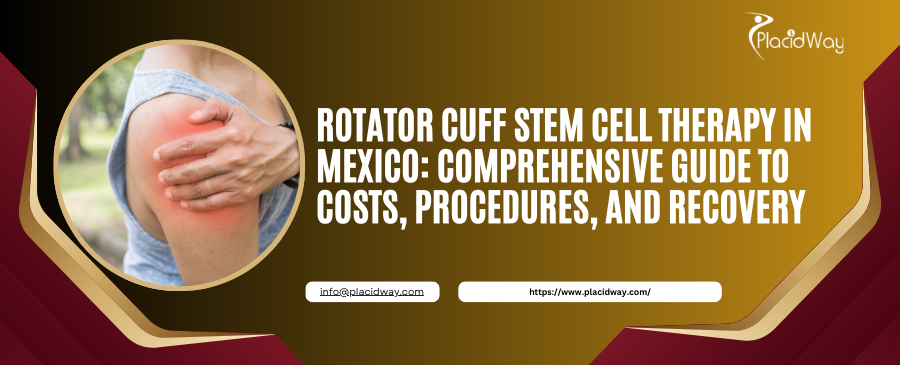
Rotator Cuff Syndrome, a debilitating shoulder injury, finds a promising, minimally invasive alternative in stem cell therapy in Mexico. Utilizing potent Mesenchymal Stem Cells (MSCs), clinics in hubs like Tijuana and Cancun promote significant tissue regeneration, pain reduction, and functional recovery. Patients often save 50%–65% compared to US costs, with treatments typically ranging from $3,500 to $8,000 USD.
Chronic shoulder pain from rotator cuff injuries can severely limit daily activities and diminish quality of life. For many, traditional surgical repair involves lengthy rehabilitation and significant downtime, prompting a search for less invasive, yet effective, alternatives. This comprehensive guide explores one such option: regenerative medicine in Mexico.
Mexico has emerged as a leading destination for advanced medical treatments, including specialized orthopedic care utilizing stem cell therapy. Patients seeking high-quality, regulated protocols for Rotator Cuff Syndrome often travel to medical tourism hubs like Tijuana, Cancun, and Guadalajara. Here, they can access cutting-edge procedures that promote natural healing and reduce pain. This article will provide a detailed overview of Rotator Cuff Stem Cell Therapy in Mexico: Comprehensive Guide to Costs, Procedures, and Recovery, helping you make an informed decision for your health journey.
What are the Core Benefits of Rotator Cuff Stem Cell Therapy in Mexico?
- Significant Cost Savings: Patients from the US and Canada can save 50%–65% on orthopedic stem cell procedures by choosing specialized clinics in Mexico, often without compromising quality.
- Excellent Safety Profile: Mesenchymal Stem Cells (MSCs) are primarily used, boasting an excellent safety record, especially with autologous or ethically sourced allogeneic cells, virtually eliminating rejection risk.
- Minimally Invasive Procedure: This non-surgical treatment uses precise, image-guided injections, offering a powerful alternative to traditional surgery with reduced downtime.
- Promotes Genuine Tissue Healing: MSCs work to reduce inflammation, alleviate pain, and actively encourage the body’s natural repair of damaged tendon tissue, leading to structural integrity.
- Faster Recovery & Reduced Downtime: Patients can often resume light activities within 48-72 hours, far quicker than with surgical interventions, with peak healing occurring over 3-6 months.
How Does Stem Cell Therapy for Rotator Cuff Tears Work?
Stem cell therapy for Rotator Cuff Syndrome is a minimally invasive, non-surgical treatment. It harnesses the body’s natural regenerative cells, primarily Mesenchymal Stem Cells (MSCs), to reduce pain, decrease inflammation, and promote the repair of damaged tendon tissue.
Rotator Cuff Syndrome involves injuries to the four tendons and muscles surrounding the shoulder joint. This condition often causes significant pain, weakness, and limited range of motion. Stem cell therapy offers a powerful alternative to traditional surgical repair, which can require challenging and lengthy rehabilitation. MSCs, multipotent adult cells from bone marrow (BMAC) or fat (ADSCs), are precisely injected into the injured shoulder area. This process is typically guided by ultrasound or fluoroscopy to ensure pinpoint accuracy. The goal is true tissue healing, not merely masking pain. MSCs initiate repair through paracrine signaling, releasing growth factors that activate native cells. They also exert anti-inflammatory effects, reducing pain and swelling. Furthermore, MSCs can differentiate into tenocytes, which are crucial for forming new, strong tendon tissue. This approach aims for internal tissue healing, providing a surgery-free solution for many with partial tears or tendinopathy.
What are the Success Rates and Potential Risks of Rotator Cuff Stem Cell Therapy?
Evidence & Outcomes: Stem cell therapy for rotator cuff tears demonstrates promising outcomes, particularly for specific injury types. For partial-thickness tears and tendinopathy, many clinics report high patient satisfaction and functional improvement rates, often between 70% and 90%. This indicates significant pain reduction and enhanced mobility for a large percentage of suitable candidates. In cases of full-thickness or massive tears, stem cells are increasingly used to augment surgical repair. This strategy aims to boost the success rate of the surgery and significantly lower the chance of re-tearing the repaired tendon. The regenerative potential of MSCs contributes to improved structural integrity and healing. However, individual results can vary based on the patient’s age, overall health, tear severity, and the specific stem cell protocol used.
Risks & Contraindications: While generally considered exceptionally safe, especially with autologous or rigorously screened allogeneic Mesenchymal Stem Cells (MSCs), like any medical procedure, there are potential risks. The primary concerns associated with stem cell therapy are typically minimal: a low risk of infection at the injection site or the possibility of insufficient efficacy if cell viability is compromised or the protocol is not appropriate for the injury severity. Unlike traditional surgery, major complications are rare. It’s crucial to acknowledge that results vary greatly among individuals. No treatment can offer “cures” or “guarantees” of specific outcomes. Patients should always have a detailed consultation with a qualified orthopedic or regenerative medicine specialist. This ensures a personalized assessment of their condition, discussion of all potential benefits and risks, and alignment of realistic expectations with the chosen treatment plan. Any unexplained swelling, severe pain, or fever post-procedure warrants immediate medical attention.
Did you know that Mexico is home to some of the world’s most advanced medical facilities, where patients often save 50% to 65% on rotator cuff stem cell therapy while receiving care that meets or exceeds international hospital standards, regulated by COFEPRIS?
How Much Does Rotator Cuff Stem Cell Therapy Cost in Mexico Compared to Other Countries?
The cost of stem cell therapy for rotator cuff tears in Mexico presents a significant financial advantage compared to the US or Canada. This affordability stems from reduced operational overhead and favorable currency exchange rates. Importantly, this cost-effectiveness does not imply a compromise on facility quality, physician expertise, or the latest treatment protocols. Many Mexican regenerative medicine centers offer bundled packages, enhancing transparency for international patients. While prices vary by cell count and included therapies (like PRP or exosomes), the overall savings are substantial.
Essential Facts & Pro-Tips
What is the Typical Recovery Timeline After Stem Cell Injections for Rotator Cuff?
The treatment journey for rotator cuff stem cell therapy in Mexico is designed for patient convenience and optimal healing. Clinics prioritize efficiency while adhering to strict safety protocols. Patients benefit from a streamlined process that minimizes downtime and supports rapid, effective recovery.