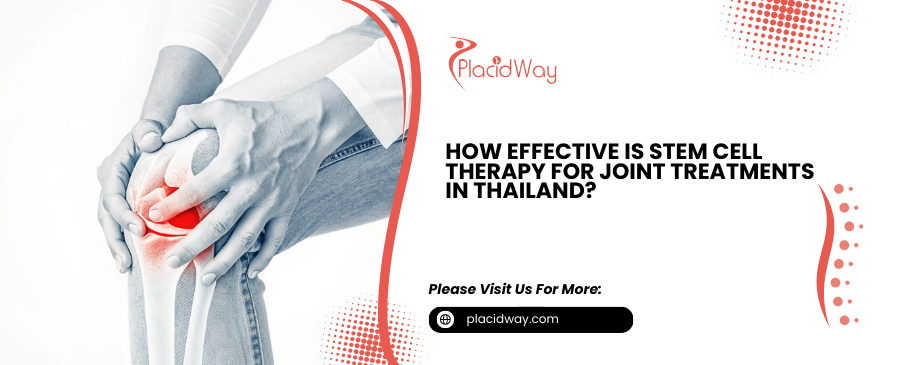
Stem cell therapy for joint treatments in Thailand shows promising effectiveness, particularly for osteoarthritis and cartilage damage. Many patients report significant improvements in pain and mobility. The cost typically ranges from $5,000 to $15,000 per joint, making it a cost-effective option when performed in accredited clinics by experienced medical professionals.
Joint pain can be a profoundly debilitating experience, impacting millions globally and significantly diminishing their quality of life. For individuals seeking advanced solutions beyond conventional treatments, regenerative medicine, particularly stem cell therapy, has emerged as a hopeful alternative.
Thailand has swiftly risen as a premier destination for medical tourism. It attracts patients from all corners of the world interested in these cutting-edge therapies.
This article explores How Effective is Stem Cell Therapy for Joint Treatments in Thailand?. We will address common questions regarding conditions treated, cell types used, safety, costs, and expected outcomes.
Please note that PlacidWay is a medical tourism facilitator connecting patients with providers, not a direct healthcare provider. Always consult a qualified physician for personalized medical advice.
Unlocking Joint Relief: Key Takeaways on Stem Cell Therapy in Thailand
- Promising Effectiveness: Many patients experience significant pain reduction and improved joint function, particularly for cartilage damage and osteoarthritis.
- Broad Applications: Effective for a range of conditions including osteoarthritis (knees, hips, shoulders), rheumatoid arthritis, meniscus tears, and ligament injuries.
- Mesenchymal Stem Cell Focus: Primarily utilizes Mesenchymal Stem Cells (MSCs) derived from the patient’s own adipose (fat) tissue or bone marrow due to their regenerative properties.
- High Safety Standards: Generally considered safe when performed in accredited Thai clinics by experienced medical professionals adhering to international protocols.
- Cost-Effective Care: Treatments in Thailand typically range from $5,000 to $15,000 per joint, offering substantial savings compared to Western countries.
Understanding Stem Cell Therapy: What Does It Involve?
Stem cell therapy for joint treatments involves introducing specialized cells into a damaged joint, leveraging their innate ability to reduce inflammation, promote tissue repair, and regenerate structures like cartilage.
The primary cells used are Mesenchymal Stem Cells (MSCs), which are “adult” stem cells capable of differentiating into various cell types, including cartilage and bone cells. These MSCs also possess powerful anti-inflammatory and immunomodulatory properties.
MSCs are usually harvested from the patient’s own body (autologous sources) such as adipose (fat) tissue or bone marrow, then processed and concentrated before targeted injection into the affected joint.
Balancing Hope and Reality: Evidence, Risks, and Considerations
Evidence & Outcomes: Clinical evidence and patient testimonials from Thailand suggest promising outcomes, particularly for osteoarthritis. Patients frequently report reduced pain, decreased inflammation, and improved joint function and mobility, with optimal results often becoming apparent 3 to 6 months post-treatment.
Risks & Contraindications: When performed in accredited clinics adhering to international standards, stem cell therapy is generally safe. Potential side effects are typically minor and temporary, such as mild pain or bruising at the injection site. Serious complications like infection are rare, but it is crucial to seek immediate medical care if you experience severe pain, spreading redness, fever, or unusual swelling. Individual results can vary significantly, so consulting a qualified medical professional for personalized advice is essential.
Did You Know?
Did you know that Thailand is home to some of the world’s most advanced medical facilities, where patients often save significant amounts on stem cell therapy while receiving care that meets or exceeds international hospital standards?
Comparing Costs: Stem Cell Therapy for Joint Treatments in Thailand
One of the compelling advantages of seeking medical treatments in Thailand, including stem cell therapy for joint conditions, is the competitive pricing. This often remains a fraction of what similar treatments would cost in Western countries.
The total cost is influenced by factors such as the clinic’s reputation, the type and source of stem cells used (autologous vs. allogeneic), the number of joints treated, and the complexity of the condition.
Cost Breakdown
Major Savings
| Country |
Estimated Cost |
Average Savings |
| Thailand |
$5,000 – $15,000 |
Starting Point Best Value |
| United States |
$15,000 – $30,000 |
50-70% Savings |
| United Kingdom |
$12,000 – $25,000 |
40-60% Savings |
| Canada / Australia |
$10,000 – $20,000 |
30-50% Savings |
Essential Facts & Pro-Tips
1
Fast Fact: Thailand’s medical facilities boast modern infrastructure, state-of-the-art technology, and adhere to stringent international standards of care and hygiene, ensuring high-quality treatment.
2
Travel Tip: Thailand is globally recognized for its warm hospitality and patient-centric approach. Medical tourists often receive personalized care, with dedicated staff assisting with language translation and accommodation.
3
Recovery Tip: Post-treatment care instructions are crucial for optimal healing. While light activities are generally permissible within days, strenuous exercise is usually restricted for several weeks to allow the regenerative process to fully initiate.
Your Journey to Joint Recovery: What to Expect in Thailand
Undergoing stem cell therapy for joint conditions in Thailand involves a streamlined and professional process. This approach is designed to ensure both patient safety and treatment effectiveness.
Understanding the typical stages can help alleviate any anxieties and thoroughly prepare you for your medical journey abroad.
Day 01
Initial Consultation and Assessment
Your journey begins with a comprehensive medical evaluation. This includes a thorough review of your health history, diagnostic imaging such as X-rays and MRI scans, and a physical examination.
A specialist will determine your suitability for stem cell therapy and discuss the most appropriate treatment plan for your specific joint condition.
Day 02 — 03
Stem Cell Harvesting, Processing, and Injection
If autologous stem cells are used, a minor procedure will harvest cells from your bone marrow (typically the hip) or adipose (fat) tissue. Both procedures are well-tolerated under local anesthesia.
The harvested tissue is then processed in a sterile laboratory to isolate and concentrate the stem cells. The concentrated cells are precisely injected into the target joint, often guided by ultrasound or fluoroscopy.
Day 04 — 05
Post-Treatment Care and Observation
Following the injection, you will receive detailed instructions regarding activity restrictions, pain management, and follow-up appointments. Most patients can resume light activities within a few days.
However, strenuous exercise is generally restricted for several weeks to allow the initial healing and regenerative processes to take hold effectively.
Frequently Asked Questions
1. How effective is stem cell therapy for joint pain in Thailand?+
Stem cell therapy in Thailand shows promising effectiveness for joint pain, particularly in conditions like osteoarthritis and cartilage damage. Many patients report significant improvement in pain, mobility, and overall quality of life.
2. What types of joint conditions can stem cell therapy treat in Thailand?+
Stem cell therapy in Thailand is commonly used for a wide range of joint conditions. These include osteoarthritis affecting knees, hips, and shoulders, and rheumatoid arthritis.
It also effectively treats meniscus tears, ligament injuries, and various other degenerative joint conditions, promoting tissue repair and reducing inflammation.
3. What are the different types of stem cells used for joint treatment in Thailand?+
Mesenchymal Stem Cells (MSCs) are predominantly used for joint treatments in Thailand. These cells are highly valued for their potent anti-inflammatory and regenerative capabilities.
MSCs are typically derived from the patient’s own adipose (fat) tissue or bone marrow, although some clinics may also utilize ethically sourced umbilical cord-derived MSCs.
4. Is stem cell therapy for joints safe in Thailand?+
Yes, stem cell therapy for joints in Thailand is generally considered safe. This is especially true when performed in accredited clinics by experienced medical professionals who strictly adhere to international standards and protocols.
Utilizing autologous stem cells from the patient’s own body minimizes the risk of allergic reactions or rejection, further enhancing the safety profile of the procedure.
5. What is the typical cost of stem cell therapy for joints in Thailand?+
The cost of stem cell therapy for joints in Thailand typically ranges from $5,000 to $15,000 per joint. This pricing varies based on several factors.
These factors include the specific clinic chosen, the type and source of stem cells used, and the overall complexity of the patient’s condition and required treatment plan.
6. How does stem cell therapy for joints work?+
Stem cell therapy works by introducing specialized cells, primarily Mesenchymal Stem Cells (MSCs), into the affected joint. These cells actively reduce inflammation and promote the body’s natural healing processes.
They achieve this by releasing growth factors and cytokines, stimulating tissue repair, and encouraging the regeneration of damaged cartilage or other joint structures, ultimately alleviating pain and improving function.
7. How long does it take to see results from stem cell therapy for joints?+
Patients typically begin to notice initial improvements from stem cell therapy for joints within 4 to 12 weeks following the procedure. These early signs often include a reduction in pain and swelling.
However, optimal results, encompassing significant improvements in joint function and mobility, are usually observed over a longer period, generally between 3 to 6 months post-treatment, as the regenerative process fully unfolds.
8. Why choose Thailand for stem cell joint treatments?+
Thailand is a popular destination for stem cell joint treatments due to its high-quality medical facilities and internationally trained specialists. It offers competitive pricing without compromising on safety or quality of care.
Additionally, the country is renowned for its excellent patient care and hospitality, allowing patients to combine treatment with a relaxing recovery period in a beautiful environment.
9. Are there any alternatives to stem cell therapy for joint pain?+
Yes, several alternatives exist, and the best choice depends on the condition’s severity, patient preference, and medical advice. Conservative management includes physical therapy, medications like NSAIDs and corticosteroids, and lifestyle modifications such as weight loss.
Injection therapies like hyaluronic acid and Platelet-Rich Plasma (PRP) therapy are also options. For severe cases, surgical interventions such as arthroscopy, osteotomy, or complete joint replacement (arthroplasty) are considered.
Ready to Take the Next Step Towards Recovery?
Choosing the right destination for your medical care is significant. By opting for treatment abroad, you are not just saving on costs—you are gaining access to specialized clinicians and world-class care.
Get Your Free Quote Now
Medical Disclaimer: This article is provided for informational and educational purposes only. It is not intended to be a substitute for professional medical advice, diagnosis, or treatment. PlacidWay is a medical tourism facilitator, connecting patients with healthcare providers worldwide; we are not a medical provider ourselves. Always seek the advice of your qualified physician or other health provider with any questions you may have regarding a medical condition. Outcomes for any medical procedure are not guaranteed, and individual results may vary significantly. If you experience severe or worsening symptoms, please seek immediate professional medical care.