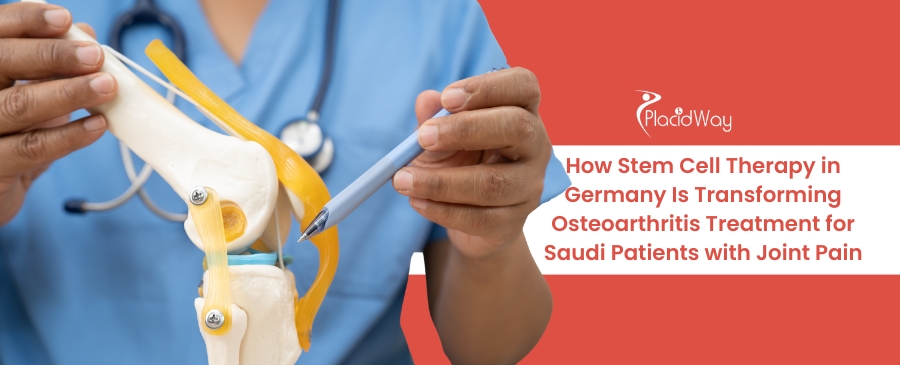
Stem cell therapy in Germany for osteoarthritis offers a minimally invasive alternative to traditional surgery for Saudi patients, harnessing the body’s natural healing abilities. It significantly reduces joint pain and improves function. Over 80% of patients experience considerable relief within three to six months post-procedure.
Osteoarthritis (OA) is a debilitating condition that causes chronic joint pain and severely impacts quality of life. For many individuals in Saudi Arabia and the broader Gulf region, conventional treatments such as medication and joint replacement surgery present various challenges and risks.
A revolutionary path in regenerative medicine, however, now offers new hope. Germany, a global leader in medical innovation, is at the forefront of providing advanced regenerative treatments.
This includes How Stem Cell Therapy in Germany Is Transforming Osteoarthritis Treatment for Saudi Patients with Joint Pain. This approach offers the potential to not only manage symptoms but also to repair and regenerate damaged joint tissue.
This guide provides a comprehensive overview of the treatment, its benefits, costs, and why Germany is a preferred choice for medical travelers from Saudi Arabia. Please note that PlacidWay is a medical tourism facilitator connecting patients with healthcare providers, not a medical provider itself.
What Are the Key Benefits of Stem Cell Therapy in Germany for OA?
- Advanced Regenerative Solution: Germany excels in cutting-edge Mesenchymal Stem Cell (MSC) therapy. This method utilizes your body’s own cells to effectively reduce inflammation, alleviate pain, and potentially regenerate cartilage in joints affected by osteoarthritis.
- World-Class Quality and Safety: German clinics adhere to some of the strictest medical standards globally, including TÜV and ISO certifications. This ensures unparalleled patient safety and high treatment success rates across all procedures.
- Significant Cost Savings: While representing a considerable investment, stem cell therapy in Germany can be more cost-effective compared to countries like the United States. It offers superior value for highly advanced and regulated care, making it an attractive option for medical travelers.
- Minimally Invasive with Fast Recovery: Unlike major surgical interventions such as joint replacement, stem cell therapy is an outpatient procedure. Patients experience minimal downtime, often resuming normal daily activities within a few days.
- Potential to Delay or Avoid Surgery: For many patients, this therapy can significantly postpone or even eliminate the need for a total joint replacement for several years. This preserves natural joint function and avoids the complexities of surgery.
What is Stem Cell Therapy and How Does It Treat Osteoarthritis?
Stem cell therapy for osteoarthritis is a minimally invasive procedure harnessing the body’s natural healing ability. It involves extracting and concentrating regenerative cells, then reinjecting them into a damaged joint to reduce pain and promote tissue repair.
Osteoarthritis occurs when the protective cartilage cushioning bone ends wears down over time, leading to pain, stiffness, and reduced mobility. Mesenchymal Stem Cells (MSCs) are powerful, undifferentiated cells capable of developing into various specialized cell types, including cartilage cells (chondrocytes).
When injected into an osteoarthritic joint, MSCs exert anti-inflammatory action by releasing proteins that powerfully reduce inflammation, a primary source of OA pain. They also promote tissue regeneration by differentiating into new cartilage cells, which helps repair the damaged joint surface.
Furthermore, MSCs provide signaling and support by releasing growth factors. These factors encourage existing cells to initiate their own repair processes, creating a healthier joint environment. The most common sources for these cells are the patient’s own bone marrow or adipose (fat) tissue, ensuring safety and minimizing rejection risks.
Examining the Evidence and Potential Risks of Stem Cell Therapy for OA
Evidence & Outcomes: Clinical experience and studies demonstrate that over 80% of patients achieve significant pain reduction and improved joint function within three to six months. Positive effects can last for several years, often delaying the need for more invasive surgeries like total joint replacement. However, individual outcomes vary significantly.
Risks & Contraindications: Stem cell therapy, especially using autologous cells, is considered extremely safe, with minimal risk of rejection or allergic reactions. Patients may experience mild soreness and swelling at the injection site for a few days, manageable with ice and over-the-counter pain relievers. You should seek immediate care if you experience severe pain, persistent swelling, or signs of infection such as fever or redness. Always consult a qualified physician to discuss potential risks and suitability for your specific condition.
Did You Know?
Did you know that Germany is home to some of the world’s most advanced medical facilities, where patients often save significant amounts on Stem Cell Therapy while receiving care that meets or exceeds international hospital standards?
How Does the Cost of Stem Cell Therapy for Osteoarthritis Compare Globally?
The cost of stem cell therapy in Germany for a single joint typically ranges from €7,000 to €14,000 ($8,000 to $15,000 USD). This comprehensive price covers consultation, cell harvesting, processing, and the injection procedure itself, ensuring transparency.
While the initial investment may seem considerable, it often proves more cost-effective when compared to the long-term expenses and risks associated with traditional joint replacement surgery. Germany’s pricing reflects high standards of care, advanced technology, and rigorous regulatory safety protocols.
Cost Breakdown: Stem Cell Therapy for Osteoarthritis (Knee)
Major Savings
| Country |
Estimated Cost |
Average Savings vs. US (Mid-Range) |
| Germany |
$8,000 – $15,000 |
Up to 40-60% Savings Best Value |
| United States |
$15,000 – $25,000+ |
0% (Baseline) |
| United Kingdom |
$12,000 – $20,000 |
Up to 20% Savings |
| Canada / Australia |
$14,000 – $22,000 |
Up to 10% Savings |
Essential Facts & Pro-Tips for Saudi Patients
1
Quality Assurance: German medical facilities are renowned for strict adherence to international quality controls, including TÜV SÜD and ISO certifications, ensuring top-tier safety and efficacy for your treatment.
2
Travel & Logistics: Saudi citizens require a Schengen Visa for medical treatment in Germany. Direct flights are available from Riyadh and Jeddah to major German cities like Munich, Berlin, and Frankfurt, simplifying travel arrangements.
3
Post-Procedure Recovery: Recovery is typically quick with minimal downtime. Patients are usually advised to rest the joint for 24-48 hours, returning to light activities quickly, but avoiding strenuous exercise for several weeks to optimize cell effectiveness.
What Does the Stem Cell Therapy Treatment Journey in Germany Involve?
The treatment journey for stem cell therapy in Germany is meticulously planned and typically completed on an outpatient basis. It begins with a comprehensive evaluation and moves through minimally invasive cell harvesting to targeted joint injection, prioritizing patient comfort and efficiency.
Step 1
Initial Consultation and Evaluation
Your journey begins with a remote consultation, where medical records and imaging scans (MRI, X-rays) are reviewed by the German medical team. This assessment determines if you are an ideal candidate for the therapy, ensuring suitability and managing expectations.
Step 2
Stem Cell Harvesting and Processing
Upon arrival in Germany, your own stem cells are harvested, typically from bone marrow (iliac crest) or adipose tissue (mini-liposuction), under local anesthesia. The harvested sample is then processed in an on-site laboratory via centrifuge to concentrate MSCs and growth factors, a process taking 1-2 hours.
Step 3
Precise Injection and Recovery
The concentrated stem cell solution is precisely injected into the affected joint using advanced imaging guidance (ultrasound or fluoroscopy). The entire procedure is completed within a few hours, allowing you to return to your hotel the same day with minimal downtime.
Frequently Asked Questions About Stem Cell Therapy in Germany
1. Is stem cell therapy in Germany safe?+
Yes, stem cell therapy in Germany is extremely safe, particularly when using your own (autologous) stem cells. The risk of rejection or allergic reaction is virtually eliminated because the cells originate from your own body. German clinics strictly adhere to sterile protocols to prevent infection, ensuring high safety standards throughout the procedure.
2. How long do the effects of stem cell therapy last for osteoarthritis?+
The benefits of stem cell therapy for osteoarthritis can last for several years. Many patients report experiencing significant relief for five years or even longer. The precise longevity of the results depends on several individual factors, including the initial severity of the osteoarthritis, the patient’s age, and their commitment to post-procedure recommendations such as physiotherapy and maintaining a healthy weight. Adhering to these guidelines can greatly enhance the durability of the treatment’s positive effects.
3. Is stem cell therapy a painful procedure?+
The stem cell therapy procedure itself involves minimal discomfort. Both the harvesting site (e.g., hip bone for bone marrow or abdomen for fat tissue) and the injection site in the joint are thoroughly numbed with a local anesthetic before the procedure begins. Patients may experience some mild soreness, tenderness, and slight swelling at the injection site for a few days following the treatment. This post-procedure discomfort is typically manageable with simple measures like applying ice packs and using over-the-counter pain relievers, allowing for a relatively comfortable recovery.
4. How soon can I expect to see results after treatment?+
While some patients may begin to report feeling better within a few weeks of receiving stem cell therapy, it is more typical to observe significant improvements two to three months after the treatment. The regenerative process initiated by the stem cells is gradual, as the body takes time to repair and regenerate damaged tissues. Optimal results from the therapy are often seen around the six-month mark. It is crucial for patients to have realistic expectations and understand that healing is a progressive journey.
5. What is the typical recovery time after the procedure?+
Recovery after stem cell therapy is generally very quick compared to surgical alternatives. Patients are typically advised to rest the treated joint for the first 24 to 48 hours to allow the cells to settle and begin their work. Most individuals can resume their light daily activities almost immediately and return to office-based work within a few days. However, more strenuous physical exercise and high-impact activities should be avoided for several weeks to ensure the stem cells have the optimal environment to facilitate effective tissue repair and regeneration.
6. Can stem cell therapy cure my osteoarthritis?+
Currently, there is no known cure for osteoarthritis that completely eradicates the condition. Stem cell therapy is not considered a cure but rather a highly effective, long-term treatment modality. Its primary goals are to significantly manage pain, improve joint function and mobility, and crucially, to slow down the progression of the disease by regenerating damaged tissue. This approach aims to provide lasting relief and enhance a patient’s quality of life, potentially delaying or even eliminating the need for major surgical interventions for many years.
7. Why should Saudi patients consider Germany for this treatment?+
Germany is a premier destination for regenerative medicine due to its rigorous research, strict regulatory oversight, and patient-centric care model. For Saudi patients, Germany offers advanced technology, world-renowned orthopedic specialists, and adherence to stringent quality and safety standards. Many clinics also provide services tailored to international patients, including English-speaking staff, translators, and accommodation options that consider cultural needs like halal food, ensuring a comfortable and effective medical journey.
8. Are there specific criteria for being an ideal candidate?+
Ideal candidates for stem cell therapy are typically those with mild to moderate osteoarthritis (Grade 2-3) who seek to avoid or delay major surgery like knee replacement. The therapy is most effective when some cartilage remains in the joint. Candidates should also be in good general health, free from active infections, cancer, or blood-related disorders. While there’s no strict age limit, younger patients often show more robust results. Realistic expectations regarding pain reduction and functional improvement are also key for successful outcomes.
Ready to Take the Next Step Towards Recovery?
Choosing the right destination for your medical care is significant. By opting for treatment abroad, you are not just saving on costs—you are gaining access to specialized clinicians and world-class care.
Get Your Free Quote Now
Related Resources for Osteoarthritis Treatment
Medical Disclaimer: The information provided in this article is intended for general informational and educational purposes only. It is not a substitute for professional medical advice, diagnosis, or treatment. Always seek the advice of a qualified physician or other healthcare provider with any questions you may have regarding a medical condition or treatment options. PlacidWay is a medical tourism facilitator, connecting patients with international healthcare providers and centers; we do not provide medical services, diagnoses, or treatments directly. Individual results from any medical procedure, including stem cell therapy, may vary. There is no guarantee of specific outcomes. We strongly advise consulting with your doctor before making any healthcare decisions. If you experience severe or worsening symptoms, please seek immediate professional medical care.