
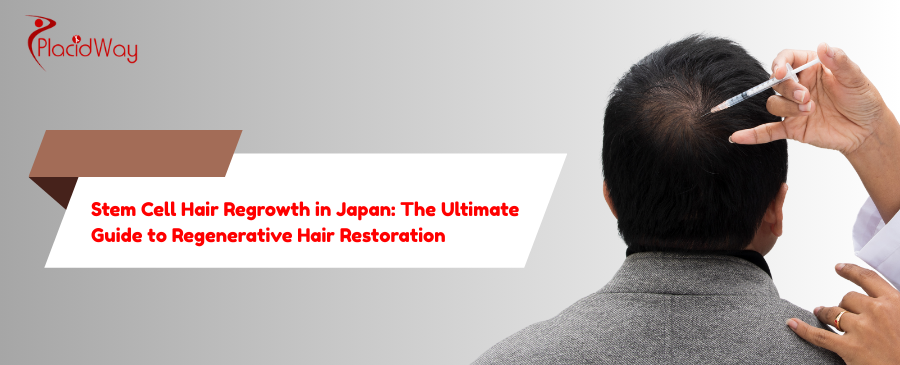
Is Stem Cell Hair Regrowth in Japan Right for You?

Stem Cell Hair Regrowth in Japan: The Ultimate Guide to Regenerative Hair Restoration

Stem Cell Hair Regrowth in Japan: The Ultimate Guide to Regenerative Hair Restoration

Japan leads globally in safety-regulated stem cell therapies, specifically utilizing adipose-derived stem cells and exosomes to reactivate dormant hair follicles. Cost-effective compared to the US, Japanese treatments prioritize medical purity. This is supported by strict government certification under the Act on the Safety of Regenerative Medicine (ASRM), ensuring what you receive is 99% pure stem cells, not just undefined ‘cocktails’ often found in unregulated markets.

Hair loss can significantly impact self-esteem and quality of life. For many, traditional treatments offer limited solutions. This has led to a growing interest in advanced regenerative medicine.

Japan has emerged as a global leader in regenerative therapies. It offers cutting-edge options for hair restoration. Its strict regulatory environment ensures patient safety and treatment efficacy.

This guide explores the world of Stem Cell Hair Regrowth in Japan: The Ultimate Guide to Regenerative Hair Restoration. We will delve into procedures, costs, top clinics, and the science behind its success. This information empowers you to make informed decisions about your hair restoration journey.

What Are the Key Benefits of Regenerative Hair Therapy in Japan?

  • Safety and Regulation: Japan boasts the world’s strictest safety laws for regenerative medicine. This ensures high-purity cell cultures and minimizes risks.
  • Advanced Technology: Leading in research and development, Japan offers cutting-edge therapies like high-concentration exosome treatments.
  • Patient-Focused Care: Clinics in major cities like Tokyo and Osaka provide English-speaking staff and personalized treatment plans.
  • Natural Results: The aim is to revitalize existing follicles, leading to natural-looking hair regrowth and increased density.
  • Competitive Pricing: While higher than some regions, Japanese treatments offer premium quality at prices often lower than in the United States.

What Exactly is Stem Cell Hair Regrowth?

Stem cell hair regrowth is an innovative, non-surgical regenerative procedure. It involves injecting the body’s own stem cells or growth factor-rich exosomes into the scalp. This aims to reverse hair thinning and promote natural hair growth.

This therapy marks a significant departure from traditional hair transplants. Instead of relocating hair follicles, the treatment focuses on revitalizing existing ones. These follicles may have shrunk or ceased producing thick hair due to various factors.

In Japan, two primary methods are commonly employed. Autologous Stem Cell Therapy involves harvesting a small amount of fat tissue. Stem cells are then isolated and injected back into the patient’s scalp. This method utilizes the body’s natural regenerative capabilities.

The other popular method is Exosome Therapy. This uses purified “messenger signals” derived from stem cells. These exosomes are rich in vital growth factors like VEGF and HGF. Exosome therapy is favored for its effectiveness and minimal downtime, particularly in clinics in Tokyo.

What is the Evidence, and What Risks Should You Consider?

Evidence & Outcomes: The Japanese approach is rooted in the “Paracrine Effect.” When stem cells are injected, they release signaling proteins that stimulate dormant follicle cells. This process enhances blood supply to hair roots and boosts the diameter of existing hair shafts. Success rates in Japan are reported around 70-85%. Patients typically experience improved hair thickness and reduced shedding. Ideal candidates exhibit early to moderate hair thinning (Norwood Scale 1-3) with some visible vellus hairs. Visible improvements typically begin around month 3-4, with significant results by 6-12 months.

Risks & Contraindications: Due to using autologous cells or highly purified exosomes, side effects are minimal. Patients may experience mild scalp redness, swelling, or tenderness for about 24 hours. Serious risks, such as rejection, are almost non-existent. However, certain individuals should avoid this treatment. Those with late-stage baldness (Norwood 6-7) where the scalp is shiny and smooth are not ideal candidates. Stem cells cannot create new follicles from scratch in these cases. Patients with active scalp infections or uncontrolled autoimmune conditions should also avoid this therapy. Always consult a qualified physician to determine suitability and discuss potential risks specific to your health profile. Individual results will vary.

Did You Know?

Did you know that Japan was the first country to expedite approval for regenerative medicine products? This allows patients faster access to cutting-edge therapies like S-DSC (Shiseido’s hair regeneration technology), while often saving significant amounts on these treatments compared to Western nations.

How Do Treatment Costs in Japan Compare Globally?

Understanding the cost structure is vital for international patients. Japanese regenerative treatments are competitively priced, especially when considering the rigorous safety standards. Unlike many ‘all-inclusive’ packages found elsewhere, Japanese costs predominantly cover the medical fees. These reflect the high expense of laboratory culturing and strict safety testing mandated by the Act on the Safety of Regenerative Medicine (ASRM). This focus on medical purity ensures unparalleled quality, making it a compelling choice despite potentially higher initial figures than some unregulated markets.

Cost Breakdown: Autologous Stem Cell Transplant

Major Savings

Country Estimated Cost Average Savings
Japan $8,000 – $18,000 Starting Point Best Value
United States $25,000 – $35,000 ~50-60% Savings
United Kingdom $20,000 – $30,000 ~45-55% Savings
Canada / Australia $20,000 – $30,000 ~45-55% Savings

Essential Facts & Pro-Tips

1
Fast Fact: Japan’s “Class II” regenerative medicine clinics operate under strict Ministry of Health, Labour and Welfare supervision, ensuring peak quality.
2
Travel Tip: Consider Osaka for potentially 15-20% lower prices than Tokyo for identical protocols, offering high safety standards for budget-conscious travelers.
3
Recovery Tip: Stress is a factor in hair loss; combining stem cell treatments with specialized ‘Head Spa’ therapies can help lower cortisol levels for better results.

What Does Your Stem Cell Hair Regrowth Journey Entail?

The stem cell hair regrowth procedure is typically minimally invasive. It’s an outpatient treatment designed for efficiency. This ensures that every safety protocol is strictly followed, minimizing downtime for patients.


Step 1: Consultation & Diagnosis
Initial Assessment and Personalized Plan
Doctors use advanced digital trichoscopy to precisely map scalp density. This crucial step determines if follicles are dormant (treatable) or irreversibly damaged (untreatable), guiding the tailored treatment plan. An initial consultation typically costs $100-$300, though it’s often waived if you proceed with treatment.
Step 2: Harvesting (Autologous Treatment)
Gentle Tissue Collection
For autologous therapy, a small amount of fat (approximately 20ml) is safely harvested. This is typically from the abdomen or behind the ear using local anesthesia. The harvesting takes about 20-30 minutes with minimal discomfort.
Step 3: Processing & Cultivation
The “Japan Difference” in Cell Preparation
Tissue is sent to a specialized, government-certified Cell Processing Center (CPC). For autologous treatment, cells are cultured for 3-4 weeks to multiply. For exosome therapy, high-purity frozen exosomes are thawed for immediate use. Viral screening, a mandatory step, costs around $150.
Step 4: Injection
Precise Scalp Rejuvenation
The concentrated cells or exosomes are meticulously injected into the thinning areas of the scalp. Fine needles or a mesotherapy gun are used to ensure precision and minimize discomfort. This injection phase takes approximately 30 minutes for exosomes, or 2-4 hours total for autologous cell harvesting and injection.
Step 5: Post-Treatment & Results Timeline
Monitoring Your Progress
Patients can typically resume normal activities immediately. Over months 1-2, reduced hair shedding is observed. Months 3-4 bring improved hair texture. Visible increases in hair density and thickness occur around 6-12 months. Follow-up appointments are crucial for monitoring long-term success.

Frequently Asked Questions

1. Is stem cell hair therapy permanent?+

While stem cell therapy can reverse miniaturization and improve hair density for several years, it is not considered strictly “permanent” like a surgical hair transplant. The natural aging process and ongoing hormonal factors can influence its longevity. To sustain the benefits, maintenance sessions, typically once a year, are often recommended. This proactive approach helps to continue stimulating hair follicles and maintain desired results over time, particularly for exosome-based therapies.

2. How does exosome therapy differ from PRP?+

PRP (Platelet-Rich Plasma) therapy uses concentrated platelets derived from your own blood. The quality and potency of PRP can vary significantly based on your age, health, and processing methods. Exosome therapy, in contrast, utilizes lab-derived, highly purified messenger cells. These exosomes are generally 10x–100x more potent than PRP and contain a precise cocktail of growth factors specifically chosen for hair regeneration. This consistency and higher concentration often lead to more predictable and robust results for hair regrowth.

3. Are there side effects of stem cell hair therapy in Japan?+

Side effects from stem cell hair therapy in Japan are minimal. This is primarily due to the use of autologous (your own) cells or highly purified, lab-derived exosomes. The body is highly unlikely to reject its own tissues. Common temporary issues may include mild scalp redness, swelling, or tenderness at the injection sites. These symptoms typically resolve within 24 hours. Serious risks, such as infection or allergic reactions, are exceedingly rare. Clinics adhere to strict safety protocols under Japan’s robust regulatory framework, further minimizing adverse events.

4. Can I combine stem cells with a hair transplant?+

Yes, combining stem cell therapy with a hair transplant is a common and highly effective strategy. Many patients opt for this approach to enhance the overall outcomes of their hair restoration. Stem cell injections can significantly boost the survival rate of transplanted grafts, ensuring that more of the newly implanted follicles take root successfully. Additionally, stem cells and exosomes promote faster healing in both the donor and recipient areas of the scalp. This leads to reduced downtime and an optimized aesthetic result.

5. How long does the treatment take in Japan?+

The treatment duration in Japan depends on the specific method. For exosome therapy, the entire appointment is swift, often taking less than one hour. This makes it a convenient option for busy individuals. Autologous stem cell therapy, which involves cell cultivation, requires two separate visits. The first visit is for fat harvest, taking 20-30 minutes. The cells are then cultured for 3-4 weeks. The second visit, 3-4 weeks later, is for the injection, which takes about 30 minutes. Both procedures are outpatient, allowing immediate return to daily activities.

6. Is stem cell hair treatment covered by insurance?+

No, in Japan, stem cell therapy for hair regrowth is typically classified as an elective cosmetic medicine procedure. As such, it is not covered by the Japanese National Health Insurance. Patients seeking this treatment should be prepared to cover the costs out-of-pocket. It is always advisable to clarify all financial aspects and inclusions with your chosen clinic before committing to any treatment. Many clinics offer transparent pricing and can provide a detailed quote covering all aspects of your treatment plan.

7. Why choose Japan over Turkey for stem cell hair therapy?+

Japan is chosen for its world-leading safety regulations and advanced biotechnology in regenerative medicine. Its strict ASRM laws ensure high-purity cell cultures. Clinics focus on pure stem cell and exosome therapies, which are often not expanded or properly cultured in Turkey. Turkey is a popular destination for cost-effective surgical hair transplants, often with luxury hospitality packages. However, ‘stem cell’ treatments there might be limited to PRP or uncultured fat, lacking the rigorous standards and advanced science found in Japan. For pure, safety-regulated regenerative therapy, Japan is the superior choice.

8. Which cities in Japan are best for this treatment?+

Tokyo, Osaka, and Yokohama are the primary hubs for regenerative medicine in Japan. Tokyo, as the capital, is an innovation hub with the highest concentration of “Class II” clinics, specializing in the latest technologies like high-concentration exosome therapy. Osaka is known as the medical capital, offering cost-effective solutions—often 15-20% lower than Tokyo for similar high-standard protocols. Yokohama provides aesthetic excellence, often combining stem cell therapy with other anti-aging skin treatments. All these cities operate under the strict supervision of Japan’s Ministry of Health, Labour and Welfare, ensuring consistent safety and quality.

Ready to Take the Next Step Towards Recovery?

Choosing the right destination for your medical care is significant. By opting for treatment abroad, you are not just saving on costs—you are gaining access to specialized clinicians and world-class care.

Get Your Free Quote Now

Related Resources

Medical Disclaimer: This article is for informational and educational purposes only and does not constitute medical advice, diagnosis, or treatment recommendations. The information provided is thoroughly researched but should not replace a consultation with a qualified healthcare professional. No guaranteed outcomes are promised. Always seek the advice of your physician or other qualified health provider with any questions you may have regarding a medical condition.

Picture of About Author: Hina Munawar

About Author: Hina Munawar

As the Editor of Global Stem Cell Therapy, I provide trusted, research-based information on stem cell treatments worldwide. With over a decade of experience in medical tourism, I guide patients toward safe, effective, and affordable therapies.

Related Articles

Canadians can find significant savings and advanced stem cell therapy for knee injuries in Mexico. Discover affordable costs, expert care, and swift access to innovative regenerative treatments.
Canadians are discovering the remarkable benefits of stem cell therapy for aging skin in Thailand, offering advanced care, luxurious clinics, and significant savings of up to 70%.
Discover how stem cell therapy in Mexico offers advanced, affordable treatment for Canadian chronic back pain sufferers. Bypass wait times and find lasting relief.
GSC Logo X
send


