British stroke survivors are reporting unprecedented improvements in motor function following intensive stem cell therapies in Slovakia, highlighting a growing trend in global medical tourism for advanced neurological rehabilitation.
The Stroke Recovery Challenge in the United Kingdom
Stroke remains one of the leading causes of severe adult disability in the United Kingdom, leaving thousands of survivors grappling with long-term motor impairments, speech deficits, and a drastic reduction in their overall quality of life. For many patients, the initial phase of recovery involves rigorous intervention within the national healthcare system, followed by standard physical and occupational therapies. However, neurological recovery often reaches a plateau within the first twelve months post-stroke, leaving a significant demographic of patients searching for alternative medical avenues to continue their progress.
Faced with limited options for regenerative treatments domestically, a growing contingent of patients and their families are looking beyond borders. As detailed in the Official News Source, international medical travel has become a vital lifeline. Patients are increasingly embarking on journeys to specialized European destinations where cutting-edge regenerative protocols are readily accessible, rigorously regulated, and administered by highly experienced multidisciplinary teams.
The motivation behind this medical migration is profound. It is not merely a pursuit of incremental improvement, but a fundamental desire to reclaim independence. The inability to perform basic daily tasks—such as gripping a utensil, walking without assistance, or articulating words clearly—drives patients to explore the frontiers of biotechnology. This search has firmly positioned Central Europe as a beacon of hope for those refusing to accept the limitations of the traditional post-stroke recovery plateau.
Why Slovakia is Emerging as a Medical Tourism Hub for Regenerative Care
Slovakia has steadily ascended the ranks to become a premier destination for medical tourism, particularly in the highly specialized field of regenerative medicine and neurological rehabilitation. Its strategic location in the heart of Europe makes it highly accessible for British patients, offering short flight times and seamless cross-border logistics. More importantly, as a member of the European Union, Slovakia adheres to stringent medical guidelines and ethical standards, ensuring that patients receive care that meets or exceeds the safety protocols they would expect in the UK.
The country’s medical infrastructure has seen massive investments over the past decade, transforming its facilities into state-of-the-art hubs for biotechnology. The clinics specializing in stem cell therapies are equipped with advanced laboratories for cell processing, ensuring the highest viability and safety of the biological materials used. Furthermore, the cost of living and operational overheads in Slovakia allow these sophisticated treatments to be offered at a fraction of the cost compared to private healthcare sectors in North America or Western Europe.
Did You Know?
Slovakia has a centuries-old tradition of utilizing natural therapeutic spas for physical rehabilitation. Today, the nation has masterfully combined this deep-rooted culture of holistic physical recovery with cutting-edge 21st-century biotechnology, creating a highly effective, dual-approach environment for severe neurological trauma recovery.
Beyond the technology, Slovakian medical professionals are widely recognized for their comprehensive approach to patient care. Many specialists undergo training across the globe, bringing diverse and innovative methodologies back to their home country. This globalization of medical knowledge ensures that patients traveling from the UK receive world-class expertise tailored specifically to the complex nature of stroke recovery.
Understanding Stem Cell Intensive Protocols for Stroke Survivors
The term “intensive” in the context of stem cell therapy refers to a highly concentrated, multifaceted treatment protocol designed to maximize the therapeutic potential of the cells. Unlike single-dose treatments, the protocols utilized in Slovakia often involve multiple administrations of high-yield stem cells over the course of several days or weeks. These protocols predominantly utilize Mesenchymal Stem Cells (MSCs), which are favored for their potent immunomodulatory properties and their ability to differentiate into various cell types.
The administration methods are precisely chosen based on the patient’s specific neurological deficits. Intravenous (IV) infusions are commonly used for systemic distribution, targeting overall inflammation and promoting vascular health. Additionally, intrathecal administration—where cells are introduced directly into the spinal canal—is frequently employed to bypass the blood-brain barrier. This ensures a higher concentration of stem cells reaches the central nervous system and the specific areas of the brain damaged by the ischemic or hemorrhagic event.
Furthermore, these intensive protocols are rarely standalone procedures. They are carefully integrated into a holistic treatment plan that includes pre-treatment physiological optimization and immediate post-treatment neuro-rehabilitation. This synchronized approach is critical, as the introduced stem cells require biological signals—often generated through physical movement and cognitive exercises—to navigate to the sites of injury and begin the repair process.
The Mechanism of Action: How Stem Cells Target Brain Injury
To understand the success reported by British patients, it is essential to delve into the mechanism of action of stem cells within the stroke-damaged brain. When a stroke occurs, it triggers an ischemic cascade—a series of biochemical reactions that lead to rapid cell death and a prolonged state of neuroinflammation. Traditional therapies focus on compensating for this loss, whereas stem cell therapy actively targets the biological environment of the brain to promote genuine healing.
Once introduced into the body, stem cells exert a powerful “paracrine effect.” Rather than solely replacing dead neurons—a complex and challenging biological feat—they act as cellular factories, secreting a myriad of growth factors, cytokines, and extracellular vesicles. These secretions drastically reduce the hostile neuroinflammation surrounding the stroke lesion, protecting surviving neurons from secondary damage and creating a hospitable environment for neurological repair.
Additionally, stem cells stimulate angiogenesis, which is the formation of new blood vessels. This is particularly crucial in the ischemic penumbra—the area of the brain tissue that is damaged but not yet dead. By restoring blood flow and oxygenation to these regions, stem cells can awaken dormant neural networks. Furthermore, they promote neurogenesis (the birth of new neurons) and synaptogenesis (the formation of new connections between neurons), which are the fundamental biological processes underlying the recovery of lost motor and cognitive functions.
Reported Improvements in Motor Function Among British Patients
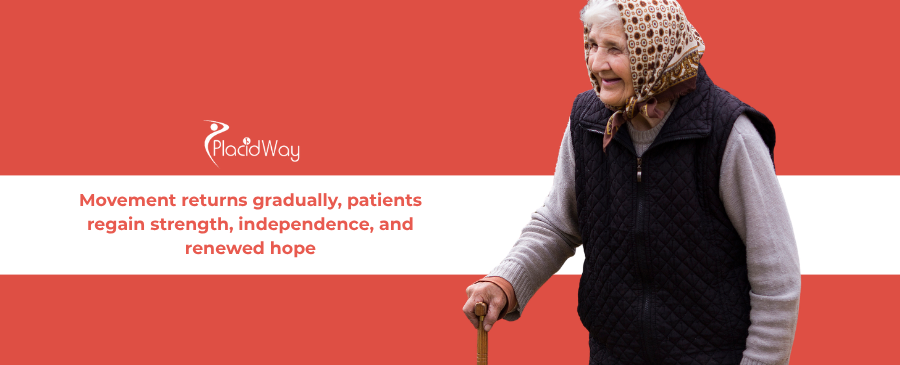
The clinical outcomes observed in British patients returning from Slovakia have been overwhelmingly positive, particularly regarding motor function. Stroke survivors who had previously been told they had reached the end of their recovery potential are documenting tangible, life-altering improvements. These functional gains are being closely monitored and validated by continuous follow-up assessments, both in Slovakia and upon their return to the UK.
Patients frequently report significant reductions in spasticity, the painful muscle stiffness that commonly follows a stroke. This reduction allows for a greater range of motion and makes subsequent physical therapy much more effective. Improvements in fine motor skills are also widely cited; patients who struggled to grasp a pen or fasten buttons are finding themselves able to perform these intricate tasks with renewed dexterity.
“The clinical outcomes reported by British patients undergoing stem cell intensives in Slovakia represent a watershed moment for the medical tourism industry. We are witnessing a paradigm shift where patients are no longer passive recipients of localized care, but proactive global health consumers seeking out scientifically backed, regenerative solutions. Reclaiming Life Post-Stroke: British Patients Report Improved Motor Function After Stem Cell Intensive in Slovakia is not just a headline; it is a validation of how borderless healthcare is fundamentally changing the prognosis for severe neurological conditions.”
— Pramod Goel, CEO of PlacidWay
Gross motor function improvements are equally remarkable. Many patients have experienced enhanced core stability, improved balance, and a normalization of their walking gait. For some, this means transitioning from a wheelchair to walking with an assistive device, or from using a walker to walking independently. These physical milestones invariably lead to profound psychological benefits, drastically reducing post-stroke depression and restoring a sense of agency and dignity.
The Synergy of Advanced Therapy and Comprehensive Rehabilitation
It is a critical misconception in regenerative medicine to view stem cells as an isolated magic bullet. The specialists in Slovakia heavily emphasize that the biological potential of stem cells must be harnessed and directed through rigorous, targeted physical rehabilitation. The infusion of cells creates a fertile biological environment, but it is the physical therapy that provides the blueprint for how the brain should rewire itself.
During their intensive stay, patients undergo hours of daily therapies. This includes conventional physiotherapy to build muscle strength, occupational therapy to relearn activities of daily living, and speech therapy for those battling aphasia. Advanced clinics also incorporate robotic-assisted gait training, virtual reality environments, and transcranial magnetic stimulation to provide massive amounts of sensory and motor feedback to the healing brain.
Did You Know?
Neuroplasticity is the brain’s remarkable ability to reorganize itself by forming new neural connections throughout life. Stem cell therapy acts as a powerful catalyst for neuroplasticity, accelerating the brain’s natural ability to reroute functions away from damaged areas to healthy, newly formed neural pathways.
This combined approach ensures that the newly forming neural connections are actively utilized and strengthened. The concept is based on the neuro-rehabilitation principle of “use it or lose it.” By forcing the brain to engage in complex motor tasks immediately following stem cell administration, the therapeutic efficacy is exponentially multiplied, leading to the sustained, long-term functional improvements reported by the patient demographic.
Evaluating the Economic Feasibility of Treatment Abroad
When British patients face the prospect of paying out-of-pocket for advanced medical treatments not covered by their national health systems, the financial implications are a primary concern. However, when comparing the costs of private neurological care and long-term disability management in the UK against the intensive programs offered in Slovakia, the economic feasibility of medical travel becomes highly apparent.
To understand the value proposition, patients must evaluate several key factors that differentiate the Slovakian healthcare model from domestic private options:
- Comprehensive Package Pricing: Clinics in Slovakia typically offer all-inclusive pricing models. These packages cover the stem cell harvesting, processing, multiple administrations, and weeks of intensive daily physical therapy, ensuring there are no hidden fees.
- Lower Operational Costs: The overall cost of living and medical facility operational expenses in Central Europe are significantly lower than in the UK. These savings are directly passed on to the international patient without compromising the quality of the biotechnology or the medical expertise.
- Immediate Accessibility: Wait times for specialized neurological rehabilitation in the UK can be detrimental to the critical window of stroke recovery. Slovakian facilities cater to international patients with streamlined admission processes, allowing treatments to commence within weeks of initial consultation.
- Long-Term Savings: By achieving substantial improvements in motor function and independence, patients often reduce their long-term reliance on professional in-home care, mobility aids, and ongoing palliative therapies, resulting in significant lifetime financial savings.
- Included Accommodations: Many intensive medical programs include specialized accommodation designed for disabled patients, along with local transport and translation services, further reducing the logistical burden and hidden travel costs.
By carefully analyzing these factors, families frequently conclude that traveling to Slovakia not only offers a superior clinical intervention but also represents a highly sound financial investment in their loved one’s future health and autonomy.
Navigating the Journey: Preparing for Medical Travel to Slovakia
Embarking on a medical journey abroad for stroke rehabilitation requires meticulous planning and preparation. The process is vastly different from booking a standard holiday; it necessitates comprehensive medical coordination and logistical foresight to ensure the safety and comfort of a neurologically compromised patient. Fortunately, the medical tourism infrastructure surrounding Slovakian clinics is highly developed to support British patients through every step.
The journey begins with a thorough remote consultation. Patients are required to submit their complete medical history, including recent MRI or CT scans, hospital discharge summaries, and current medication lists. A multidisciplinary team in Slovakia reviews this data to determine the patient’s candidacy for stem cell therapy. Once approved, the clinic works closely with the patient’s family to design a customized, intensive treatment itinerary.
Travel logistics are the next critical phase. Families must arrange flights that accommodate passengers with reduced mobility, utilizing airport assistance services. Upon arrival in Slovakia, medical concierge services typically take over, providing wheelchair-accessible transfers directly to the clinic or specialized accommodation. Finally, post-treatment care planning is vital. Before returning to the UK, the Slovakian medical team provides an extensive discharge plan, outlining the necessary continuation of physical therapy and lifestyle adjustments to ensure the longevity of the stem cell treatment’s benefits.
Ready to Explore Stem Cell Therapy Options?
Discover how advanced regenerative medicine and intensive rehabilitation can transform your stroke recovery journey. Connect with top-tier medical providers abroad through PlacidWay.