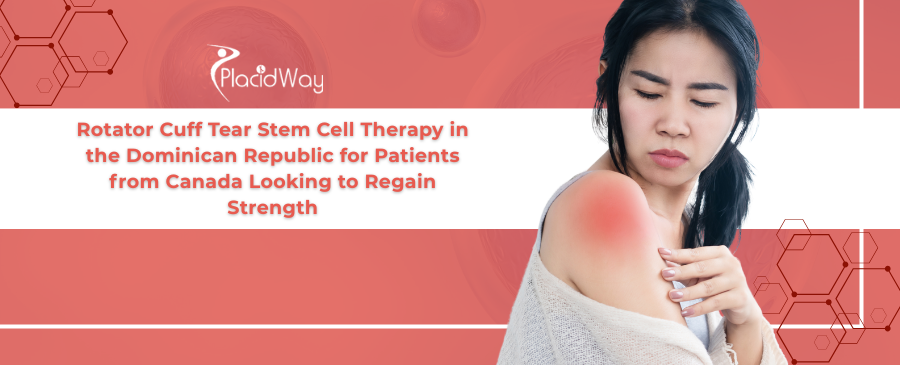
Rotator cuff tears can be a significant source of pain and disability, making everyday activities challenging and limiting physical independence. For many Canadians, traditional treatments often involve lengthy rehabilitation, pain management, or even surgery, each with its own set of recovery times and potential complications. This often leads individuals to seek alternative, less invasive, and potentially more regenerative solutions.
The good news is that medical innovation is opening new doors. Stem cell therapy has emerged as a cutting-edge approach, offering hope for natural tissue repair. The Dominican Republic has become a recognized destination for medical tourism, particularly for regenerative treatments, drawing patients from North America, including Canada, who are looking for high-quality, accessible care for conditions like rotator cuff tears. This blog will explore how this innovative treatment in the DR can help Canadian patients regain their shoulder strength and improve their quality of life.
What is Rotator Cuff Tear Stem Cell Therapy?
Rotator cuff tear stem cell therapy is a revolutionary regenerative medicine treatment designed to heal damaged tissues without the need for extensive surgery. It utilizes the body’s natural healing capabilities by concentrating and deploying potent stem cells, which have the remarkable ability to differentiate into various cell types, including those found in tendons, ligaments, and cartilage. When injected into the site of a rotator cuff tear, these stem cells can help reduce inflammation, stimulate the growth of new, healthy tissue, and ultimately facilitate the repair of the damaged rotator cuff tendons.
This therapy typically uses mesenchymal stem cells (MSCs), often sourced from the patient’s own bone marrow or adipose (fat) tissue, or from ethically sourced umbilical cord tissue. The procedure is minimally invasive, usually performed under local anesthesia, and involves precisely injecting the stem cells into the affected shoulder area using imaging guidance to ensure accuracy. The goal is to create a more robust and functional shoulder, helping patients, including those from Canada, alleviate chronic pain and improve overall function, thereby working towards regaining strength.
How does Stem Cell Therapy help in Rotator Cuff Repair?
The mechanism by which stem cell therapy assists in rotator cuff repair is multi-faceted. Stem cells, particularly MSCs, possess several key properties that make them ideal for regenerative purposes. They release growth factors and cytokines that signal surrounding cells to engage in repair processes. These bioactive molecules can:
- Stimulate the proliferation of native cells to create new, healthy tissue.
- Reduce local inflammation, which often exacerbates pain and delays healing.
- Modulate the immune system to prevent further tissue damage.
- Promote the formation of new blood vessels, enhancing nutrient supply to the injured area.
By harnessing these capabilities, stem cell injections can directly address the underlying tissue damage in a rotator cuff tear. Instead of merely managing symptoms, the therapy aims to repair the structural integrity of the torn tendons. This leads to a more lasting solution for patients from Canada seeking significant relief and the ability to regain their full shoulder strength and range of motion. The body’s own healing mechanisms are boosted, leading to a more natural and potentially complete recovery.
Why consider the Dominican Republic for Rotator Cuff Stem Cell Treatment from Canada?
For Canadian patients dealing with a rotator cuff tear, seeking treatment abroad, particularly in the Dominican Republic, has become an increasingly popular choice. Several compelling reasons contribute to the DR’s appeal as a destination for medical tourism in the field of regenerative medicine:
- Cost-Effectiveness: The cost of stem cell therapy in the Dominican Republic can be significantly lower than in Canada or the United States, even when factoring in travel expenses. This makes advanced treatments more accessible to a wider range of patients.
- Accessibility and Shorter Wait Times: Canadian healthcare can sometimes involve long waiting lists for specialized treatments or surgeries. The Dominican Republic often provides quicker access to consultations and procedures, allowing patients to address their condition without undue delay.
- Advanced Clinics and Expertise: The DR boasts modern medical facilities equipped with state-of-the-art technology and experienced medical professionals specializing in regenerative medicine. Many clinics cater specifically to international patients, offering high standards of care and personalized treatment plans.
- Medical Tourism Experience: Patients can combine their treatment with a recovery period in a beautiful, warm environment. This can contribute positively to overall well-being and recovery, making the experience less clinical and more holistic.
These factors combine to make the Dominican Republic an attractive option for Canadians looking for effective and timely solutions for their rotator cuff tears, enabling them to pursue therapies aimed at regaining strength and improving quality of life.
What are the benefits of choosing Stem Cell Therapy over traditional surgery for Rotator Cuff Tears?
When considering treatment options for a rotator cuff tear, many patients, especially those from Canada, weigh the pros and cons of traditional surgery versus innovative regenerative therapies. Stem cell therapy presents several distinct advantages over surgical repair:
| Feature | Stem Cell Therapy | Traditional Surgery |
|---|---|---|
| Invasiveness | Minimally invasive (injection) | Invasive (incisions, sutures) |
| Anesthesia | Local or conscious sedation | General anesthesia |
| Recovery Time | Generally shorter, less intense | Longer, often with significant rehabilitation |
| Healing Mechanism | Promotes natural tissue regeneration | Surgical repair/reattachment |
| Risk of Complications | Lower (e.g., infection at injection site) | Higher (e.g., infection, nerve damage, re-tear) |
For those seeking to avoid the risks and prolonged recovery periods associated with surgery, stem cell therapy offers a compelling alternative. It focuses on facilitating the body’s own healing processes, leading to durable results and allowing patients to more quickly work towards regaining strength and resuming their normal activities.
What is the typical cost of Rotator Cuff Tear Stem Cell Therapy in the Dominican Republic?
The cost of medical treatments, particularly advanced ones like stem cell therapy, is a major factor for Canadian patients considering options abroad. In the Dominican Republic, the price for rotator cuff tear stem cell therapy is generally more affordable than in Canada or the United States, making it an attractive destination for value-conscious patients. While prices can vary, most clinics offer packages that fall within a range, typically from $5,000 to $15,000 USD.
This cost usually includes the consultation, the stem cell harvesting (if using autologous cells), processing, and injection, as well as follow-up care. Factors influencing the final price can include:
- The specific clinic and its reputation.
- The source of the stem cells (autologous from bone marrow/fat vs. allogeneic from umbilical cord).
- The number of injections or treatment sessions required.
- Additional therapies or rehabilitation programs offered as part of a package.
When comparing these costs to potential out-of-pocket expenses for similar procedures in Canada (which may not be covered by provincial health plans for experimental treatments or could involve significant private clinic fees), the Dominican Republic often presents a financially viable path for Canadians seeking to address their rotator cuff tears and effectively work on regaining strength.
How long does recovery take after Stem Cell Treatment for a Rotator Cuff Tear?
One of the key advantages of stem cell therapy for rotator cuff tears is the generally shorter and less arduous recovery period compared to traditional surgery. Immediately after the procedure, patients may experience some mild soreness or swelling at the injection site, similar to any injection. This usually subsides within a few days. Patients are typically advised to rest the treated shoulder and avoid strenuous activities for the first few weeks to allow the stem cells to integrate and begin their regenerative work.
The actual healing process, where new tissue is formed and the tendon is strengthened, occurs gradually over several months. Most patients from Canada will notice progressive improvements in pain reduction and increased mobility within 1-3 months. Significant improvements in regaining strength and full functional capacity can be expected between 3-6 months, with continued healing for up to a year. Physical therapy often plays a crucial role during this period to optimize the healing environment and maximize functional outcomes. Clinics in the Dominican Republic will provide a detailed post-treatment protocol to guide patients through their recovery effectively.
Are there risks associated with Rotator Cuff Stem Cell Therapy?
Like any medical procedure, rotator cuff stem cell therapy carries some potential risks, though they are generally considered minimal, especially when performed by qualified and experienced medical teams. The most common side effects are usually localized and temporary:
- Injection Site Discomfort: Patients may experience mild pain, bruising, or swelling at the site where the stem cells were injected or where they were harvested (if autologous).
- Infection: As with any injection, there is a very small risk of infection, which clinics mitigate through strict sterile protocols.
- Allergic Reaction: While rare, especially with autologous (patient’s own) cells, there is a theoretical risk of an allergic reaction if allogeneic (donor) cells are used. Reputable clinics perform rigorous screening to minimize this.
- Lack of Efficacy: Not every patient responds to therapy in the same way, and while many experience significant improvement, complete resolution of symptoms or full restoration of strength cannot be guaranteed in every case.
Reputable clinics in the Dominican Republic adhere to international safety standards and employ skilled practitioners to minimize these risks. They conduct thorough patient evaluations to ensure suitability for the procedure and discuss all potential outcomes transparently. For Canadian patients, understanding these low risks can provide confidence in pursuing this innovative treatment for their rotator cuff tear and working towards regaining strength.
What should Canadian patients expect when traveling for Stem Cell Therapy in the DR?
For Canadian patients considering rotator cuff tear stem cell therapy in the Dominican Republic, the experience often extends beyond just the medical procedure. Many clinics specializing in medical tourism provide comprehensive support to ensure a smooth and comfortable journey:
- Pre-Travel Consultation and Planning: Initial consultations can often be done remotely, allowing patients to discuss their condition, review their medical history, and understand the treatment plan and costs before traveling. Clinics may also assist with travel arrangements, accommodation, and local transportation.
- Arrival and Clinic Experience: Upon arrival, patients are typically greeted by clinic staff, sometimes with airport pickup. The clinic environment is often modern and designed for international patients, with English-speaking staff and personalized care. A thorough in-person medical evaluation, including diagnostic imaging, will confirm suitability for the stem cell treatment.
- The Procedure: The stem cell injection itself is usually a relatively quick, outpatient procedure. Patients are monitored to ensure comfort and safety.
- Post-Treatment and Recovery: Patients will receive detailed instructions for post-treatment care, including any necessary medications, activity restrictions, and rehabilitation exercises. Many choose to stay in the DR for a few days to a week for initial recovery in a relaxing setting before returning to Canada.
This holistic approach helps Canadian patients feel supported throughout their journey, from their initial inquiry about rotator cuff tear stem cell therapy to their return home, confident in their steps towards regaining strength.
How do I know if I’m a suitable candidate for Rotator Cuff Stem Cell Therapy?
Determining suitability for rotator cuff stem cell therapy is a critical first step for any Canadian patient considering this innovative treatment. While stem cell therapy offers broad applicability, it’s not universally suitable for every type or severity of rotator cuff tear. Eligibility is typically assessed through a comprehensive medical evaluation, which includes:
- Detailed Medical History: Reviewing your shoulder injury, previous treatments, and overall health status.
- Physical Examination: Assessing your range of motion, pain levels, and any instability in the shoulder joint.
- Diagnostic Imaging: MRI (Magnetic Resonance Imaging) is crucial for visualizing the extent of the tear, its location, and whether it’s a partial-thickness tear, a small full-thickness tear, or a chronic degenerative tear.
Generally, ideal candidates include individuals with:
- Partial-thickness rotator cuff tears.
- Small to medium full-thickness tears that are not severely retracted.
- Chronic shoulder pain that has not responded adequately to conservative treatments like physical therapy, medication, or steroid injections.
- Patients who wish to avoid surgery or are not good surgical candidates due to other health issues.
Clinics in the Dominican Republic will carefully review all your medical information to provide an honest assessment of whether stem cell therapy is the right path for your specific rotator cuff tear, guiding you toward the best option for regaining strength.
What results can I expect from Rotator Cuff Tear Stem Cell Therapy for regaining strength?
The primary goals of rotator cuff tear stem cell therapy are to reduce pain, improve function, and allow patients to successfully work on regaining strength in their affected shoulder. While individual results can vary based on the severity of the tear, patient age, overall health, and adherence to post-treatment protocols, many patients experience positive outcomes.
Expected results include:
- Reduced Pain: This is often one of the first and most significant improvements reported, as inflammation decreases and healing begins.
- Improved Range of Motion: As the tendon heals and pain lessens, patients typically find it easier to move their arm through a wider range of motion.
- Increased Strength: Over time, as new, healthy tissue is generated and the tendon gains integrity, patients will experience a gradual but noticeable increase in shoulder strength. This allows for the resumption of daily activities, sports, and hobbies that were previously difficult or impossible.
- Enhanced Quality of Life: With reduced pain and improved function, patients from Canada can look forward to a better overall quality of life, greater independence, and the ability to engage in activities they enjoy.
It’s important to remember that stem cell therapy promotes natural healing, which is a process that takes time. Consistent physical therapy and following your doctor’s recommendations are crucial to maximize the benefits and achieve optimal results for regaining strength after your rotator cuff tear stem cell therapy in the Dominican Republic.
Ready to explore advanced treatment options for your rotator cuff tear? Discover how PlacidWay can connect you with leading clinics in the Dominican Republic and other global destinations for regenerative medicine. Take the first step towards regaining your strength and improving your quality of life today.