Finding a stem cell clinic abroad is not simply a matter of comparing destinations or choosing the largest treatment menu. You need to understand the proposed cell type, how it is processed, whether your specific use is established or experimental, who will treat you, and what happens if complications develop after you return home. This patient-first shortlist reviews ten international clinics requested for this guide and shows you how to compare them without assuming that a clinic listing, laboratory certificate, or high cell count proves that a treatment will work for your condition.
Quick Summary: Comparing the Best Stem Cell Therapy Clinics Worldwide
- Featured locations: Japan, Mexico, Slovakia, Colombia, Thailand, Malaysia, and Jamaica.
- Cost: there is no responsible single worldwide estimate. Your total depends on the diagnosis, cell source, processing method, dose, route, number of sessions, hospital services, travel, and follow-up.
- Evidence caution: many marketed uses of mesenchymal stromal/stem cells, exosomes, or wellness infusions remain investigational and should not be described as guaranteed cures.
- Best candidate: a patient who has a confirmed diagnosis, current medical records, realistic expectations, and independent specialist advice about standard treatments and research options.
- Credentials to request: facility license, treating physician registration, ethics approval or treatment authorization where required, cell-processing documentation, donor screening, sterility testing, viability testing, and a written adverse-event plan.
- Selection note: the ten clinics are listed in the requested order. This is an editorial comparison, not an objective ranking by success rate or a medical endorsement.
What Stem Cell Therapy Means Before You Compare Clinics
Stem cells are cells that can renew themselves and, under specific conditions, develop into more specialized cell types. In clinical care, the phrase “stem cell therapy” may refer to very different products and procedures. These can include blood-forming stem cell transplantation, autologous cells collected from your own tissue, donor-derived mesenchymal stromal cells, concentrated cell preparations, or products marketed alongside platelet-rich plasma, natural killer cells, peptides, or exosomes.
These options are not medically interchangeable. Evidence supporting blood-forming stem cell transplantation for selected blood disorders does not automatically support an intravenous mesenchymal cell infusion for arthritis, autism, Parkinson’s disease, diabetes, anti-aging, or general wellness. The cell source, level of manipulation, intended use, delivery route, dosage, manufacturing controls, and regulatory pathway all affect the risk and evidence standard.
Important safety point: a treatment can be legal to provide under a country’s framework yet still have limited evidence for a particular diagnosis. Ask separately whether the facility is licensed, whether the cell product or treatment plan is authorized, and whether good clinical evidence supports your exact indication.
How These 10 Stem Cell Therapy Clinics Were Selected
The requested clinics were assessed using their current PlacidWay profile information, geographic accessibility, published treatment focus, availability of physician or reviewer information, and whether the profile gives patients enough detail to begin a serious verification process. No clinic was awarded a clinical score because comparable, independently audited outcome data were not publicly available across all ten centers.
| Comparison factor | Why it matters | What patients should verify |
|---|---|---|
| Regulatory transparency | A clinic should be able to explain which authority licenses the facility and oversees the proposed service. | License number, issuing authority, scope, current status, and whether the authorization covers cell handling. |
| Physician accountability | You need to know who diagnoses you, approves the protocol, administers treatment, and manages complications. | Full name, specialty, registration number, experience with your diagnosis, and hospital privileges. |
| Cell-processing controls | Contamination, poor characterization, inconsistent dosing, and improper storage can create serious risks. | Cell source, donor screening, sterility, endotoxin, identity, viability, batch release, transport, and chain of custody. |
| Indication-specific evidence | A broad clinic menu does not show that each condition has comparable research support. | Published evidence for your diagnosis, trial phase, endpoints, limitations, and standard-care alternatives. |
| Aftercare and emergency planning | Complications may appear after treatment or after you travel home. | Written follow-up schedule, emergency contact, local hospital pathway, complication costs, and records transfer. |
10 Best Stem Cell Therapy Clinics in the World to Compare in 2026
The clinics below are presented in the order requested. Their profile descriptions show different treatment scopes and regulatory environments, so compare the proposed protocol rather than assuming that all “stem cell therapy” programs offer the same product or level of evidence.

HELENE – Stem Cell Clinic, Tokyo, Japan
HELENE is listed in Tokyo with a focus on regenerative medicine, longevity, joint care, metabolic programs, mesenchymal stromal/stem cell administration, natural killer cell therapy, and exosome-related services. Its profile describes an in-house cell processing center and identifies Dr. Takaaki Matsuoka as the medical reviewer, along with several associated doctors.
The profile states that the clinic has official regenerative medicine plans or licenses under Japan’s framework and lists quality certifications. Patients should request the exact MHLW plan identification for their proposed treatment, confirm that the plan covers the cell source and route being offered, and verify the scope and expiry of any ISO or third-party certificate. Japan’s regenerative medicine system is structured, but a filed or reviewed treatment plan is not the same as proof of effectiveness for every advertised condition.
Best comparison fit: patients prioritizing Japan’s regulatory framework, multilingual coordination, and a clinic profile that describes both cell processing and multiple administration routes.

Cell Grand Clinic, Osaka, Japan
Cell Grand Clinic, located in Shinsaibashi, Osaka, is a leading regenerative medicine clinic in Japan. In Japan, stem cell and regenerative treatments are provided under strict national regulation (the Act on the Safety of Regenerative Medicine), and the clinic holds one of the country’s top-tier regenerative medicine licenses, with 13 government-approved treatment protocols.
The clinic specializes in autologous (the patient’s own) adipose-derived stem cells, custom-cultured to order in a GMP-standard facility for exceptional safety and quality. Director Dr. Yuichi Wakabayashi has extensive achievements in this field, has performed over 3,000 stem cell treatments, and communicates directly with international patients in English.
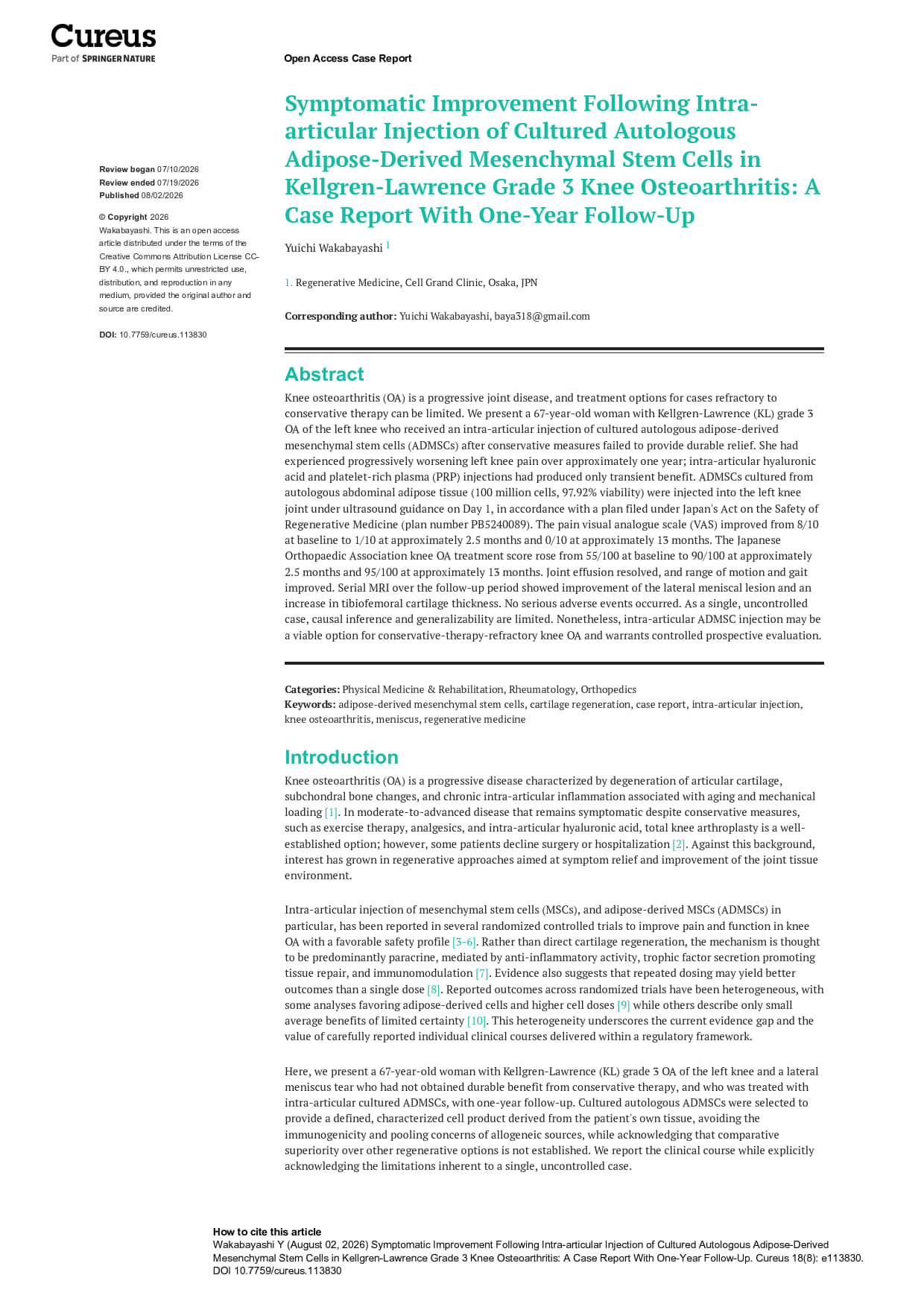
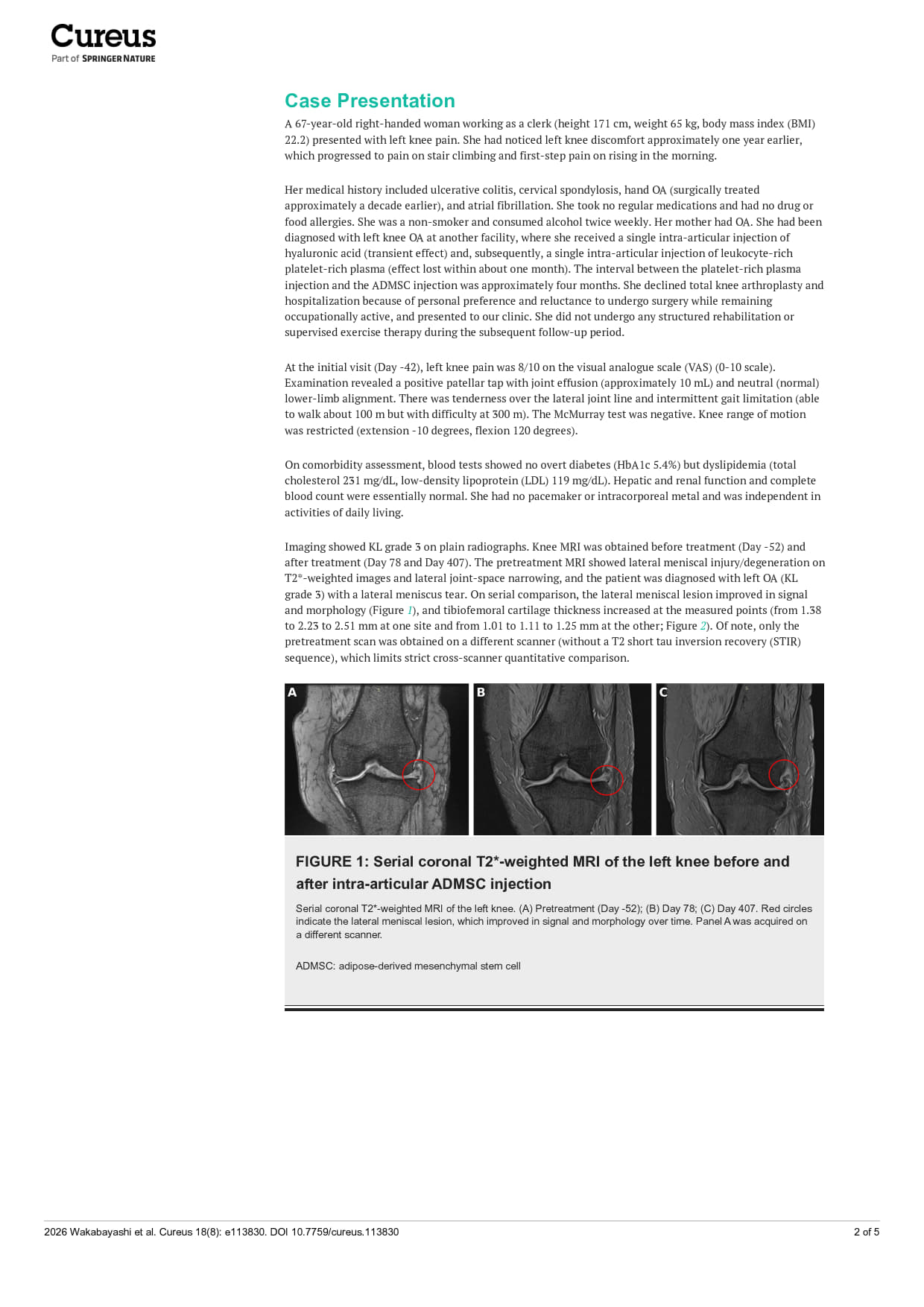
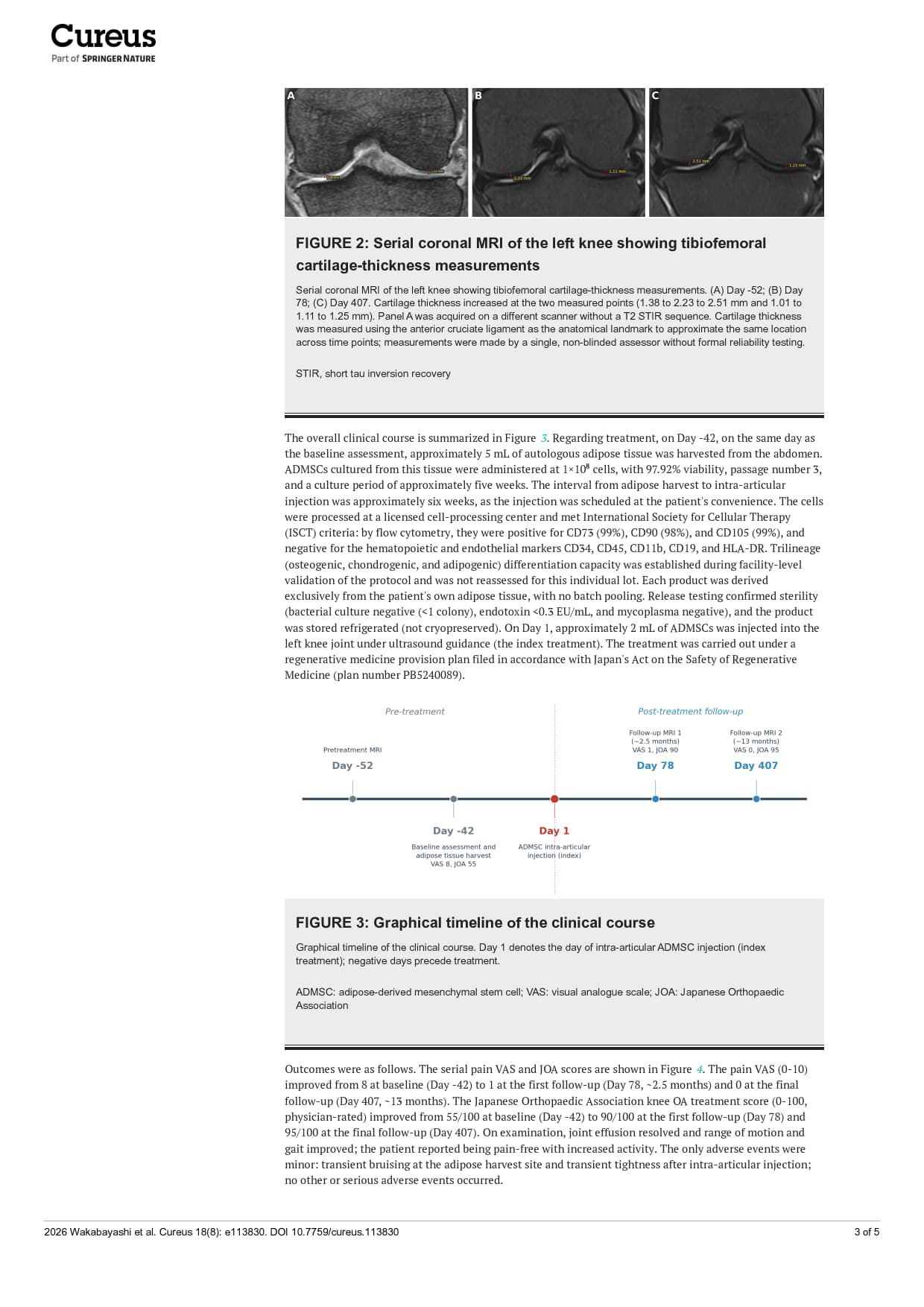
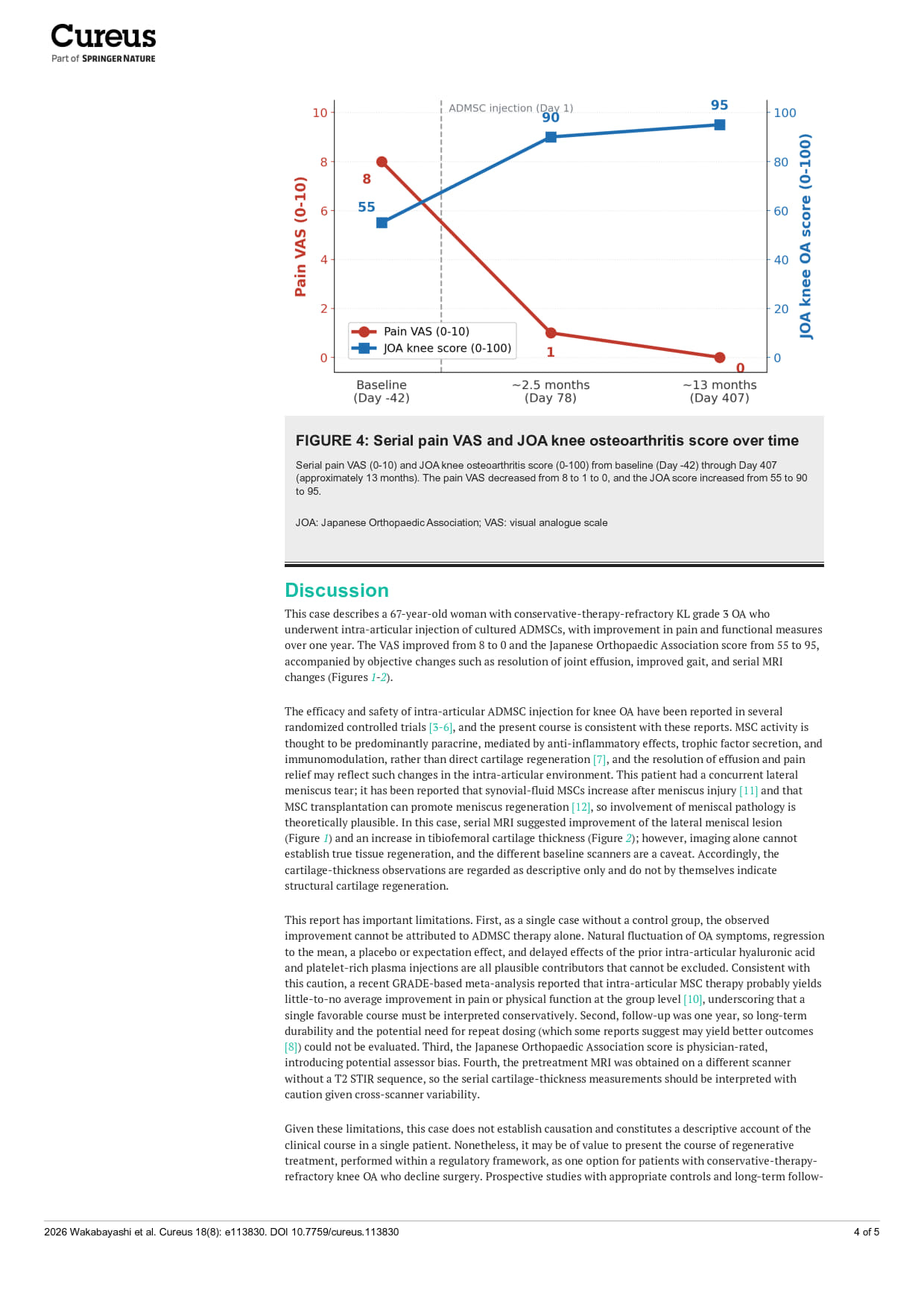
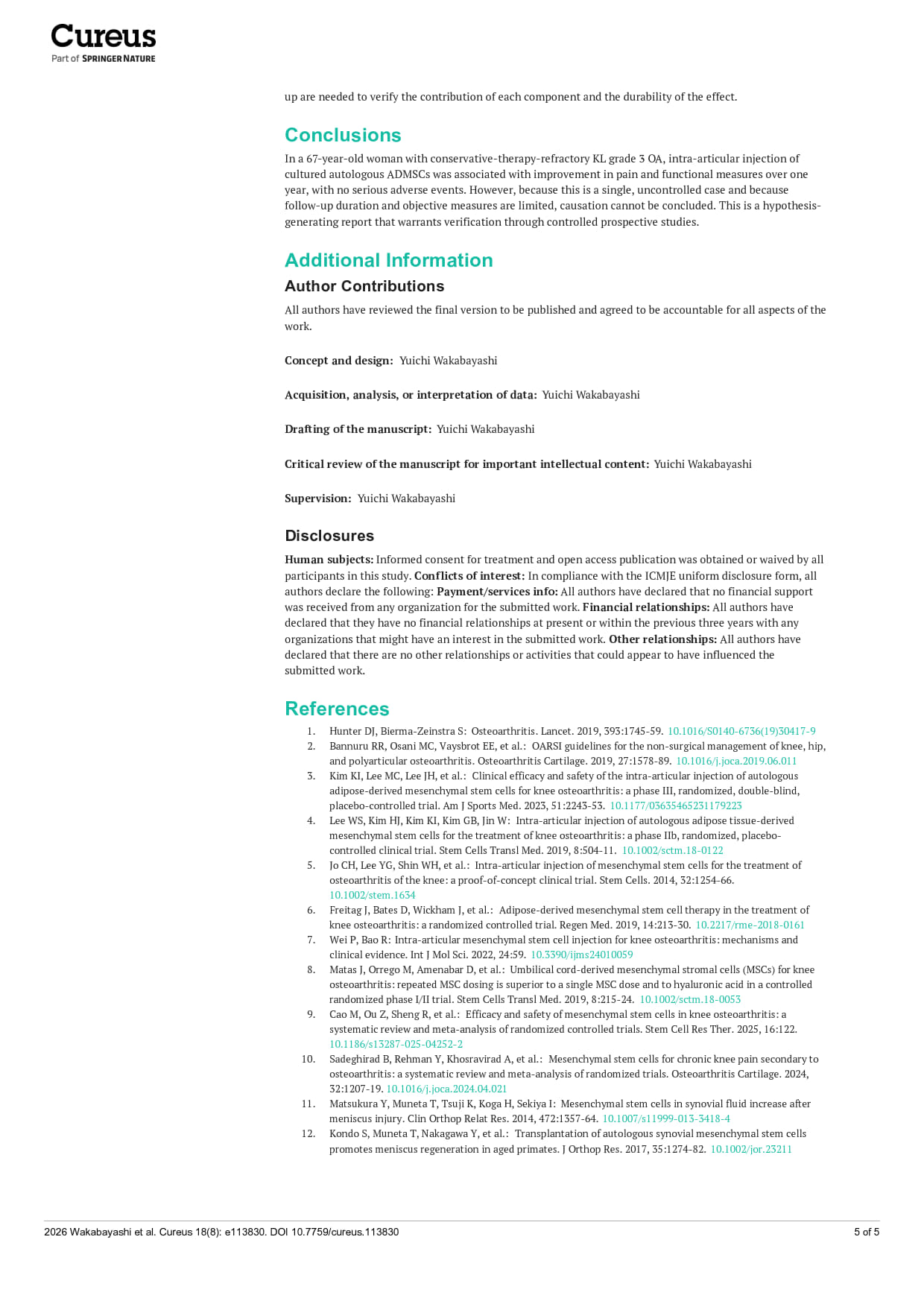
Best comparison fit: patients exploring a Japan-based longevity or regenerative program led by an experienced clinician with government-approved protocols and direct English communication. Reflecting this commitment to transparency, Dr. Wakabayashi’s one-year outcome report on adipose-derived stem cell therapy for knee osteoarthritis was published in the peer-reviewed medical journal Cureus in 2026 (DOI: 10.7759/cureus.113830), adding independently verifiable clinical documentation to the clinic’s growing body of research.
Symptomatic Improvement Following Intra-articular Injection of Cultured Autologous Adipose-Derived Mesenchymal Stem Cells in Kellgren-Lawrence Grade 3 Knee Osteoarthritis: A Case Report With One-Year Follow-Up
 Page 1
 Page 2
 Page 3
 Page 4
 Page 5
Author: Yuichi Wakabayashi
Affiliation: Regenerative Medicine, Cell Grand Clinic, Osaka, Japan
Journal: Cureus
Year: 2026
Volume/Issue: 18(8)
Article: e113830
DOI: 10.7759/cureus.113830

MexStemCells Clinic, Mexico City, Mexico
MexStemCells is listed in Mexico City with stem cell therapy, chronic disease, anti-aging, longevity, and several orthopedic package categories. The profile identifies Javier Sanchez Gonzalez as medical reviewer and lists Dr. Rodolfo Lerma as an associated physician. Its current package examples include ankle, knee, hip, hand, and finger joint programs.
For treatment in Mexico, ask to see the facility’s current COFEPRIS authorization and clarify whether the clinic, cell bank, laboratory, and any regenerative medicine service operate under separate permissions. Request documentation for cell origin, donor eligibility, microbial testing, viability, and chain of custody. For joint conditions, an independent orthopedic opinion and current imaging can help determine whether the proposed injection is reasonable compared with physical therapy, medications, conventional injections, or surgery.
Best comparison fit: North American patients seeking a Mexico City option with profile-listed orthopedic packages and named medical professionals.

CellCenter, Bratislava and Malacky, Slovakia
CellCenter is listed at locations in Bratislava and Malacky. Its profile describes programs for neurological and neuromotor disorders, cardiovascular and autoimmune conditions, musculoskeletal problems, post-traumatic injuries, and longevity. Associated professionals include MUDr. Milan Hric, Dr. Mgr. Karim Dakkak, and Dr. Emilia Vlcek.
Because Slovakia is an EU member state, patients should ask how the proposed cell product is classified under national and European rules. Substantially manipulated cells or cells used for a different essential function may fall within advanced therapy medicinal product requirements. Ask whether treatment is standard care, hospital exemption, compassionate use, or clinical research, and request the legal basis in writing. Neurological and cardiovascular claims deserve especially careful evidence review because small uncontrolled studies cannot establish effectiveness.
Best comparison fit: European patients seeking a regional option and willing to verify the exact national and EU pathway for the proposed cell product.
Stem Cells Kyron, Cali, Colombia
Stem Cells Kyron is listed in Cali with physician-guided programs across orthopedic, spine, neurological, autoimmune, metabolic, longevity, fibromyalgia, tendon, ligament, and autism-related categories. The profile identifies Dr. Carlos Eduardo Rojas Martinez as medical reviewer and Daniel Sanz as an associated professional.
Patients should verify the clinic’s health-service authorization, the role of Colombia’s national regulator INVIMA where a biological product or cell-processing activity is involved, and any local health authority permissions. Ask the clinic to separate established supportive care from experimental cell therapy in the written plan. For autism, neurological disorders, autoimmune disease, and fibromyalgia, request peer-reviewed evidence that matches the proposed cell source, route, dose, age group, and outcome measures.
Best comparison fit: patients considering Colombia for a broad regenerative medicine evaluation and who will insist on condition-specific evidence and authorization documents.

CellsTime Clinique, Tijuana, Mexico
CellsTime Clinique is listed in Tijuana under stem cell therapy, sports medicine, sexual medicine, anti-aging, and longevity. The profile names Dr. Hiram Fernandez as medical reviewer and lists Dra. Lizbeth Margarita Aguilar Romero and Dr. Irydia Pellegrini. It also highlights transportation access from San Diego.
The profile advertises a very broad condition range, which should trigger more—not less—verification. Ask for a diagnosis-specific protocol, the proposed cells and route, a realistic explanation of evidence limits, and the medical reason that this approach is preferable to established care. Confirm current COFEPRIS documentation for the facility and any cell bank or regenerative service. For procedures involving fertility, sexual medicine, rare disease, or systemic infusion, request a specialist review outside the clinic before agreeing.
Best comparison fit: U.S. and Canadian patients prioritizing border access and named physicians while carefully reviewing a broad treatment menu.

EDNA Wellness, Bangkok, Thailand
EDNA Wellness is listed in Bangkok as a surgeon-led clinic with UC-MSC programs for orthopedic, neurological, skin, anti-aging, longevity, and other categories. The profile identifies neurosurgeon Dr. Pongwat Polpong as medical reviewer and lists Dr. Naputt Virasathienpornkul, Dr. Apisit Rattanatanasarn, and Dr. Sarunya Yutthagovit.
The profile states that cell production follows GMP standards in collaboration with the Thailand Institute of Scientific and Technological Research and lists ISO 9001:2015 and ISO/IEC 17025:2017. Patients should request the certificate numbers, accredited scope, issuing body, expiry dates, and documentation connecting the tested laboratory process to the exact clinical batch they will receive. Also verify the clinic license, physician registration, Thai regulatory status of the product, and evidence for the specific neurological or orthopedic indication.
Best comparison fit: patients considering a Bangkok program with named specialists and profile-listed laboratory quality credentials.
BioStemCells, Puerto Vallarta, Mexico
BioStemCells is listed in Puerto Vallarta with regenerative wellness programs described for chronic pain, autoimmune conditions, orthopedic injuries, aging-related goals, and exosome-related services. The profile emphasizes bilingual support for international patients from the United States and Canada.
The public summary reviewed for this guide does not identify a treating physician or detailed laboratory documentation. Before travel, request the physician’s name and registration, the facility and regenerative medicine license, the source and legal status of each biological product, batch testing, and a treatment-specific consent form. Exosome products require particular caution because marketing often runs ahead of clinical evidence, and regulatory status differs by country. Do not accept “cell-free” as proof that a product is low risk.
Best comparison fit: patients seeking a Puerto Vallarta option with English-Spanish coordination who will complete additional physician and laboratory verification.

BIOregeneration, Kingston, Jamaica
BIOregeneration is listed in Kingston with regenerative wellness, joint, longevity, cellular repair, intravenous infusion, peptide, and integrative health services. The profile identifies founder Dr. Janice Simmonds-Fisher and describes training in medicine, plant-based therapeutics, tissue engineering, and medical tourism facilitation.
Patients should verify Dr. Simmonds-Fisher’s current professional registration and the facility’s status with Jamaica’s Ministry of Health and Wellness. Ask which services are medical treatments, which are wellness services, and which remain experimental. Request complete product information, laboratory quality records, adverse-event procedures, and an explanation of how conventional care will be coordinated. Combining several interventions in one package can make it harder to know which component caused a benefit or complication.
Best comparison fit: patients considering a Caribbean destination and a physician-led integrative program, with careful separation of wellness claims from evidence-based medical treatment.
FirstCell Malaysia, Kuala Lumpur, Malaysia
FirstCell is listed in Kuala Lumpur with MSC and natural killer cell programs across anti-aging, cancer-related support, chronic disease, longevity, fertility, and autism categories. The profile identifies Dr. Vignesh Sugumaran as medical reviewer and Dr. Sara V as an associated doctor.
Malaysia’s NPRA updated its cell and gene therapy product registration guidance in 2025. Patients should ask how the proposed product is classified, whether it is registered or supplied through another permitted pathway, and which facility performs cell processing. For fertility, autism, cancer, or neurological use, obtain an independent specialist opinion and ask whether the clinic is offering treatment, supportive care, or research participation. Also confirm whether natural killer cell services are being proposed for wellness, immune support, or a defined oncology indication.
Best comparison fit: patients seeking a Kuala Lumpur center with profile-listed MSC and NK programs and access to Malaysia’s updated regulatory framework.
How Much Does Stem Cell Therapy Cost at International Clinics?
A single worldwide price would be misleading because “stem cell therapy” can describe a local joint injection, an intravenous infusion, multiple administration routes, a cell-collection visit followed by culture, a multi-day package, or a program combining unrelated wellness services. Public profile prices also change and may omit laboratory, anesthesia, imaging, rehabilitation, medication, accommodation, or complication care.
| Cost component | Questions to ask | Common omission risk |
|---|---|---|
| Medical evaluation | Is specialist review, imaging, bloodwork, and eligibility screening included? | Remote quote issued before records are reviewed. |
| Cell product and laboratory | What is the source, dose, batch testing, culture process, and release standard? | “Millions of cells” stated without identity, viability, or quality documentation. |
| Administration | Does the quote cover IV, joint, intrathecal, intra-arterial, or image-guided delivery? | Hospital, anesthesia, imaging guidance, or procedure-room fees billed separately. |
| Travel package | Are flights, hotel, local transport, interpreter, meals, and companion costs included? | “All-inclusive” applies only to local transport and hotel nights. |
| Aftercare | How many follow-ups are included, for how long, and who responds after you go home? | Extra charges for repeat tests, rehabilitation, or complication management. |
Quote rule: compare itemized written quotes only after each clinic has reviewed the same medical records. Do not compare a procedure-only price from one clinic with a multi-day package from another.
How to Verify a Stem Cell Clinic’s Licenses and Laboratory Claims
Start with the local legal framework, not an international logo. A facility may need one authorization to operate as a clinic, another for laboratory or cell-processing activity, another for importing or distributing a biological product, and additional approval for research. Ask the provider to identify every authorization that applies to your protocol.
- Verify the medical facility: request the current license, legal business name, physical address, issuing authority, and permitted scope.
- Verify the cell source: ask whether cells are autologous or donor-derived, adult, perinatal, adipose, bone marrow, or another source.
- Verify processing: request the cell-processing facility name, quality system, cleanroom standards, culture method, storage, transport, and batch-release criteria.
- Verify the treatment pathway: ask whether your use is approved, authorized under a regenerative medicine plan, supplied under hospital exemption, or performed as research.
- Verify certificates: confirm the certificate number, accredited scope, issuing organization, and expiry. ISO 9001 concerns quality management and does not prove clinical efficacy.
- Verify adverse-event reporting: ask who records, reports, and manages infections, allergic reactions, clots, neurological complications, worsening disease, or other serious events.
How to Verify the Stem Cell Doctor Treating You
A clinic founder, profile reviewer, medical director, and treating doctor may be different people. Before paying, obtain the name of the doctor who will make the final eligibility decision and the doctor who will perform each administration procedure.
Credential Check
Confirm the physician’s registration number with the national medical council, specialty certification where applicable, disciplinary status, and hospital or procedural privileges.
Condition Experience
Ask how often the doctor treats your diagnosis, what standard options they considered, what evidence supports the plan, and what outcomes they track.
Procedure Competence
For image-guided joint, intrathecal, intra-arterial, or other invasive delivery, verify specialty training, imaging support, anesthesia, and emergency readiness.
Patient Demographics and Travel Corridors for International Stem Cell Therapy
Reliable age, gender, diagnosis, and origin-country statistics were not publicly available in a comparable format for all ten clinics. This guide therefore does not invent a demographic chart. Eligibility should be based on diagnosis, medical stability, evidence, and procedural risk—not age or gender marketing segments.
Geography still influences which clinics patients compare. North American travelers often begin with Mexico, Jamaica, or Colombia because of flight access and time zones. European patients may consider Slovakia, while patients from East Asia, the Gulf, South Asia, and Oceania may compare Japan, Thailand, and Malaysia. These are practical travel corridors, not proof of treatment quality.
| Origin region | Common shortlist destinations in this guide | Travel issue to plan |
|---|---|---|
| United States and Canada | Mexico, Jamaica, Colombia | Border or flight logistics, continuity with home specialists, and emergency coverage after return. |
| Europe | Slovakia, Japan, Thailand | EU product classification, travel insurance exclusions, and long-haul thrombosis risk. |
| Middle East and South Asia | Thailand, Malaysia, Japan | Visa timing, language support, companion planning, and follow-up across time zones. |
| East Asia and Oceania | Japan, Thailand, Malaysia | Flight fitness, access to records, and coordination with local rehabilitation or specialist care. |
Stem Cell Therapy Risks, Uncertainty, and Warning Signs
Risks depend on the product and route. They may include pain, bleeding, infection, immune reactions, contamination, clotting, unintended tissue growth, neurological injury, worsening symptoms, or delay of effective standard treatment. Invasive routes can add anesthesia, vascular, spinal, or procedure-specific risks.
Marketing Red Flags
- One cell product promoted for many unrelated diseases
- Guaranteed improvement or cure language
- Testimonials used instead of controlled evidence
- Pressure to pay before physician record review
- No written explanation of regulatory status
Clinical Red Flags
- No named treating physician
- No batch-release or sterility documentation
- No independent ethics review for research
- No emergency transfer arrangement
- No plan for long-term follow-up or adverse events
Seek urgent medical attention after treatment for breathing difficulty, chest pain, fainting, severe headache, new weakness, confusion, high fever, spreading redness, severe swelling, uncontrolled bleeding, or sudden worsening of your condition.
International Stem Cell Therapy Planning Timeline
| Timeframe | Biological or clinical process | Patient sensation | Activity level | Action required |
|---|---|---|---|---|
| 4–8 weeks before travel | Diagnosis confirmation and risk assessment | No treatment-related symptoms | Normal | Collect records, obtain independent opinion, verify clinic and doctor. |
| 2–4 weeks before travel | Eligibility testing and final protocol review | Possible anxiety or uncertainty | Normal unless doctor advises otherwise | Review consent, itemized cost, cell documents, travel fitness, and emergency plan. |
| Treatment day | Administration and monitoring vary by route | Possible injection discomfort, fatigue, or short-term reaction | Restricted according to procedure | Confirm batch identity, medication list, discharge instructions, and emergency contact. |
| First 24–72 hours | Early inflammatory, infusion, or procedural effects may appear | Varies; may include soreness or fatigue | Light activity unless restricted | Remain near medical care and report concerning symptoms promptly. |
| Weeks to months | Any claimed benefit or adverse event requires structured assessment | Symptoms may improve, remain unchanged, fluctuate, or worsen | Based on diagnosis and rehabilitation plan | Use objective follow-up measures and continue standard medical care. |
Frequently Asked Questions About the Best Stem Cell Therapy Clinics Worldwide
Which is the best stem cell therapy clinic in the world?
There is no universal best clinic because the right choice depends on your diagnosis, the proposed cell product, evidence, regulatory pathway, physician expertise, laboratory controls, and aftercare. Compare clinics using the same records and questions rather than relying on a global ranking.
Are treatments at international stem cell clinics proven?
Some stem cell uses, especially blood-forming stem cell transplantation for selected blood disorders, are established. Many marketed uses involving MSCs, exosomes, neurological conditions, arthritis, autism, Parkinson’s disease, diabetes, or anti-aging remain investigational or have limited evidence. Ask about your exact indication.
How do I know whether a stem cell clinic is licensed?
Request the facility’s license number, legal name, address, issuing authority, scope, and expiry. Then verify it directly with the relevant regulator. Also ask whether separate permissions apply to the cell-processing laboratory, biological product, importing, storage, or research protocol.
Does GMP certification prove stem cell therapy works?
No. GMP-related controls can support consistent manufacturing and contamination prevention, but they do not prove that treatment improves your condition. Clinical effectiveness requires appropriate human studies using a comparable product, route, dose, patient group, and outcome measure.
What laboratory documents should a stem cell clinic provide?
Ask for cell source, donor screening, identity or characterization, viability, sterility, endotoxin, mycoplasma testing where relevant, culture conditions, passage number, storage, transport, chain of custody, batch-release criteria, and the responsible laboratory’s authorization or accreditation.
Are higher stem cell counts always better?
No. A larger number does not automatically improve outcomes and may not be comparable across sources or processing methods. Dose should be justified by evidence for your condition and route. Identity, viability, purity, potency, safety testing, and clinical relevance also matter.
Are exosome treatments safer because they are cell-free?
Cell-free does not mean risk-free. Exosome products can vary in source, purification, composition, sterility, potency, and regulatory status. Ask for product documentation and evidence for the intended use. Do not assume an exosome infusion is proven because it is marketed as regenerative.
Should I stop my regular treatment before traveling?
Do not stop prescribed treatment unless the clinician responsible for that treatment advises you. Ask the international clinic to coordinate with your home specialist, review medication interactions, and explain whether any temporary changes are medically necessary before the procedure.
Can I use ClinicalTrials.gov to check a clinic’s claims?
You can search for studies related to your condition and cell type, but registration alone does not prove effectiveness or government approval. Review the sponsor, study phase, status, design, enrollment, outcomes, oversight, and whether the clinic is actually a listed study site.
What should an itemized stem cell therapy quote include?
It should identify physician review, tests, cell product, laboratory work, dose, number of sessions, administration route, imaging, anesthesia, hospital services, medicines, rehabilitation, transport, hotel, companion costs, follow-up, cancellation terms, and financial responsibility for complications.
How can I compare these ten clinics fairly?
Send the same medical records to each clinic and request answers in writing. Compare the diagnosis, treatment objective, cell source, processing, dose, route, evidence, physician credentials, regulation, risks, total cost, follow-up, and reasons the clinic would decline treatment.
Compare Stem Cell Therapy Clinics with Clearer Information
PlacidWay can help you request information from providers, compare treatment plans and itemized costs, and organize the questions you need to ask. A clinic response should support—not replace—independent medical advice.
Submit Your Request | Get Healthcare Providers Specific to Your Needs
Disclaimer
Disclaimer: This information is for educational purposes only and does not replace professional medical advice. Always consult a qualified healthcare provider before making medical decisions. Inclusion in this guide does not constitute a medical endorsement, guarantee of regulatory approval, or claim that a treatment is safe or effective for your condition.
References
- Important Patient and Consumer Information About Regenerative Medicine Therapies – U.S. Food and Drug Administration
- The ISSCR Guide to Stem Cell Treatments – International Society for Stem Cell Research
- How to Read a Study Record – ClinicalTrials.gov, U.S. National Library of Medicine
- Regenerative, Cellular and Gene Therapy Information – Japan Ministry of Health, Labour and Welfare
- Health Service Establishments and Licensing – COFEPRIS, Government of Mexico
- Advanced Therapy Medicinal Products Overview – European Medicines Agency
- Guidance for Registration of Cell and Gene Therapy Products, Second Edition 2025 – Malaysia NPRA
- Standards and Regulation Division – Ministry of Health and Wellness, Jamaica